

RABAT, Morocco - The victory of an Islamist Party in Morocco's parliamentary elections appears to be one more sign that religious-based parties are benefiting the most from the new freedoms brought by the Arab Spring.
Across the Middle East, parties referencing Islam have made great strides, offering an alternative to corrupt, long-serving dictators who have often ruled with close Western support.
The Justice and Development Party dominated Morocco's elections through a combination of good organization, an outsider status and not being too much of a threat to Morocco's all-powerful king.
By taking 107 seats out of the 395 seats, almost twice as many as the second-place finisher, the party ensured that King Mohammed VI must pick the next prime minister from its ranks and to form the next government out of the dozen parties in Morocco's parliament.
People are also reading…
It is the first time the PJD - as it is known by its French initials - will be part of the government, and its outsider status could be just what Morocco, racked by pro-democracy protests, needs.
Although it didn't bring down the government, the North African kingdom of 32 million just across the water from Spain was still touched by the waves of unrest that swept the Arab world after the revolution in Tunisia.
The king responded by modifying the constitution to give the next parliament and prime minister more powers, and held early elections.
But there was still a vigorous movement to boycott the elections. There was only a 45 percent turnout in Friday's polls, and many of those who went to vote turned in blank ballots or crossed out every party listed to show their dissatisfaction with the system.
Election observers from the U.S.-based National Democratic Institute estimated that up to a fifth of the ballots they saw counted had been defaced in such a way.
In the face of such widespread distrust of politics, historian and political analyst Maati Monjib said a government led by a new political force could be the answer.
"If the PJD forms a coalition in a free and independent way and not with a party of the Makhzen," he said referring to the catchall phrase for the entrenched establishment around the king, "this will be a big step forward for Morocco."
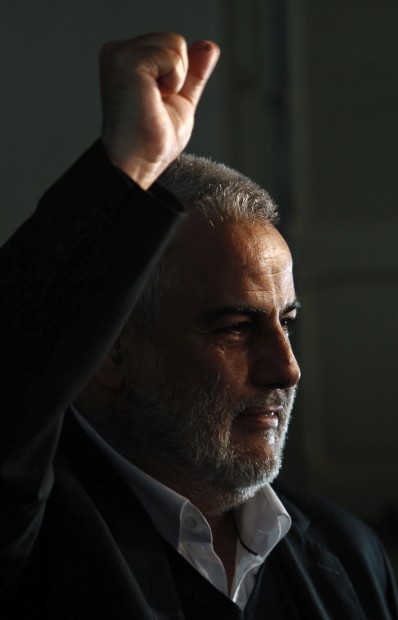
The PJD is from the more moderate end of the Islamist spectrum. The party's leader, Abdelilah Benkirane, supports a strong role for the monarchy and the movement has always been careful to play the political game.


