

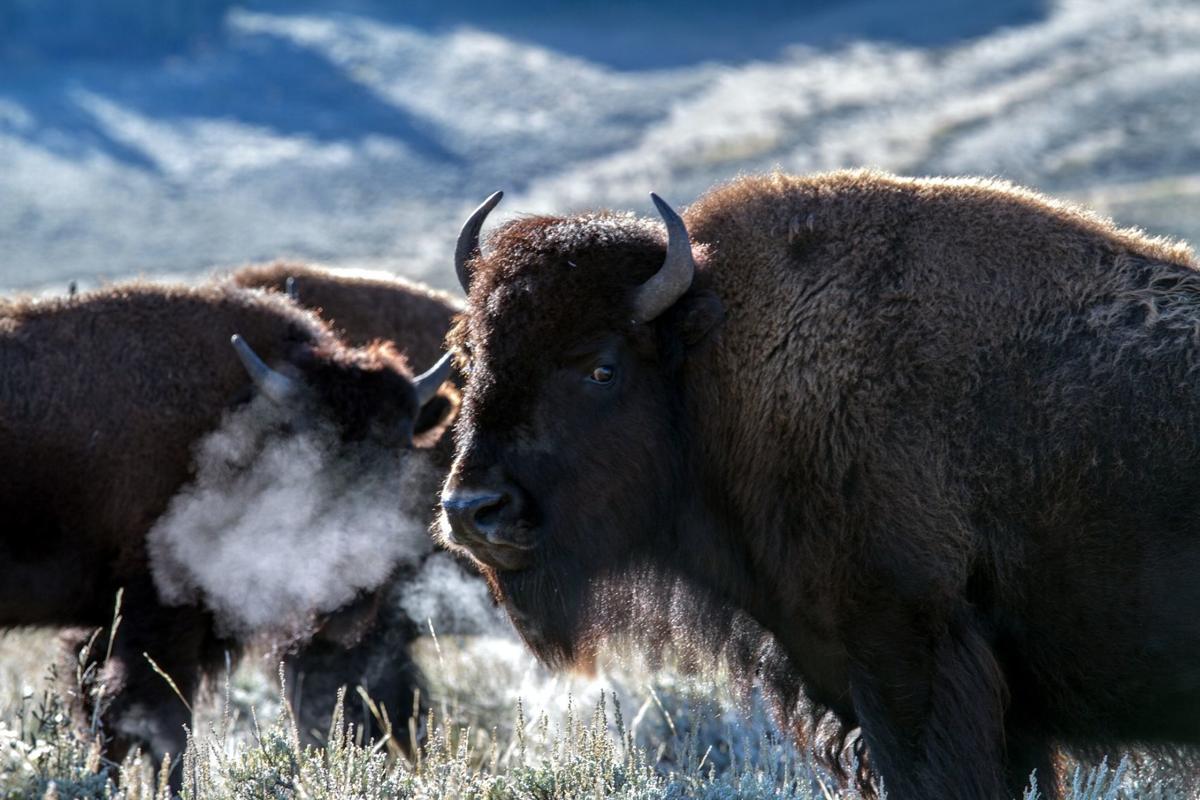
The animals in Yellowstone National Park aren't the only ones stocking up for the winter.
Park rangers at one of the country's most visited national parks have a long, isolating winter ahead. In order to survive, they have to prepare, the park said in a Facebook post Friday.
"During winter, rangers stationed in the interior of Yellowstone experience a level of isolation unknown to most modern Americans," Yellowstone National Park wrote.
Yellowstone winters are frigid, and skis, snowshoes and snowmobiles are the primary way to get around, according to the National Park Service. Roads shut down as winter storms slam the park, and there is little vehicle access.
"Every year in early November, most park roads close to regular traffic to prepare for the winter season," the National Park Service said. "The only exception is the road between Mammoth Hot Springs and the northeast entrance, which is open to regular traffic all year. Around mid-December, roads open to limited snowmobile and snowcoach travel." Because of the restricted road access, rangers who need groceries or medical care could have to travel by snowmobile for over two hours to access those basic necessities, the park said.
People are also reading…
The temperatures are also brutal. It can drop as low as -30 degrees Fahrenheit at night, the park said. That cold, dry air can cause dehydration too, which means you have to eat and drink more to keep yourself warm, officials warn.
"Freezing, dehydrating, and fermenting are just a few ways rangers prepare for the long, cold months," the park wrote. "People everywhere are learning to be more self-sufficient."
9 ways to practice social distancing in the outdoor space
9 ways to practice social distancing in the outdoor space
1. Take the trail less traveled

Some trails can seem more like a crowded sidewalk at times. These are the trails you should avoid. Instead, turn your eyes to the trails you aren’t normally using. They might be less spectacular in some cases, but this will allow you to practice social distancing as you’ll be dodging fewer people on your hike. Consider a “boring” footpath and urban routes (provided you’re easily able to remain less than six feet others). Do not enter the backcountry seeking ‘social distance’ and put yourself in a situation that may require search and rescue assistance.
2. Go outside at odd hours

Avoid the outdoor space when it’s likely to be most crowded — on the weekends and during the middle of the day. By visiting a natural space when there are fewer people there, social distancing will be easier.
3. Avoid using on-site facilities

While you might be social distancing yourself from other people, you should also social distance yourself from their germs. Avoid spots that people would be touching things, including bathrooms, gates, trailheads, and parking lots.
4. Park farther away from the trailhead

Social distancing can be difficult in crowded parking lots with only a couple feet between vehicles. Consider finding a spot that might be a little further away to avoid this closeness.
5. Don’t travel for trailheads

When you travel for a trailhead, you take your germs with you and drop them off along the way at places like small-town gas stations. This can allow the virus to further spread across regions. Try to hit the local trails first and keep in mind that many of the small towns you’re thinking about visiting might have limited or strained rescue and medical services.
6. Sanitize

Don’t forget to thoroughly wash your hands following any sort of outdoor recreation. Bring hand sanitizer while on your adventure for the times that a sink isn’t nearby.
7. Go outside less

This recommendation might be a hard one to swallow, but every time you leave your house, you’re risking catching COVID-19 or passing it along unknowingly. Limit the risk to yourself and others by going outside a fewer number of times throughout the week.
8. Limit the number of people you’re with

In times like these, enjoying nature by yourself is the most ideal situation. If you must recreate in a group, keep it small and keep your distance. One alternative to group workouts is to use an application like Strava to track your times and still compete.
9. Don’t do anything dangerous or risky

If you’re still exploring the outdoor space with proper ‘social distance,’ do so in a responsible manner. Keep in mind that search and rescue crews and resources are strained in this time of pandemic. Avoid situations where you may become lost or hurt and avoid traveling to small towns for recreation where resources may be even more limited.
