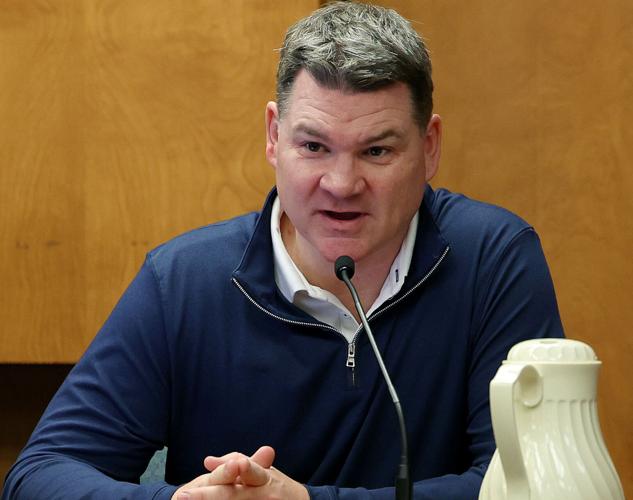
In the end, the only party that lost in the RJ Godfrey eligibility hearing at Pima County Superior Court on Tuesday wasn't even in the room.
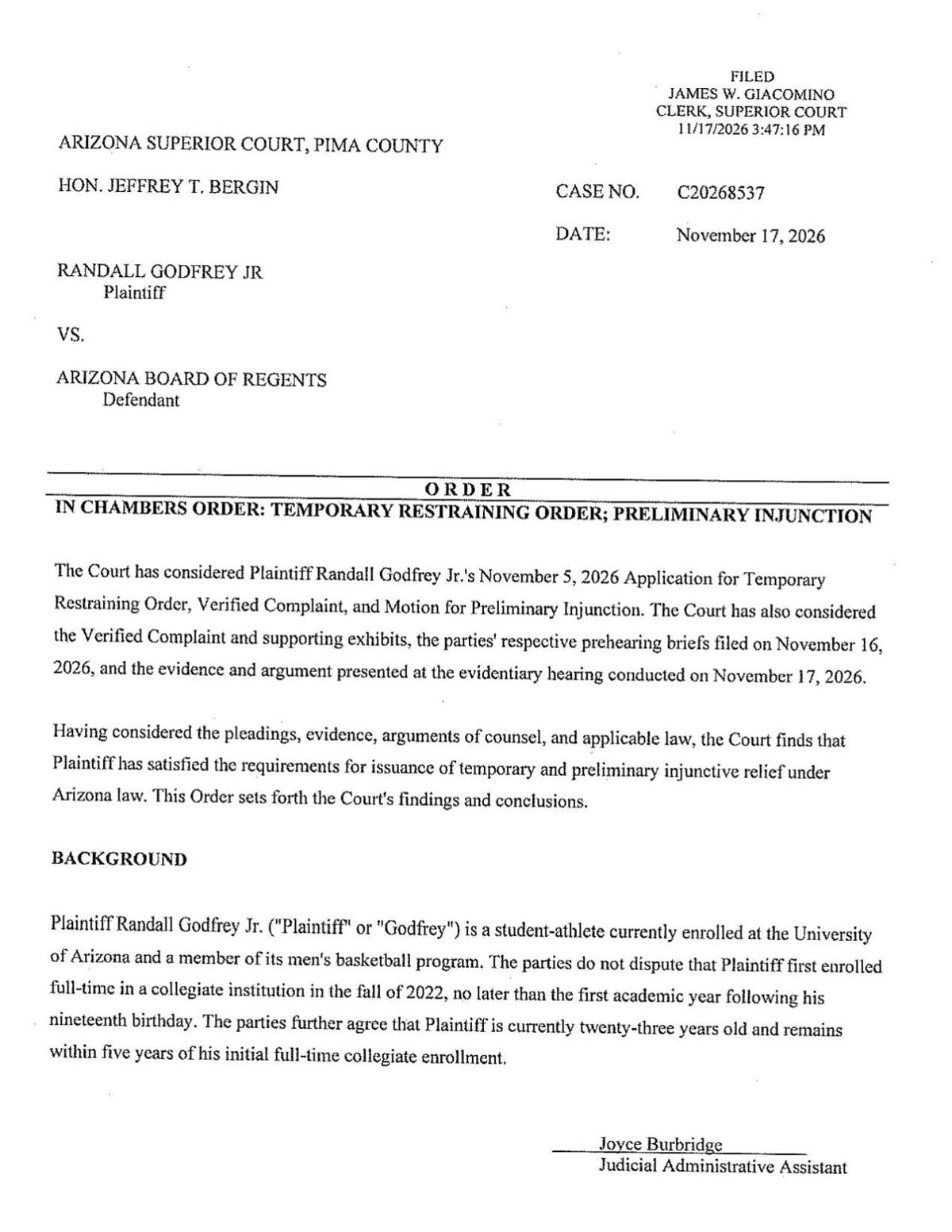
Before a courtroom packed full of Arizona basketball players, staffers, fans and media, Judge Jeffrey Bergin issued a temporary restraining order and a motion for a preliminary injunction on Tuesday that paved the way for Godfrey to become quickly eligible as a fifth-year senior this season.
Bergin ordered that Arizona certify Godfrey as specified under the wording of the NCAA's "five-for-five" Bylaw 12.6, a move that appeared to be celebrated by the plaintiff, courtroom spectators — and the defendant alike.
Because the defendant in this case was UA, not the NCAA. The NCAA has been defeated in five-for-five cases all over the country, but never in one that it wasn't named a defendant in.
People are also reading…
Until now.
"We just over here switching the game up," posted the Texas Trial Group, the firm of Godfrey's attorney, Puerto Rico-based Ryan Downton, adding a bullseye emoji. "NCAA said it is on schools. So we put it on the schools."
Ultimately, Arizona appeared to be OK with that.
Godfrey's attorneys had filed a lawsuit on Nov. 5, saying UA breached its contract with the NCAA and Godfrey by failing to certify him under NCAA Bylaw 12.6, which allows players five years of eligibility from their first enrollment in college or 19th birthday.
The bylaw does not specifically say players such as Godfrey, who entered college in 2022 and played four seasons, are no longer eligible, though the NCAA has said in other public announcements they are ineligible because they finished their careers when old eligibility rules maxing out at four years were still in effect.
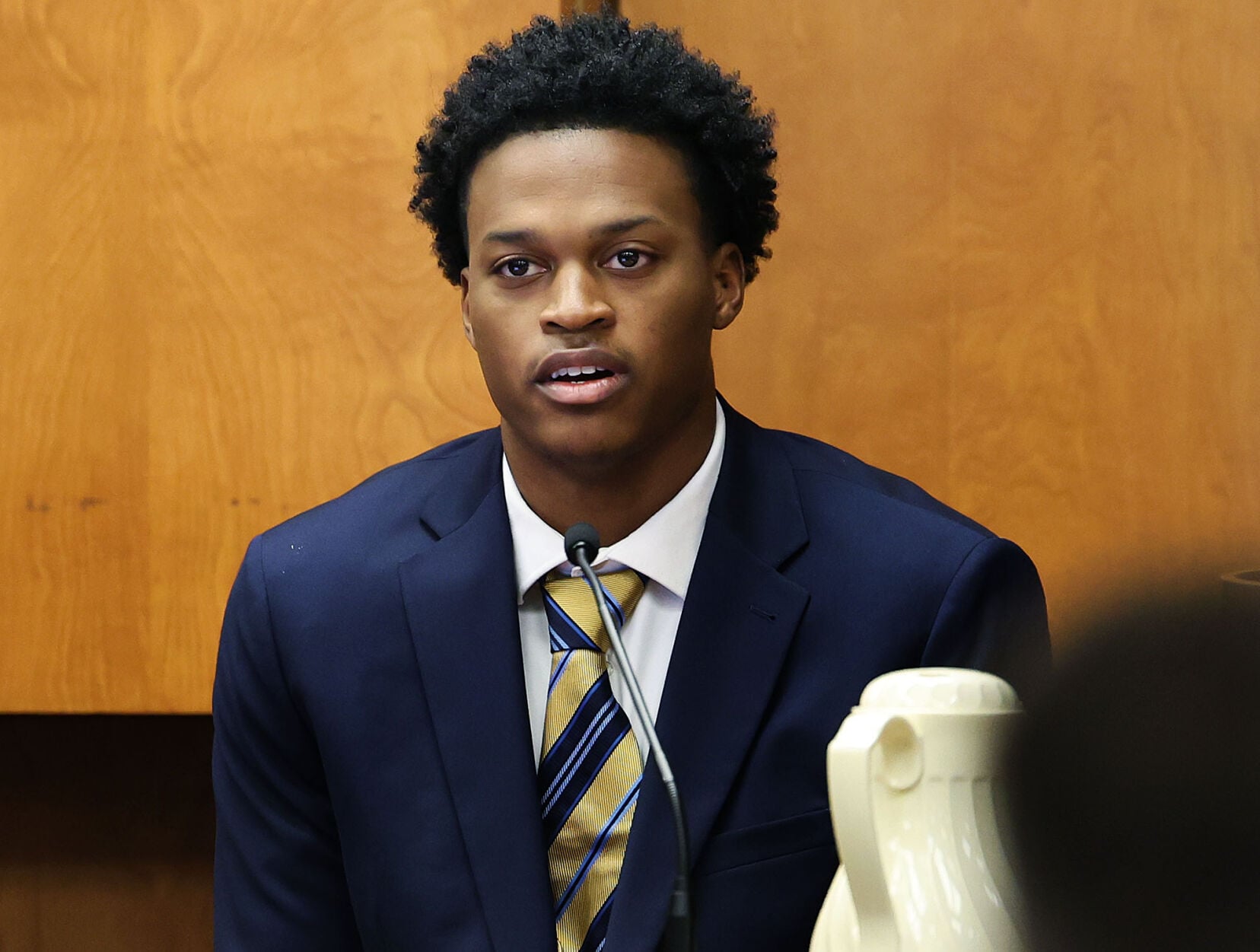
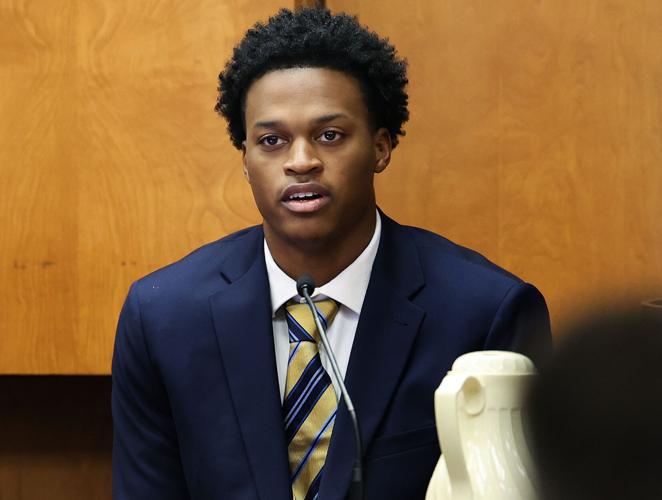
Arizona basketball player RJ Godfrey speaks during a hearing at Pima County Superior Court in Tucson on Nov. 17, 2026.
Before the hearing was held Tuesday, UA's outside attorney, Brendan Melander, filed an official response saying that Godfrey's initial complaint "creates a conundrum for the university" because it feared the NCAA could impose its rule of restitution if UA certified Godfrey as a result of a court order that was later overturned.
Then, after Downton and Godfrey's Tucson-based attorney, Ali Farhang, spent over 90 minutes interviewing witnesses and establishing the NCAA's rules and relationship with its member schools, Melander took less than a minute to respond.
"I'll be brief," Melander told Bergin. "You've heard a lot today about what RJ's participation means to the university and all those who are involved. So the university stands ready to comply with whatever you do. That's all we have."
Afterward, UA issued a statement saying it would comply with the order and its actions firmly indicated it would not seek to overturn the injunction via a trial.
The NCAA has not responded to multiple requests from the Star seeking comment about Godfrey, including one sent Tuesday.
During a morning hearing that lasted about two hours, Godfrey and his attorneys spent plenty of time establishing Godfrey's value to the Wildcats as a potential starting power forward, calling Godfrey, UA coach Tommy Lloyd and UA players Derek Dixon and Ivan Kharchenkov as witnesses.
Lloyd noted that Godfrey could have made a "significant difference" in the Wildcats' 84-75 loss to UCLA on Nov. 2 and Kharchenkov testified that he's been playing too many minutes and doing so out of position because of Godfrey's absence.
But Godfrey's attorneys also spent much of their time trying to establish that the NCAA Manual is a binding contract with UA and other member schools, which is what Bergin said he based his ruling on.

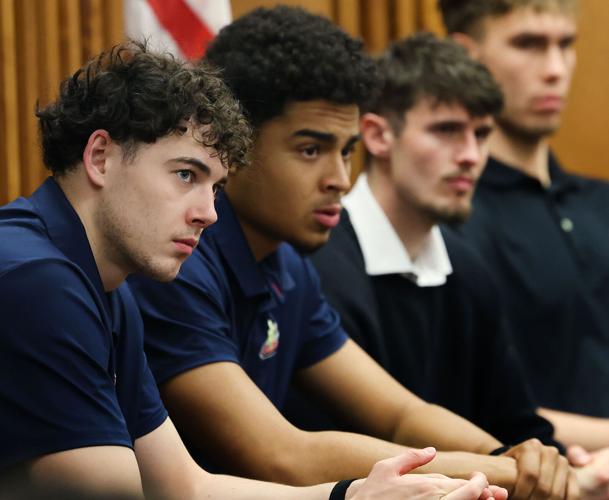
From left to right, Ugnius Jarusevicius, Endurance Aiyamenkhue, Addison Arnold and Motiejus Krivas listen as RJ Godfrey’s lawyer speaks to the judge during a hearing at Pima County Superior Court in Tucson on Nov. 17, 2026.
In a question he posed to Dixon, Downton even compared the NCAA and its manual to a referee and a basketball rulebook.
"So the ref can't come to you in a game and say, 'Hey, I don't care what the rulebook says. Today, if you want three points, you're going to shoot behind the (longer) NBA line.' " Downton said. "That can't happen, can it?"
"No, it can't," Dixon said.
Downton then said, "The NCAA's essentially the referee for college sports... its manual is the rulebook for NCAA eligibility."
Bergin said his ruling "is not and cannot" be based on Godfrey's value to the team but instead was based entirely on contract law. He said the NCAA Manual "likely constitutes a contractual framework" between UA and the NCAA, and that Arizona law favors enforcement of contracts according to their "plain terms."
As Bergin was announcing his decision, Farhang briefly put his arm around Godfrey, while relieved and jubilant expressions were quickly apparent all over the courtroom.
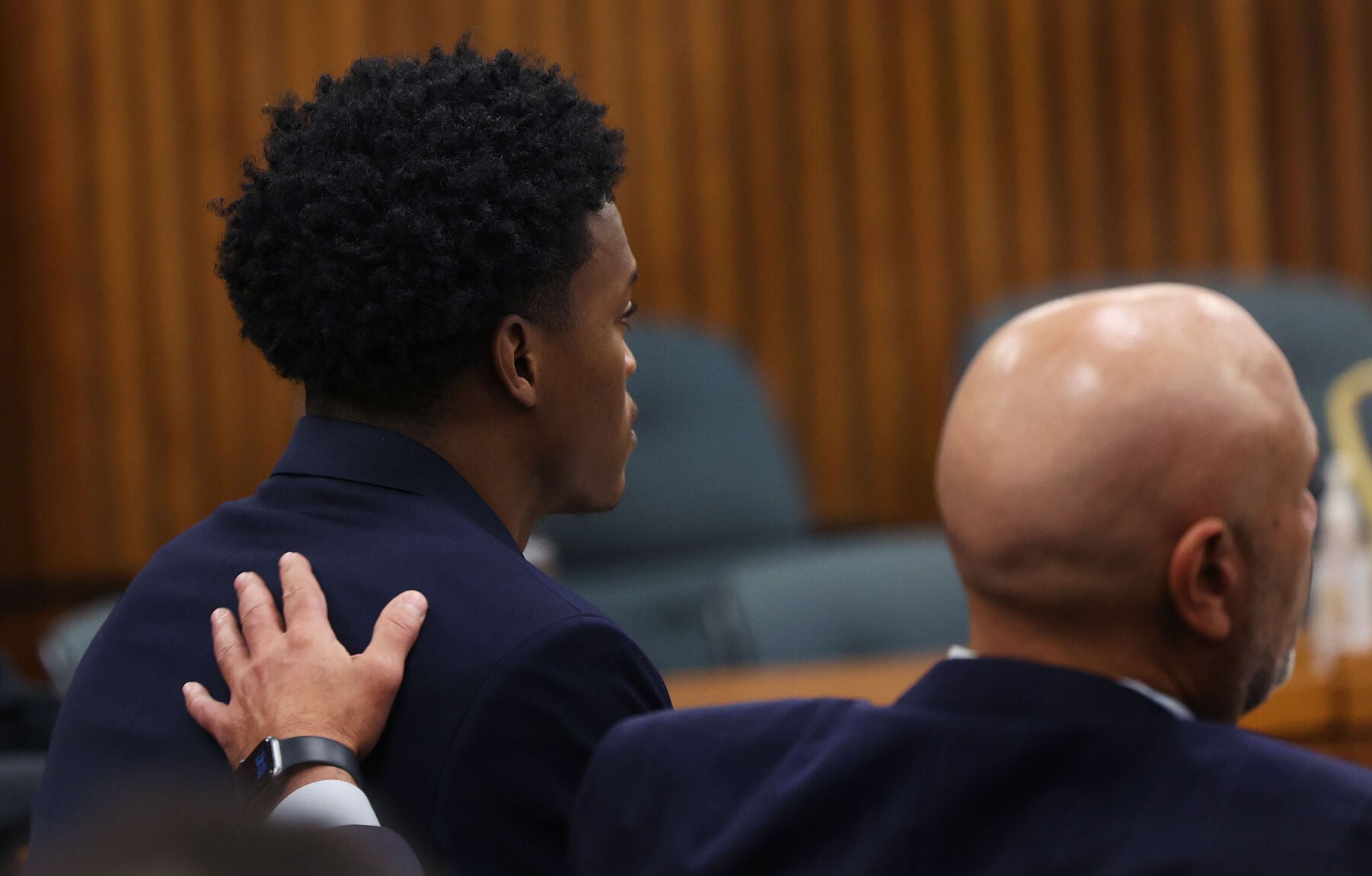
Ali Farhang, right, places his hand on RJ Godfrey’s back after the judge lifted a temporary restraining order during a hearing at Pima County Superior Court in Tucson on Nov. 17, 2026.
"I am delighted for RJ that he finally received justice today after such a long journey," Farhang said later Tuesday. "He is an excellent young man that will do our team, university and community proud, both on and off the court."
It was a victory for Godfrey after previous legal attempts in Georgia and Texas hit roadblocks, thanks to a twist that ultimately proved successful.
Already having filed lawsuits on behalf of Godfrey and others against the NCAA in several states, Downton said after Tuesday's trial that he decided to try suing UA instead of the NCAA once the manual was published in August without a written exclusion against 2022 players.

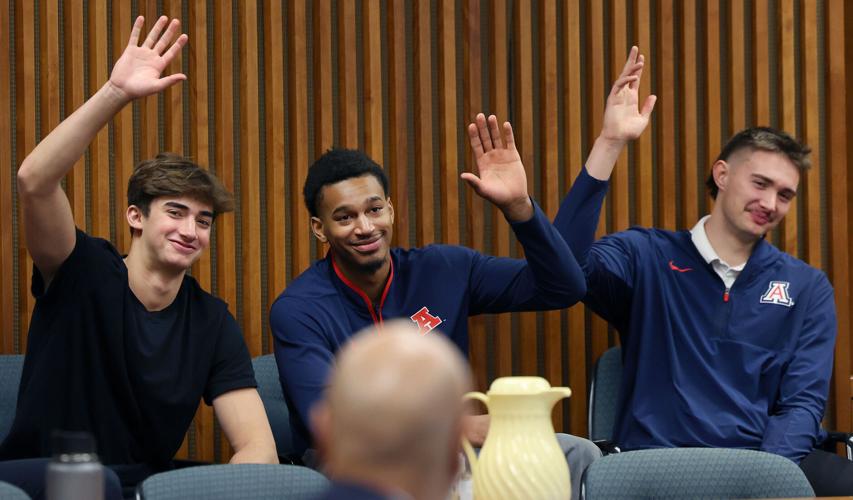
From left to right, Joaquin Rigdon, Cameron Holmes and Evan Otten all raise their hands when asked by Ryan Downton, lawyer for RJ Godfrey, if they want Godfrey to play during a hearing at Pima County Superior Court in Tucson, Ariz. on November 17, 2026.
"When we started these lawsuits during the summer, we didn't know what the text was going to say," Downton said. "We assumed it was going to exclude the class of '22.
"If the players are excluded, then the claim is only against the NCAA. Once the manual came out and we knew the players were included, then the universities have a duty to certify them. That was the real difference."
Downton argued during Tuesday's hearing that the manual is the true contract between the NCAA and its member schools. He also said that the NCAA had chances to update the Manual with an exclusion for 2022 high school graduates, including during a mid-September revision, and did not — nor did it update its online legislative database with any such exclusion.
In a written order issued later Tuesday, Bergin wrote that "the Court's responsibility is to enforce the rule that was actually adopted, not the rule that the NCAA may contend should have been adopted."
He added that "any threat of sanctions from the NCAA are, at this point, hypothetical and speculative" while saying the balance of hardships between UA and Godfrey decisively favored the player.
"We're thankful that the judge took his time to focus on the legal issues," Downton said. "It's not an emotional ruling. It's based on the law, and he's ruled the same way as 60 other courts around the country. It's requiring Arizona to comply with the contract and the NCAA, if they act in concert with Arizona, then they're bound by it as well."
The long road to eligibility
Arizona had expressed a cautious approach to Godfrey's eligibility since he arrived in early August as a transfer from Clemson. Godfrey received a preliminary injunction in his first legal five-for-five attempt — via a lawsuit in Georgia — but UA did not clear him to play in its three exhibition games in Lithuania later that month.

Arizona basketball head coach Tommy Lloyd speaks during a hearing at Pima County Superior Court in Tucson on Nov. 17, 2026.
At the time, there also were questions over whether Godfrey's eligibility could also be impacted by his participation in a college all-star game and benefits he received from an agent.
Downton said UA had been taking a "better-safe-than-sorry approach," while UA coach Tommy Lloyd testified that he believed UA wouldn't certify Godfrey because it feared retribution from the NCAA.
After the Wildcats returned from Lithuania, the NCAA received a stay on the Georgia injunction, preventing Godfrey from becoming eligible again. Last month, Godfrey jumped into a five-for-five case in Texas, but a district judge there denied injunctive relief to athletes such as Godfrey who had previously sought it in other jurisdictions.
Then, as Downton and Farhang neared the filing of their lawsuit in Pima County Superior Court on behalf of Godfrey, they asked UA to certify Godfrey on Nov. 2, the opening date of the college basketball season.
They presented an email they received in return, from UA compliance officer Kristen Arquilla, as evidence that the question over Bylaw 12.6 was holding Godfrey up.
In the email, Arquilla said the NCAA had directed "through an Ed Column" that athletes who entered college in 2022-23 and already played four years are not eligible under rule 12.6 unless "a court order applying to that specific student-athlete" was granted.
Now UA has that order.
Not only did the school say it will comply with the order regarding NCAA Bylaw 12.6, but it also said it has already filed a reinstatement waiver for Godfrey over the eligibility issues regarding benefits from an agent and playing in an all-star game (Godfrey's attorneys said he repaid the benefits and was never paid for the game).

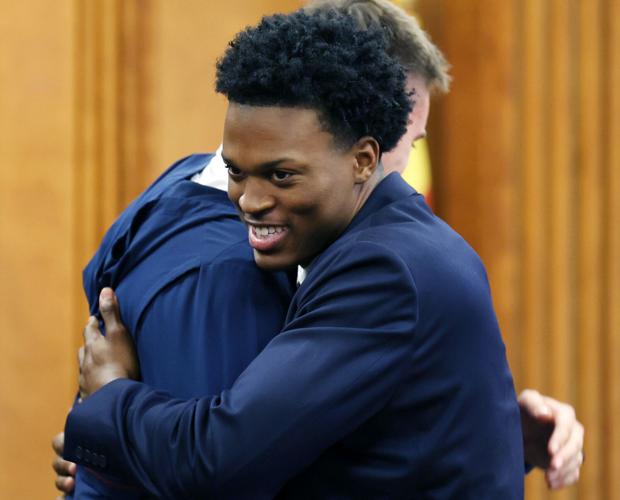
Arizona basketball player RJ Godfrey, right, receives a hug from his teammate, Motiejus Krivas, after his hearing at Pima County Superior Court in Tucson on Nov. 17, 2026.
"The University of Arizona respects and appreciates today’s ruling by the Pima County Superior Court regarding Arizona men’s basketball student-athlete RJ Godfrey," UA's statement read. "The university remains committed to working proactively with the NCAA and looks forward to their timely review and a resolution of this matter."
Even though the lawsuit technically divided UA and its men's basketball program, Lloyd said after the hearing that he and athletic administrators had been working through it.
"The university did a great job supporting a student athlete and doing what's right for the individual, instead of worrying about how this would reflect on them," Lloyd said. "I think we all need to be grateful. This was a great example of leadership across all levels of the university."
UA athletic director Desireé Reed-Francois was not present at the hearing — and a request for comment from the Star was returned only with the school's statement — but Downton finished his arguments by reading a declaration from Reed-Francois in which she expressed support for Godfrey.
Reed-Francois said she voted for the new age-based model of eligibility as one of two Big 12 representatives on the Division I Council but was not asked to vote on whether or not high school players from the class of 2022 were to be excluded from the new rule.
"RJ Godfrey has my support in his pursuit of eligibility," Reed-Francois said, according to Downton. "I hope to see him compete this season."
Contact sports reporter Bruce Pascoe at bpascoe@tucson.com. On X(Twitter): @brucepascoe
Bruce Pascoe
Reporter