A key supporter of Republican President Donald Trump criticized him Sunday after he announced his plan to suspend tariffs on the import of foreign beef.
Lawmakers from agricultural states, including Alabama Sen. Katie Britt, and key cattle and farm groups said the decision would hurt American farmers.

A drone photograph shows the GM Assembly plant in the background and the GM Oshawa Elevation Centre on the day U.S. president Donald Trump paused the new tariffs against Canada for three days, Wednesday in Oshawa, Ontario, Canada.
Britt said in an interview Sunday she “appreciate(s) the administration’s efforts” but urged Trump to reconsider.
“I have heard directly from Alabamians about this policy shift, and I share their deep concerns,” Britt said.
In a surprise announcement Friday, Trump posted on social media that for the next 90 days, the United States will allow 300,000 metric tons of ground beef to be imported by companies that have committed to selling them below current market prices.
People are also reading…
“Today, I concluded a deal to substantially lower the price of ground beef for working American families,” Trump wrote in a post. “This deal will reduce prices for Americans while giving space for our Great American Beef Herd to grow again.”
Trump did not say which countries he reached a deal with on the suspended tariffs or which companies committed to lower prices.
In July, the average price of a pound of ground beef sold in the United States was $6.89, according to the U.S. Bureau of Labor Statistics.

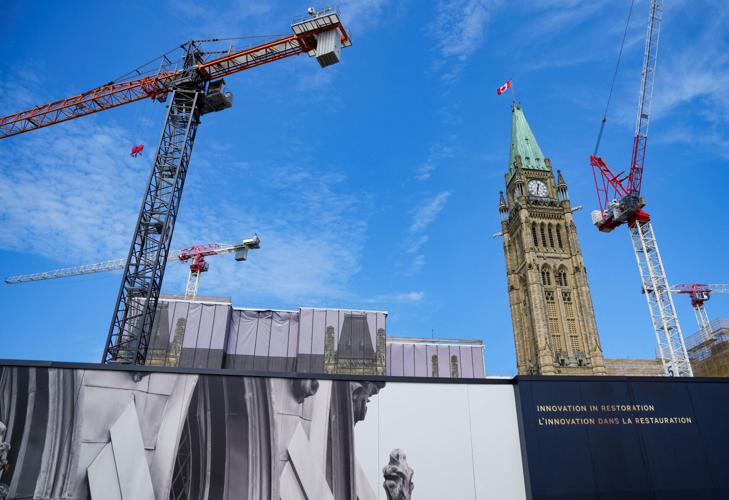
The Peace Tower on Parliament Hill is seen after Canada's Prime Minister Mark Carney spoke with the news media after he suspended trade negotiations with the U.S. on Saturday in Ottawa, Ontario, Canada.
The announcement drew immediate criticism from the National Cattlemen’s Beef Association and several GOP officials who typically support the administration.
Britt said the decision risks hurting local farmers.
“Importing more foreign beef comes at the expense of our cattlemen, who are critical to both affordable and sustainable food supplies,” she said.
“I appreciate the administration’s efforts to make life more affordable for hardworking Americans; however, we must do so in a way that supports our cattlemen here at home and strengthens domestic food security. I ask the administration to reconsider its approach to achieve those goals.”
Montana Sen. Tim Sheehy wrote on social media that he “advised President Trump against this course of action for a year.”
America’s domestic cattle herds are the smallest size since the 1950s, according to recent reporting.
The National Cattlemen’s Beef Association also criticized Trump's action. "While America’s cattle producers share the goal of keeping groceries affordable for consumers, flooding the market with government-subsidized, below-market beef is not the way to rebuild the American cattle herd," the group said in a statement.
A White House official, who discussed the move on the condition of anonymity, said Trump's deal on ground beef is intended to be a short-term action to fill a gap to meet consumer demand. The Trump administration will simultaneously work with ranchers to expand domestic beef production for the long term, the official said.
Meawhile, Trump's promised 50% tariffs on some Canadian goods went into effect just after midnight Saturday, after the United States and its northern neighbor failed to reach a trade agreement.
The tariffs were announced in a July 20 executive order and were initially scheduled to take effect Wednesday but Trump put a three-day pause on the tariffs, saying the two countries were making a deal.
Both sides of the negotiating table blamed the other for crumbling trade negotiations late Friday.

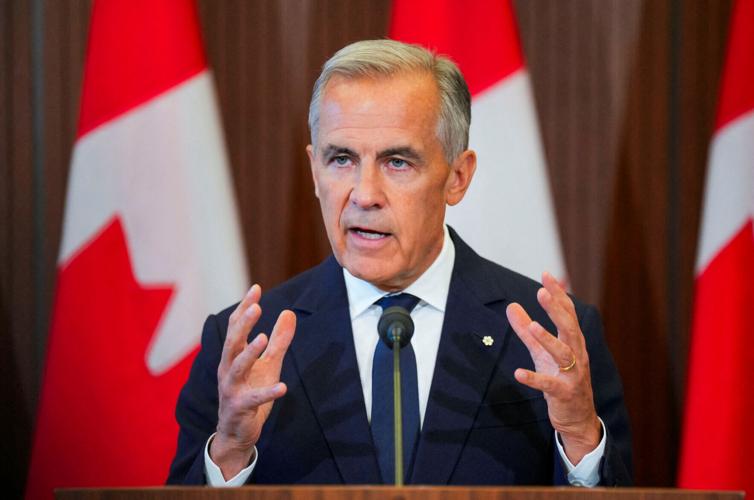
Canada’s Prime Minister Mark Carney speaks with the news media Saturday in Ottawa, Ontario, after he suspended trade negotiations with the United States.
Canadian Prime Minister Mark Carney said in a statement posted to social media late Friday that he suspended trade negotiations with the United States and ordered Canadian negotiators to return to Ottawa.
"They have worked hard, in good faith, to defend the interests of Canadians throughout these negotiations up until the very last minute," Carney said. "However, last-minute changes in the U.S. proposed terms were unfair, uneconomic, and called into question the reliability of any deal."
Carney said Canada would match the tariffs "dollar for dollar," with retaliatory tariffs coming in September. Details of those actions will be released in the coming days, Carney said in a speech Saturday.
The office of U.S. Trade Representative Jamieson Greer said in a statement that Canada declined to finalize the deal.
"Despite the U.S. offer to Canada to receive the best treatment of any major exporter to our market, new demands and walk backs of other commitments by Canada have upended the careful balance reached in the past days," Greer's office said. "In addition, Canada is continuing to maintain its prolonged retaliation against the United States, including, among other things, flat-out prohibitions on certain American goods and services."
The tariffs apply to just over 5% of Canadian exports to the United States, including on various goods such as wine, dairy, hockey sticks and cement. Carney said about $28 billion worth of goods would be tariffed. They do not apply to exempted goods including energy, potash, fish and critical minerals. The tariffs do not qualify for preferential treatment under the U.S.-Mexico-Canada free-trade agreement, which shielded much of Canadian goods from earlier U.S. tariffs.
After Canada-U.S. trade talks broke down, U.S. President Donald Trump hit Canada with 50 per cent tariffs on various items. Analysis from economist Trevor Tombe indicates that if the tariffs last, Canada would shed tens of thousands of jobs.