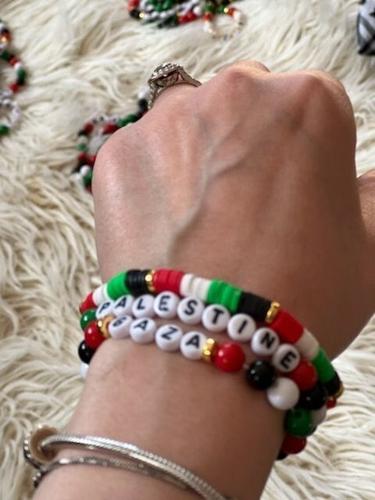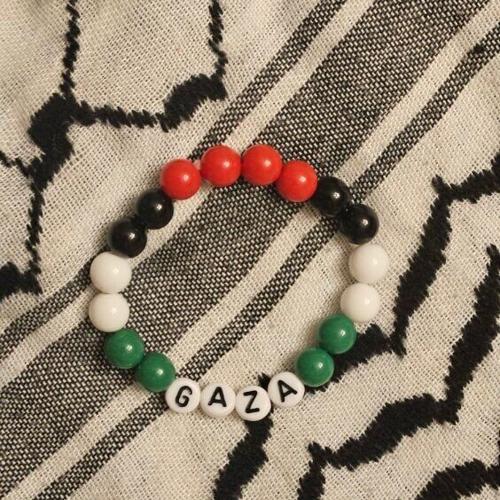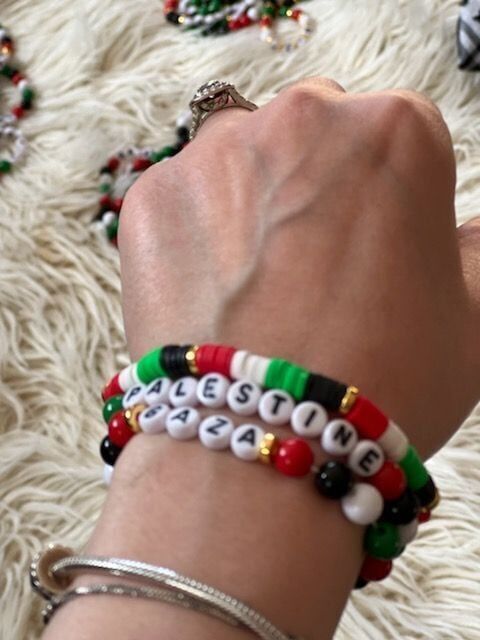
Nawal Abuhamdeh of St. Louis shared a bracelet-making fundraiser that her 10-year-old daughter’s Girl Scout troop started earlier this month to raise money for urgent humanitarian needs for children in Gaza. She never expected the organization’s leadership would threaten her with legal action for doing it.
Abuhamdeh had led the troop’s annual cookie sale, which raises funds for the troop’s activities, for the past four years. But as this year’s sale approached, her heart just wasn’t into it.
Since the attack by Hamas on Oct. 7 that killed about 1,200 Israelis, mostly civilians, she’s witnessed the destruction of her parents’ homeland in Palestine.
Israel’s assault in Gaza — one of the most destructive military campaigns in recent history — has killed more than 29,000 Palestinians since the war began, according to the territory’s Health Ministry. That includes around 12,000 children. A cluster of UN agencies and nonprofits warned this week that child deaths were poised to skyrocket because food and safe water have become incredibly scarce in the Palestinian territories. Virtually all young children have infectious illnesses.
People are also reading…

The finished product
The girls in Abuhamdeh’s troop, who come from diverse backgrounds, including Somali, Indian, Syrian, Jordanian and Palestinian, have been emotionally affected by the news reports.
The videos circulating are traumatizing. Abuhamdeh watched an inconsolable Palestinian father collect body parts of his slain children in a shopping bag. A doctor tried to save his 16-year-old niece’s life by amputating her leg without anesthesia on his dining table. A wailing 4-year-old tried to get up and look for his parents — both of whom were killed, and his own legs amputated.
“I’m grieving. We are all grieving. We literally couldn’t muster the energy to sell cookies,” Abuhamdeh said.
She asked the girls if they had ideas for a community service project. They suggested making and selling beaded bracelets to raise money for the Palestine Children’s Relief Fund. Abuhamdeh recalled seeing Girl Scout efforts to raise money for war victims in Ukraine highlighted by the organization. It seemed like a good way to channel their sadness into a positive action.
She shared a post on social media, advertising bracelets for $5 or $10 with all the proceeds going to the relief fund. Soon after, she received an email from the Girl Scouts of Eastern Missouri. It said members could not raise money that represents “partisan politics” and must “stay neutral.”
The organization asked her to immediately remove all references to the Girl Scouts from any communications and social posts about the girls’ efforts. Abuhamdeh replied by explaining how important the fundraiser was for the girls and how critical the situation in Gaza was for children. She assured them that the troop wasn’t making any political statements.
“We condemn any innocent lives taken — whatever religion they are, whatever ethnicity they are,” said Abuhamdeh.
She asked the leadership how their bracelet sale was any different than the Girl Scout fundraisers for Ukraine. She received a lengthy response, in official language, informing her that the activity had not followed the “appropriate policy, procedures and approval processes as outlined in our volunteer and leader training documents.”
The last sentence hit her hard: “Unfortunately, if this direct violation of the organization’s governing documents and policies continues, Girl Scouts of Eastern Missouri and Girl Scouts of the United States have no other choice than to engage our legal counsel to help remedy this situation and to protect the intellectual property and other rights of the organization.”
“I got a little scared; I’m not gonna lie,” she said. “I wondered, what are they going to do to me?”
For years, she had strived to give these girls the opportunities she had missed out on herself. The troop had formed a sisterhood, growing up together since kindergarten.
Abuhamdeh reached out to the other parents. They decided the organization’s values didn’t align with what they were trying to teach their daughters.
Abuhamdeh sent an email to the Girl Scouts expressing her disappointment and hurt, and explaining that the troop wanted to disband from the Girl Scouts. They sent her instructions on how to leave the organization.
When I asked Kelly Daleen, chief membership and marketing officer for the Girls Scouts of Eastern Missouri, why this project was different from other fundraisers for war victims, she wrote that the troop leader had failed to get prior approval.
Abuhamdeh said she wished they had simply said so at the start, and asked her to suspend the activity until she got the necessary approval. Instead, they made her troop feel unvalued and vilified in a moment of deep grief and vulnerability. The tone of their emails felt like a cold reprimand to her. It reminded her of the times growing up that simply existing as a Palestinian American had offended someone.
“What did we do wrong?” the girls have asked her.
Abuhamdeh gets emotional when she talks about the decision to leave an organization that teaches girls to “make the world a better place.”
In the end, she said, deciding to stand up for their beliefs was the Girl Scout way.