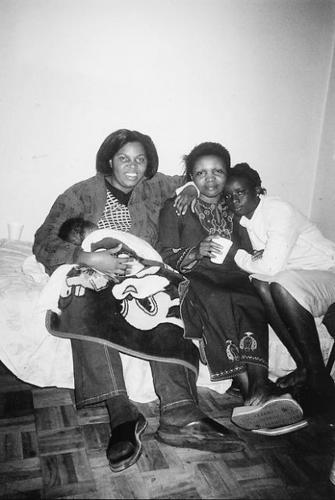
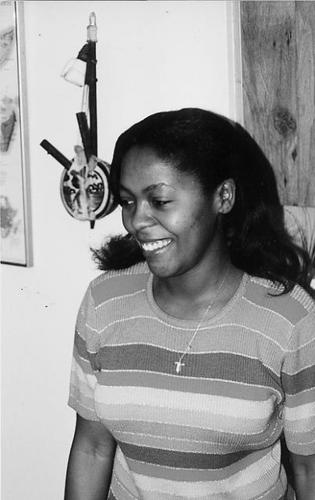
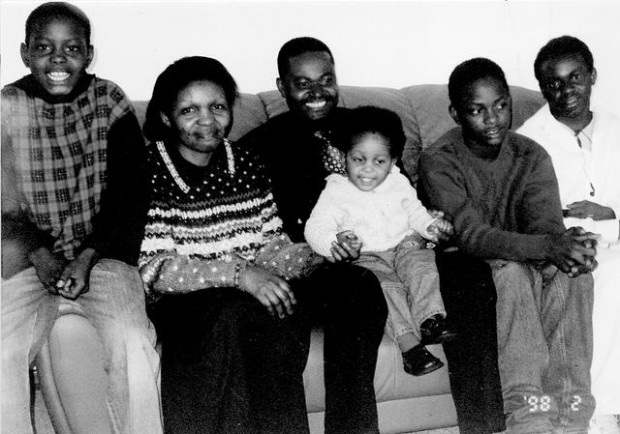
Editor's note: Although Fiston and his family are Hutu, when Hutu extremists threw Rwanda into civil war, no one was safe. Without a stable government to protect them from the mass violence and political unrest, Fiston's family decided to flee the country.
I was born in a peaceful country, until the war started.
April 7, 1994, 6 p.m.
My family and I are sitting down at the wooden dinner table, eating boiled potatoes with green beans.
"Between a chicken and an egg, which one was on Earth first?" my dad asks, adding, "I think the chicken was created first because God did not create eggs."
"But Dad, the chicken comes from an egg and grows up and makes more eggs which become chickens!"
Suddenly five angry men from the Tutsi army kick the door open and shout, "Whose house is this?"
People are also reading…
My father answers in his loud voice, "This is my house. What can I help you with?" The five army men smell like burning trees. They grab my father and hold a gun to his temple and threaten to kill him. I hear the captain say "nutaduha infunguzo turakwicana na famille yawe" ("We will kill you and your whole family").
I'm crying and screaming, "Don't kill him!" They demand that my father give them access to the bank where he works as a financial adviser. My father tells them he doesn't know where the key is. They threaten to kill him again. Finally, the soldiers leave but say they'll be back.
I knew that was the last time I would get to sleep in that big mansion my father had worked for his whole life. We were forced to run away, and this night has haunted me for a long time.
* * *
I was born in 1988 in one of the world's smallest countries, Rwanda, a country of mountains with rivers flowing between them. People live in the mountains, in houses that are made from hot burned sand. Before the war, Rwanda was beautiful and people from all over the world visited its jungles.
All of my childhood, I was treated like a prince. My parents got me everything I wanted and made sure I had everything I needed. I was 6 years old, and I had a room with my bed, my toys, and all that a kid could ever want — I had it all to myself. My family never had to walk long distances because we had cars and drivers to transport us. I lived in a world where life was just a fantasy, until the war started and life dramatically changed. Life became reality. War started for us that April night, the night the genocide started.
After hearing about the war, we immediately called my Uncle John, who still lived with my grandparents. Within a few hours, he was at our house to pick us up. We left behind our property and everything we owned, including my favorite toy, Joh, a robot my grandpa gave me. I don't remember much about the trip, but I do remember that when we got to where my grandma (nyogokuru) and grandpa (sogokuru) lived, we ate tons of the fruit that grew on the trees outside of their house: avocados, lemons and oranges. Our whole family would sit on a picnic table outside of their house and my grandpa would tell us ghost stories at night.
The genocide officially began on April 6, 1994. We knew we would have to get away from the violence, but transportation was a problem. My grandfather was paralyzed and used a wheelchair, and could not leave. I remember he told me, "I will not make that long journey." It's like he could read the future.
Beginning in April 1994, we walked until 1997. We walked like I could never have imagined. Because the bridge that led out of Rwanda toward the Democratic Republic of the Congo had been destroyed and all of the streets leading out of the country were so crowded, we had no other choice than to walk. We stopped at little towns along the way, but the longest we could stay was no longer than a week. We couldn't turn back because the Rwandan Army, and the Rwandan Civil War, were coming behind us. There were more than 200,000 of us walking, and we walked over 100 miles for three months.
During the war, intellectuals and the wealthy were targets. The Tutsi army ordered special soldiers to execute them. To survive we had to bribe these soldiers with everything we owned. We ran out of food and water, people died, diseases spread like never before. After we left our house we kept on walking, climbing up and down volcanoes. Once, we had to cross a river with a single piece of wood as a bridge. Many people didn't make it across that bridge. If you fell, you were eaten by crocodiles. But by the grace of God, my family and I made it across without a single scratch. We struggled so much that sometimes I would sit and ask myself if life was real or a nightmare. We spent seven months in the forest.
Three years later, the war cooled down and we went back to Rwanda from our camp in the Democratic Republic of the Congo, which was then known as Zaire. When we returned from the forests, we had nothing but the old, stinky clothes we had on. We found out that our house was taken by one of the soldiers and given to his grandmother. So we decided to live with sogokuru and nyogokuru. Grandpa had survived the war in his wheelchair.
The soldiers who had taken our house found out that we were still alive, and thought that we would go back to our house. Soldiers arrested my father so that he could not go and claim our house. For a month, we had no clue where Dad was. We thought he was killed, and we had cried.
One morning though, my father walked through the door. At first, I didn't even recognize him; he looked like a street kid. But I had that feeling in the pit of my stomach that told me that this man was my father. "Daddy, what happened"? I asked. He told us that he had been beaten and tortured by people of his own race.
In friendship, my father's generosity is unparalleled. My father's commitment to his friends is why I honor him and follow his ways. Before the war started, he worked at the Rwandan Commercial Bank and earned a lot of money. One day, a friend's wife gave birth to quadruplets. The family wasn't financially stable, and could not afford milk for the babies. So my father offered to sign a contract with a baby formula company, and the money for the family's milk was deducted from my father's monthly pay. He paid for the milk until our friend could afford to. I learned that I should always make friends, because I'll never know when I might need them.
We recovered financially from the war and our lives were back to normal. My father's friend found out that we were still alive and got a house for us and jobs for my parents. During the war, he'd bought a car dealership and got rich.
For what seemed like a long time, there were no bombs, no people shooting; our second home in Rwanda was calm. My dad got work at an insurance company as the senior manager in the province of Gisenyi, and his monthly pay was raised. My brothers and I got bicycles to race around the garden by our new house, we went shopping for T-shirts and jeans, and took weeklong vacations to the beach. But as they say, "Jealousy makes people nasty."
September 24, 2000, 3 a.m.
Gisenyi is still dark and freezing cold when I open my eyes and squint at the white walls of the bedroom I share with my brother. I am barely out of bed when my mother tells me and my brothers to hurry up and go get dressed. We don't respond, but put on sweatshirts and jeans. When my mom, my brothers and I walk out to the waiting SUV, the black leather seats are already warm and my father and his best friend are sitting in the front seat. The friend has volunteered to drive us on a "trip." Since my father got his new job at the insurance company, we've taken a lot of trips as a family, and I wonder where we're going this time: the beach, for a long hike in the mountains, to my grandmother's house for a weekend. But as I sit in the heat of the back seat, my parents making small talk in the front, I realize that I have too many clothes for a vacation. I lean on my brother's shoulder and sleep.
Three years of peace and freedom had come to an end.
Amazingly, we managed to get out of the country. We moved to Kenya and settled there for three months.
Life was hard. People stole too much. Even our own neighbors stole from us, just to turn around and sell our things.
On a beautiful Sunday morning at sunrise, my family and I went to church to pray before a friend's wedding. We had so much fun that we forgot about our home. With happy smiles on our faces, we went home making jokes and laughing. But when we got home, the door was open, the curtains were torn in pieces, and my clothing was lying in the doorway. Our happy faces disappeared in less than a second. I stepped into the house and what I saw was unbelievable. "Dad, did we move?" I asked, joking.
"No, you idiot!" he said. "Someone stole all of our stuff, and all the money that was hidden under my bed!"
There was nothing we could do, so we decided to leave the country and move to Malawi. We were left with nothing, and life was even harder for foreigners. We didn't speak Kichewa, and there was no second language in Malawi. We owned a little shop that sold basic grocery items like rice, sugar, soap, and toilet paper, but we had very few customers because we didn't speak the language.
After thinking about the education they wanted for me and my brothers, my parents decided to leave Malawi. We journeyed to South Africa, where we started over yet again. South Africa is where I spent most of my teenage life. We had free education, and free health services. My parents were unemployed, and if anyone asked me how we survived, I wouldn't know what to tell them.
In 2002, my parents received great news from one of the United Nations employees. They found out that we could apply for resettlement in any overseas country. My aunt already lived in the United States, and worked for one of the organizations that help bring refugees to the states. But we knew it wouldn't be easy. The U.N. took three years to research us and make sure that we were "safe." Bringing my family to the USA was my father's dream.
For three years we waited for the U.N. to give us the good news, the news that would put my father's mind at ease. Finally, my parents received the good news that we would be leaving for the USA in two weeks. The time passed by so fast that we felt like we didn't have any time to prepare for the journey.
July 13, 2005, 8 p.m.
My family and I are sitting at a café in the Johannesburg airport in South Africa, smiling with a group of our best friends for the last time. My mom's eyes are filled with tears of happiness, but I know she misses her friends already. My father stands to the side, making the last phone call to another of his best friends.
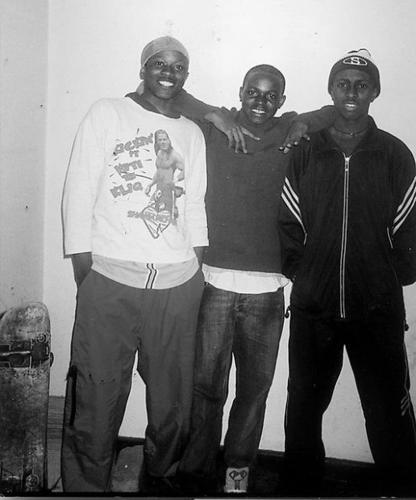
My best friends Rico and Robert have come to send us off, and we start to talk about our experiences at church camp every December. We talk about the sports we played (soccer, basketball, rugby) and the food we ate (potato salad), the fun things we did when we met new people (skateboarding, shopping at the mall). As the memories flow, I start to cry. I wonder how much I will miss them, and if I'll ever have best friends like them again.
Amid the noise of people departing and coming home , my brother snaps the last photo I take with my best friends. "Hush, hush everybody!" someone says. We hear a voice over the loudspeaker announce our flight.
"Do you know what that means?" someone else says. "Time to say goodbye, time to wish each other the best with life, and time to make a promise." Rico, Robert and I promise each other never to get involved in anything illegal.
After a three-day trip that first took us to London, my beautiful aunt Pauline was waiting at the Tucson airport for us. She had a bunch of roses for her sister, my mom, who she had not seen for 10 years. As soon as we arrived, Aunt Pauline took us to the apartment she had prepared for us.
Once in the apartment, I opened the fridge and looked for some water. Instead, I found so many different types of sodas. My aunt had bought food so that we could come home and rest without cooking. We felt like we had died and risen again.
Now we are here together, as a family of seven. My three brothers, both of my parents, my aunt, and me. My father got a job during his first month here. He saved up and got to buy his own car for the first time in 10 years.
My brother John and I started school at Catalina Magnet High School, and my other brother Hugue goes to school at Townsend Middle School.
As I sit here writing this, I'm thankful to God that I'm still alive. I'm thankful for what I went through because if the war had not happened, there would be no man in me.
Thanks to my parents who never gave up on me and my brothers. Thanks to my aunt who helped us through our hard financial times. I will repay you by making you proud of the work you did raising me.