

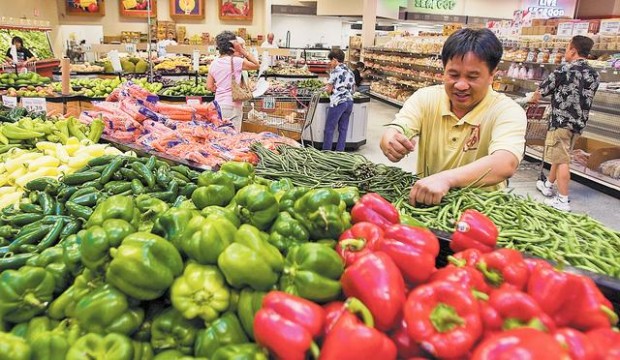
Lee Lee Oriental Supermarket may not generate the same urbane consumer rush as the coming of an Ikea, REI or Nordstrom store, but when the international ethnic grocery opens its doors in Tucson later this month, it will have them beat for exotic taste.
A visit to the supermarket, being built in a former Food 4 Less at 1990 W. Orange Grove Road, will be more like an expedition than a shopping trip, based on the description given by Kevin Ho, who is setting up the Tucson store.
It's easier to name the continents whose cuisine won't be represented than those that will. Groceries will be organized by regions as follows, the Phoenix-based markets' Web site says:
• Thai, Laos, Cambodia
• India, Pakistan, Bangladesh, Middle East
• South America, Brazil, Argentina, Colombia, Jamaica, the Caribbean
People are also reading…
• Philippines
• Indonesia, Holland, Malaysia, Singapore
• Japan
• Korea
• China, Vietnam
There also will be halal-certified foods for Muslim shoppers, Ho said.
And as in the budding chain's Chandler and Peoria supermarkets, the store will be looking for more products to add to the shelves, Ho said.
"Customers will bring in a box and say, 'I like this brand.' We try to find for them," Ho said.
Ho is a Cambodian refugee, like most of the people involved in the company. He said finding ethnic food for people is what Lee Lee Oriental Supermarket is all about.
"This is a country of immigrants," Ho said, adding that he was one of the Cambodian "boat people" who came to the United States in 1988, when he was 18.
Started with small Mesa store
Owner and founder Meng Truong, also a Cambodian refugee, said he found he couldn't get the ingredients for his homeland's food when he came to the United States in 1981.
He worked briefly in a Phoenix-area electronics store and then opened a small Asian grocery in Mesa, before opening a larger store in 1992. He and his wife and family opened another store in Peoria in 2008.
"When we first opened — I'm a truck driver, too — I drove the truck to L.A. and (would) bring the stuff back to Arizona" every week, Truong said.
Today there are daily truckloads from Los Angeles to the Lee Lee supermarkets, but the hauling is now done by commercial trucking firms.
Truong said 80 percent of the stores' products come from Los Angeles, where importers bring them in from around the world. The major exception is meat and poultry, which Truong and Ho said they source in Arizona.
Much work to be done
A lot of work remains if the Tucson store is to open in late August, as planned. The shelves that line 18 aisles are set up but not stocked. The open freezers and refrigerated cabinets are in place but not yet running.
The glass-fronted fresh-meat and fish counters appear ready.
A pair of massive 8-by-12-foot plastic tanks are empty, though they will hold live freshwater and saltwater fish.
Nearby is a big stainless steel fryer.
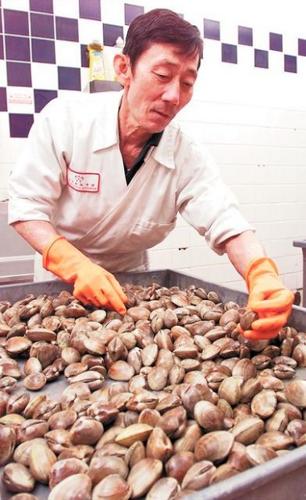
The 52,000-square-foot supermarket will offer shoppers a chance to point out a live fish and have it cleaned and fried seconds later.
There will be whole pigs and ducks spinning on barbecue spits.
There will be wild vegetables and jungle fruits with names most of us probably can't pronounce.
Chef Janos Wilder is interested
Well-known local chef Janos Wilder — owner of Janos and J-Bar — welcomes the new hunting grounds.
"I'm a denizen of these places," Wilder said of farmers markets and ethnic grocery stores.
"I'm pretty enthusiastic about it. Anytime you get more of those things where you have more variety of things to choose from, that's great for me."
Wilder said he doesn't like to order exotic ingredients unseen.
"I much prefer to go to markets. I can look at the products. … The Asian markets just have such interesting things.
"I'll be there."
"Bad time to expand"
Truong said he was concerned about expanding during the recession, but he couldn't wait.
"It's a bad time to expand, but we have to do it. We have more competition coming in, in Chandler and Phoenix," Truong said.
So he said it was the right time to get into Tucson.
Truong said the Tucson store, like those in Peoria and Chandler, will employ about 100 workers. Some of the positions, especially high-skilled jobs such as butchers, will be filled by workers transferring from the Phoenix-area stores. But he said the store is hiring for other positions daily.
DID YOU KNOW
At the time of Arizona statehood in 1912, there were 52 grocery stores in Tucson. Fifty of them were operated by Chinese grocers. The Chinese population here at that time was between 500 and 600.
In 2007, according to Census Bureau estimates, there were more than 28,700 people of Asian ancestry in Pima County.