

The remnants of an ancient civilization will be showcased as an archaeological jewel in a modern development of luxury condos, houses, shops and restaurants in Oro Valley.
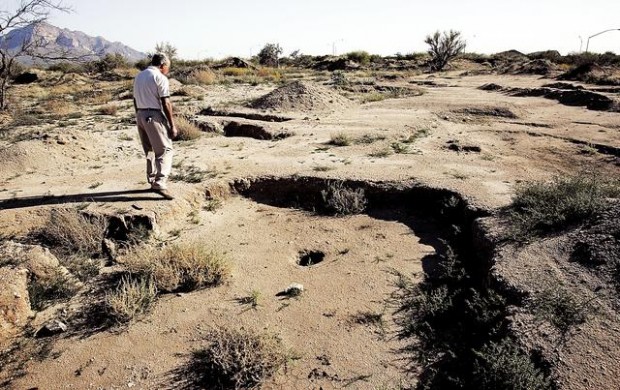
The developer of Vistoso Town Center, a planned 87-acre community in Rancho Vistoso, wants to make the most of the site on which a Hohokam village once thrived.
"I'm very interested in archaeology and the past of the Southwest, so I was very excited to acquire a piece of land that had such a significant archaeological value," local developer Steve Solomon said.
Area archaeologists say Honey Bee Village beneath the land dates to about 500 A.D., when the Hohokam first settled along the Honey Bee Wash in the Cañada del Oro Valley.
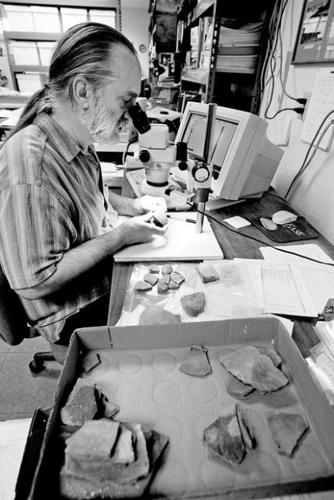
"This site is quite significant because it will provide us with a fuller picture of Hohokam life than we've had before," said Henry Wallace of Desert Archaeology Inc., the Tucson company doing the archaeological work on Honey Bee Village.
People are also reading…
Archaeologists say the site was home to the Hohokam until about 1200 A.D.
First recorded in the late 1970s, the village sat largely undisturbed for years, as new housing sprouted on top of other archaeological sites.
Even as some eyed the site for potential development, the fate of Honey Bee Village would be different. By the time Solomon bought the land in 2005, after two years of discussion with the previous owners, efforts already were under way to preserve it.
In 2004, Pima County voters approved a $1 million bond issue to buy the site, but officials later deemed it unaffordable. Instead the county, Solomon and Oro Valley entered into a contract in 2006.
Solomon agreed to donate the village's 13-acre core to Pima County for preservation. The county then used the $1 million to pay for archaeological work on the surrounding land where Solomon's Vistoso Town Center will take shape.
Pima County eventually will turn over to Oro Valley the 13 acres, the former hub of the village, which contains a plaza, a ball court and numerous pit houses.
Members of the Tohono O'odham Nation, considered likely descendants of the Hohokam, also have been involved in the Honey Bee Village Preserve project.
Tribal Chairman Ned Norris Jr. and other O'odham recently took part in a blessing and dedication ceremony of the 13-acre preserve, which is east of North Rancho Vistoso Boulevard and south of the Moore Road alignment.
Human remains found at the site have been turned over to the tribe for proper reburial, said Tony Burrell, head of the Cultural Resource Office in the nation's San Xavier District.
Burrell said he would prefer that such ancestral sites as Honey Bee Village — which the Tohono O'odham view as sacred — could be left undeveloped.
But he said he is a realist and knows growth is inevitable.
Some developers and local governments now seem more willing to work toward striking a balance between development and preservation, as well as getting the tribe involved, Burrell said.
At Honey Bee, the tribe also has had a chance to become involved in the decision-making process.
"We were able to contribute to the discussion about what would be appropriate for display," Burrell said.
The tribe also gave $206,500 toward a $480,000 wall that Oro Valley placed around the preserve, said Scott Nelson, the town's special-projects coordinator.
Pima County's Loy Neff said Solomon's eagerness to preserve the land is uncommon.
"The scale of participation by the land developer is pretty exceptional," said Neff, program manager in the county's Cultural Resources and Historic Preservation Office.
"There had been previously some other examples, but they were nowhere near this scale."
For Solomon, the preserve represents an opportunity to incorporate his passion for the region's heritage into what he says will be a unique development in the area.
When the development's 10-acre commercial plaza is completed in mid-2010, it will serve as the main entry to the 13-acre preserve.
Eventually, the site will open to the public and include signage with interpretive trails, Solomon said.
Even though houses will be built above portions of the Hohokam village, Solomon said he's pleased that all parties involved worked toward the common goal of saving the core.
He also modified his development plans to preserve other interesting features, including a horno, or roasting pit.
"We may use it for demonstrations to show people how the Hohokam roasted agave in the same pit 1,000 years ago," Solomon said, noting that some of the pit houses will be unearthed for exhibition.
His development also will include a museum and visitors center in the commercial plaza, where he hopes to display some of the recovered artifacts.
Hohokam designs will be part of the development's architecture.
The archaeological significance of the site will serve to enhance the Southwestern-style subdivision's rooftop views, Solomon said.
"This is not a cookie-cutter subdivision," he said.
"I think there are plenty of people who cherish the idea of living in an archaeological site."