

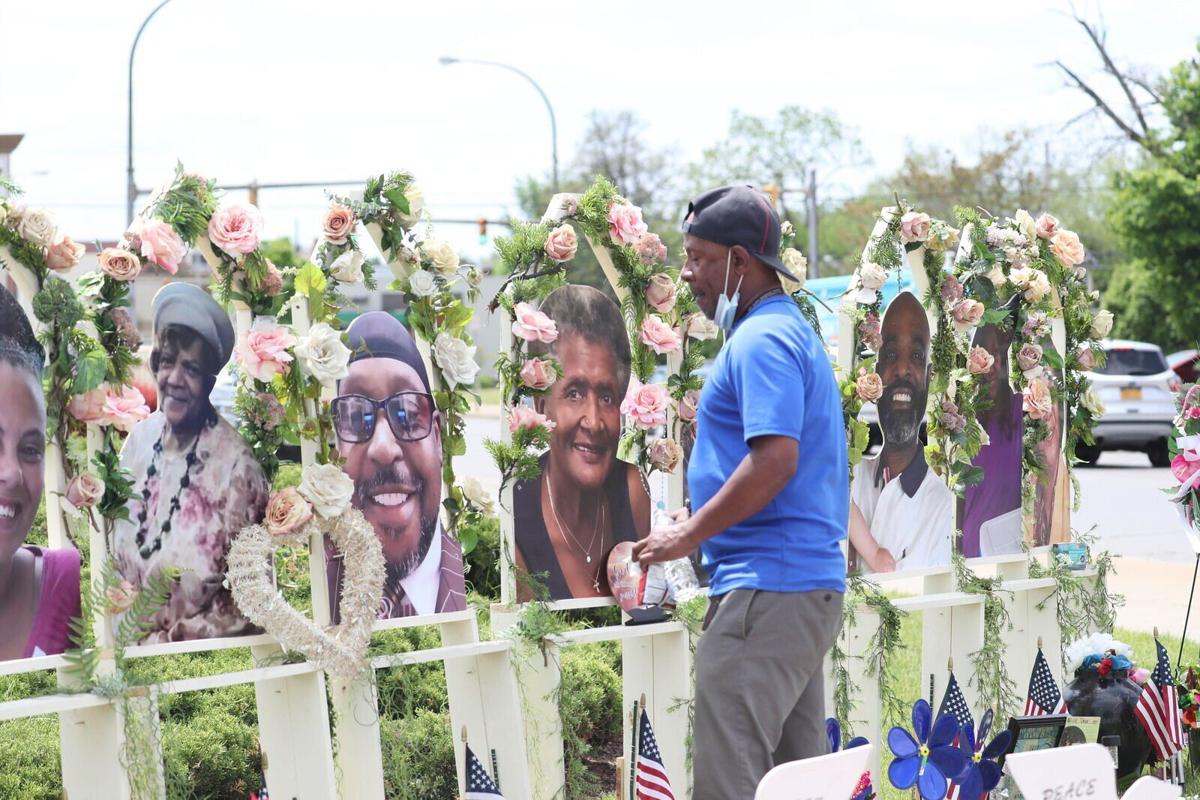
The donations – from individuals giving $10 to $20 and corporations pledging six figures – add up to $3 million worth of commitments aimed at helping the community recover from the racially motivated mass shooting at a Tops supermarket.
Now the Buffalo Together Community Response Fund is preparing to put some of that money into the hands of recipients, with $560,000 worth of grants going to 70 Black-led organizations.
“We felt very strongly that we needed to get out an initial round of funding with whatever support we had in hand, to support Black-led organizations that have a meaningful and long-term presence in the Jefferson Avenue community,” said Clotilde Perez-Bode Dedecker, the Community Foundation’s president and CEO. “These have been the individuals that have been on the front lines of responding and coordinating the appropriate response from the community they are a part of.”
People are also reading…
The Community Foundation and the United Way of Buffalo and Erie County are coordinating the Buffalo Together fund, which is a collaboration of 15 organizations.
The fund’s purpose is to address community needs beyond those of the victims of the mass shooting. A separate fund, the Buffalo 5/14 Survivors Fund, is addressing the victims’ needs.
Nearly 50 local and national corporations and foundations have made commitments to the Buffalo Together fund, and more than 1,100 individuals have donated by check or online.
“Convening partners and activating resources in the face of community crisis is what United Way was built to do," said Michael Weiner, president and CEO of the United Way of Buffalo and Erie County. "These initial investments are the first step in a community-led process of listening, learning and rebuilding, made possible by an outpouring of generous support from our community."
Fund organizers chose the 70 organizations to receive the initial grants with assistance from community representatives, elected officials and the funders’ existing networks. The grants range in size from $5,000 to $20,000, and will be distributed in the coming days.
Those grants represent the starting point of the Buffalo Together fund’s work. It still has about $2.44 million worth of commitments and donations, and continues to accept contributions.
Fund coordinators said three areas of attention they have identified are “providing important support with a focus on Black-led organizations that are working directly in the community; ensuring availability of mental health services; and addressing longer-term, systemic issues of racial justice.”
The fund will “take the long view in due course, and with urgency, even as we move money to the front lines right now,” Dedecker said.
Many of the partners in the Buffalo Together fund also worked together on the Western New York Covid-19 Community Response Fund, which awarded over $14 million to over 400 nonprofits, she said.
Henry-Louis Taylor Jr., director of the Center for Urban Studies at the University at Buffalo, applauded how the first wave of grants are supporting groups responding to immediate community needs brought on by the mass shooting.
“But these are not issues that are going to change the realities of Black Buffalo,” Taylor said. “They’re not issues that are going to touch the root problems that this community is facing.”
Taylor said substandard housing on the East Side is an issue that ought to be at the top of that list, from poor-quality living conditions to “rent gouging” that consumes upward of 60% of a resident’s income. Those poor living conditions make it harder for school-age children to thrive, and often forces them to change residences during a school year, he said.
Taylor also wants to see more “green infrastructure” on the East Side, in the form of trees and bushes to cleanse the air against emissions from gasoline-powered vehicles traveling through the neighborhoods, especially on the Kensington Expressway. Those conditions lead to respiratory illnesses like asthma.
The East Side would benefit from more on-the-job training programs, to create clear employment pathways, he said, a publicly financed community land trust for the East Side would safeguard against “speculation gentrification” by developers.
Grants applied to purposes like those would serve as “seed money” for transforming the East Side, given the massive financial commitment necessary to make far-reaching changes, Taylor said. “But it has to be done by the people who live there.”
In this Series
Complete coverage: 10 killed, 3 wounded in mass shooting at Buffalo supermarket
-
Updated
Hochul pledges pursuit of justice after shooting, calls on sites to crack down on white supremacist content
-
Updated
Sean Kirst: In Buffalo, hearing the song of a grieving child who 'could not weep anymore'
-
Updated
Recently retired police officer, mother of former fire commissioner both killed in Tops shooting
- 249 updates

