After 78 years of farming and 61 years of pecan growing along the Santa Cruz River south of Tucson, Farmers Investment Co. is calling it quits.
The company has agreed to sell its land and all other holdings to an out-of-state partnership. Final closing of the deal is expected this month, FICO officials said. Brian Driscoll, FICO's CEO and president, said the company won't reveal the names of the new owners until then.
The sale brings to a close the reign of the Walden family over the property, in which former FICO president Richard Walden and his father Keith transformed it from a cotton farm once owned by the Queen of the Netherlands into one of the largest pecan groves in the world.
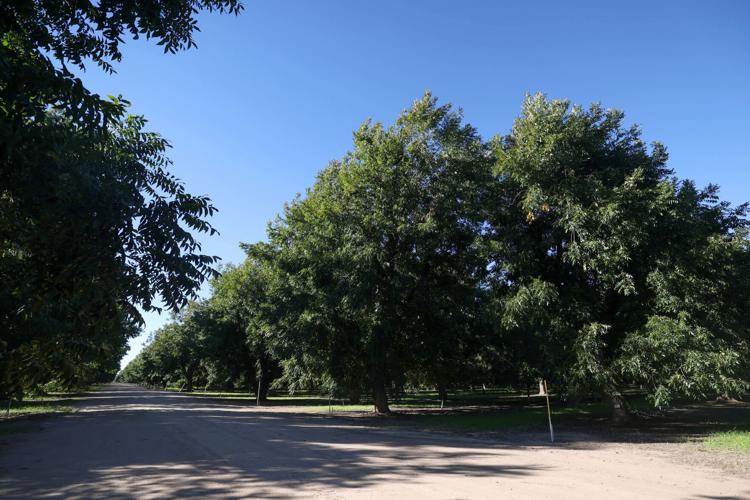
Today, FICO's groves occupy 4,483 acres in the town of Sahuarita and the nearby unincorporated community of Continental. Under Keith Walden, FICO bought the Sahuarita and Continental Farms in 1948 and converted them to pecans in 1965.
People are also reading…

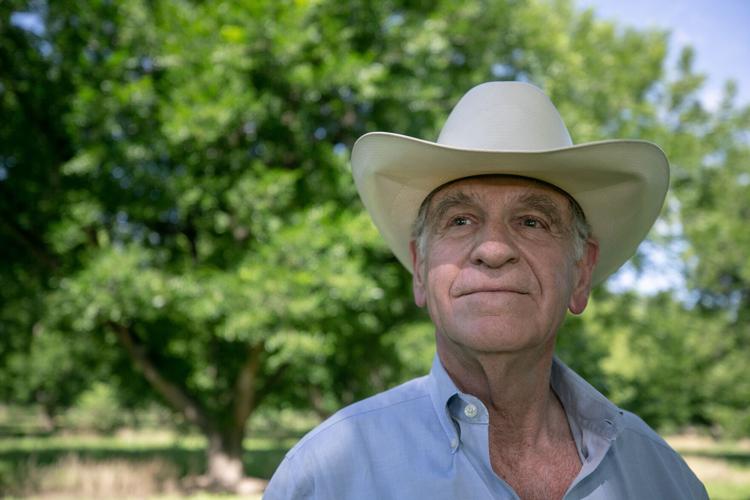
Richard Walden, shown here in 2018, and his father Keith Walden transformed vast acreage in the Sahuarita area from a cotton farm once owned by the Queen of the Netherlands into one of the largest pecan groves in the world. After 61 years of growing pecans there, the Waldens' Farmers Investment Co. FICO has agreed to sell its land and all other holdings to an out-of-state partnership.
FICO also grows pecans on another 3,652 acres it owns in the town of San Simon along Interstate 10 just west of the New Mexico border.
The company is actually a partnership of the Walden family and Chicago-based Henry Crown and Co., although the Waldens have been FICO's public face.
And while the groves remain profitable and employ 86 people total in Sahuarita and San Simon, the company's imprint on the region is far broader than the growing of pecans.
Water fights
At least since the 1960s, the Waldens have been big players in regional water and other environmental issues in southern Pima County.
Keith Walden was in the 1960s a staunch advocate for bringing Central Arizona Project water from the Colorado River to the Tucson area, including the groves, via a canal that would be paid for by the federal government, and repaid by farmers and cities receiving the water at no or low interest, respectively.
But FICO was one of the first of many Arizona farming operations to decline to actually buy the CAP water when it arrived in the 1980s, due partly to its higher cost than groundwater.
Since 2020, however, the pecan groves have been taking CAP water via a pipeline from CAP's terminal just south of Tucson that FICO and the Freeport-McMoRan mining company jointly paid $17 million to build.
In 1976, FICO won a landmark Arizona Supreme Court ruling that led directly to passage of the 1980 Arizona Groundwater Management Act, by threatening to halt groundwater pumping by mines and the City of Tucson in the vicinity of the groves.

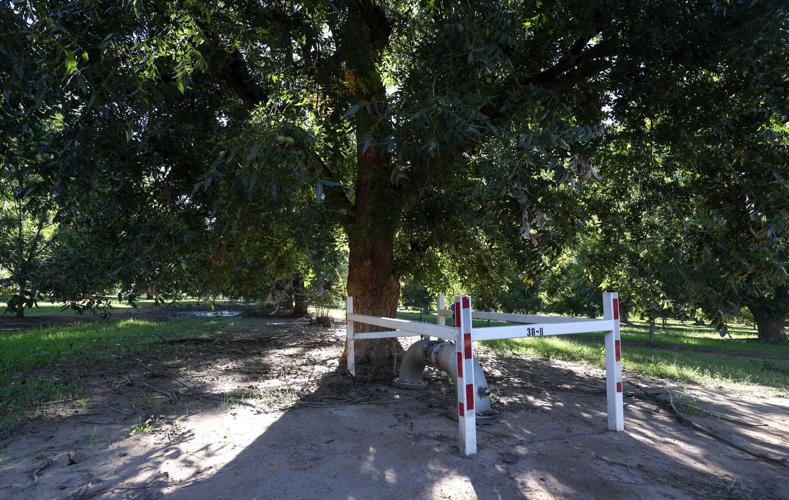
The watering system inside FICO's pecan groves. At least since the 1960s, FICO's owners, the Waldens, have been big players in regional water and other environmental issues in southern Pima County.
Thirty years later, the company took on the mining industry once again, by opposing construction of the proposed Rosemont Mine and later the Copper World mine in the Santa Rita Mountains by Canada-based mining companies.
In both disputes, the Waldens were competing with the mining companies for the use of groundwater. But in the case of Rosemont and Copper World, the family has said it was also concerned about the mines' potential to seriously damage the Madrean forest ecology of the Santa Ritas.
Today, the latter fight continues, although Hudbay Minerals says it's ready to start construction soon on Copper World and it's highly unclear if the Waldens or any other opponents can stop it.
‘It's time to sell’
And now, a key factor driving the Waldens to sell their groves is economics, said Driscoll, FICO's CEO. While the company's profits have been largely stable over the past 5 to 10 years, the operation has been burdened by rising costs for almost every aspect of its operation — supplies, labor, fuel and fertilizer, he said.
"Agricultural commodity prices are not keeping up with costs for anything," he said. "Rising fuel prices drive up fertilizer prices. Overall, with the economics as they are, it's time to sell."

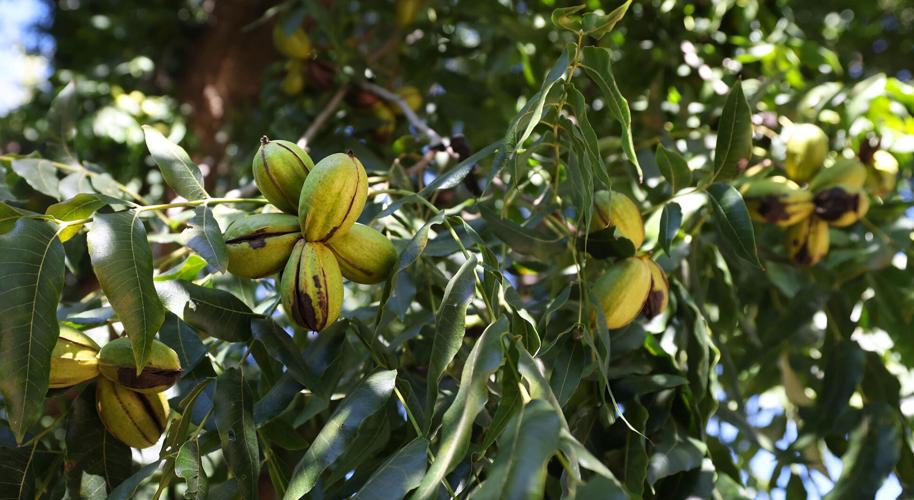
Nutlets growing in Farmers Investment Co.'s Sahuarita pecan groves. FICO's groves occupy 4,483 acres in the Sahuarita and Continental areas south of Tucson.
Timing is another factor, he said. The shareholders in both the Walden and Crown families are aging, he said, "and this is the time they have an opportunity to sell."
Richard Walden, who left FICO's CEO post last year but remains executive chairman and sits on the company's board of directors, is 84. His wife Nan, FICO's vice president and counsel, is 72. They split their time now between living on a ranch they own in Amado south of Tucson and a home in Santa Ynez, California, near Santa Barbara. Keith Walden died in 2002 at age 88.
"The Walden family, along with our original partners, the Crown Family, have been privileged to be stewards of the land in what is now Green Valley and Sahuarita since 1948," the Waldens said in a statement. "Our children and grandchildren, along with 3-4 generations of wonderful employees, have worked this land together. Only 1-2% of us in America are farmers and ranchers. Yet we feed our country and the world.
"It has been a difficult decision for our family and partners to sell these farms. But we know it is the right decision for this time. We have confidence in the buyers. They are experienced in growing pecans and other kinds of agriculture. They understand our traditions and culture. They have assured us that they will employ many of our existing employees, and we have provided severance for those who choose to leave or retire."
No employees are expected to be laid off as a result of the sale, although some will leave voluntarily, Driscoll said.
Since 2020, FICO has gradually shifted much of its water use to CAP water, thanks to the pipeline. It has also gradually replaced the use of flood irrigation of the groves by water traveling in ditches to the use of sprinklers. Sprinkler irrigation typically results in about 10% less water use than flood irrigation, the Waldens said. They've converted as many as 250 acres a year from flood irrigation to sprinklers.

FICO's owners say, "The Walden family, along with our original partners, the Crown Family, have been privileged to be stewards of the land in what is now Green Valley and Sahuarita since 1948. Our children and grandchildren along with 3-4 generations of wonderful employees have worked this land together. Only 1-2% of us in America are farmers and ranchers. Yet we feed our country and the world."
While FICO actually used more total water in 2025 than it did in 2020, its pumping of groundwater has dropped nearly 60% in that time, state records show. The total water use had dropped from about 20,000 acre-feet a year to about 18,000 by 2024.
But it rose to more than 21,000 in 2025 because of that summer's extreme heat, said FICO spokesman David Steele. An acre-foot is enough to serve four Tucson-area homes with water for a year.
"We are proud that we have taken the steps to conserve our groundwater and enable the new management to farm sustainably into the future," the Waldens said in their statement.
‘There is a lot of money in real estate’
The long-term future of the groves remains unclear.
A development plan for a massive, master-planned community featuring thousands of acres of homes along with commercial and mixed-use development was approved for the northernmost acres of the groves by the Sahuarita Town Council in October 2015. But the Waldens acknowledged at the time that not only did they not expect housing demand to reach that area for at least a decade, but that they wanted to keep farming for at least that long.
The Sahuarita Farms master plan calls for 1,900 acres of housing, 1,100 acres of businesses and 2,400 acres of various mixed-use projects that would combine residential and commercial development. About 1,400 acres, or 26% of the entire property, will be set aside as open space.
A separate plan covering the groves' southernmost 1,100 acres, along Continental Road in unincorporated Pima County, was approved a year earlier by the Pima County Board of Supervisors. That plan called for another 1,900 homes, along with several businesses and offices, with two-thirds of the property to be set aside as open space.
Today, the groves lie near other, fast-growing parts of Sahuarita, suggesting that they could become ripe for development in the near future, a real estate salesman said.
"The pecan groves site, it is a potential premium area for homes. The housing market, honestly, may be a little slow right now due to high interest rates, but you're seeing a little bit of prices coming down. They’re still building. New homes are still a hot item," said Jose Figueroa, a real estate agent who is active in the Sahuarita area. "I think the groves are already being seen as a potential site for development.
"I honestly don’t know how much money is in the pecans. I know there is a lot of money in real estate," Figueroa added. "I wouldn’t be surprised if somebody makes that move to develop within 5 years, unless pecan prices are super good."
One obstacle to the development that will cost lots of money to overcome is that 95% of the groves lies within the 100-year floodplain, said Tim Campbell, FICO's land resources director. That means developers will have to come up with some kind of engineering scheme to take land out of the floodplain to make it developable.
The groves cover about two-thirds of FICO's entire Tucson-area holdings of 6,600 acres. Between them, the company's Sahuarita and Continental farms span a total of about 10 miles along the river.
FICO had plans to carry out a massive excavation of all the dirt in the riverbed that lies above its lowest point, said Campbell. That would effectively take the groves out of the floodplain, he said.
The excavated land would be placed on top of the river banks. The river channel that remains would be wide and deep enough to accommodate all the water that would flow during a 100-year-flood, Campbell said.
Today, the market in the Sahuarita area for new homes is strong enough that if the pecan groves weren't in the floodplain, there would be houses on that property, said Linda Morales, a longtime private consultant who directs the Planning Center. It's a Tucson planning and architecture firm that designs developments for the private and public sectors.
But no effort has been made so far to take the pecan groves out of the floodplain because the Waldens haven't been ready for it, Campbell said.
"They are farmers. They like to farm. That’s what they do," Campbell said.
As for the new owners, FICO's Driscoll couldn't speculate as to when they might want to develop the groves.
"They're pecan people," was all he could say.
Contact Tony Davis at 520-349-0350 or tdavis@tucson.com. Follow Davis on Twitter@tonydavis987.

Tony Davis
Reporter