

GLOBE - "Fire in the hole."
As Manuel Cruz uttered those words into his cellphone, explosives experts on the other end of the line set off dynamite in two abandoned mine shafts on park land just outside of town.
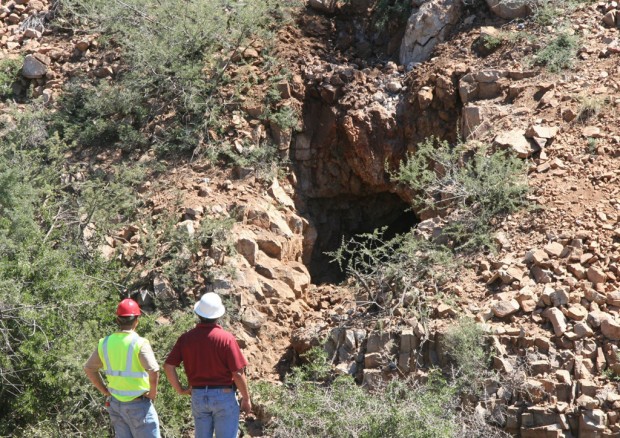
With two quick blasts, dirt and rocks filled the mines - one an upright entry into the hillside and the other a gaping hole in the ground.
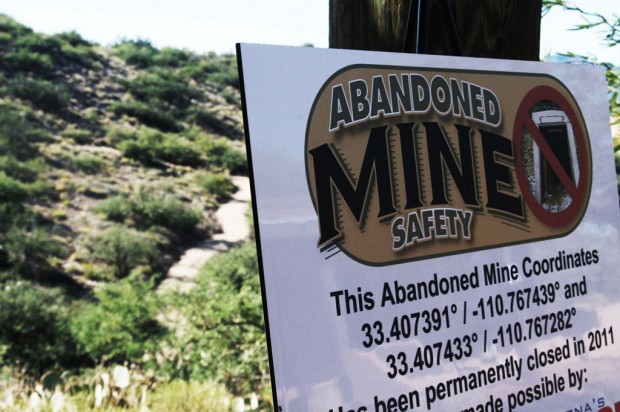
The city of Globe worked with Cruz, executive director of the nonprofit organization Abandoned Mine Safety, to fill in the shafts because they were just feet from a hiking trail and an easy walk from an elementary school.
Cruz, who ran unsuccessfully last year for state mine inspector, said he started the nonprofit because of the danger posed by thousands of abandoned mine shafts scattered throughout Arizona. The State Mine Inspector's Office has only enough funding to close a small fraction of those mines each year, making it important for private groups and companies to step forward, he said.
People are also reading…
Cruz's group relies on private contributions. A donation from Tucson-based Rosemont Copper helped close the two mines here.
"Somebody has to do it, so private industry is going to have to step up," said Dennis Fischer, project site coordinator for Rosemont Copper. "I think it's an important thing to do, and we'll continue to support this organization."
Arizona law requires that abandoned mines be fenced off and marked, but State Mine Inspector Joe Hart said it's crucial to do more.
"In my way of thinking, that's not adequate," Hart said. "I've got an 8-year-old grandson who could reach any 4-foot barbed-wire fence. I want to fill them up."
Hart's office estimates there are about 100,000 abandoned mines in Arizona. About 10,000 have been pinpointed, and the vast majority of those are considered threats to public safety.
The reasons for closing abandoned mines may be simple, but the process for doing so is anything but.
It starts with money, which is in shorter supply due to the state's budget woes.
Laurie Swartzbaugh, deputy director of the State Mine Inspector's Office, said that of a $1.2 million budget, about $180,000 goes toward salaries and other costs associated with closing abandoned mines each year. With some private donations added to that budget, Swartzbaugh said, the office closed 146 mines in the last fiscal year.
"I think we've done a doggone good job, considering what we had to work with," Hart said.
Hart said the paperwork necessary to protect contractors from liability when they close mines can take six to seven months.
Hart said he applauds Cruz's efforts but worries that private groups may not take all the necessary precautions or be able to guard against lawsuits.
"There's just a huge amount of liability, and it takes an awful lot of insurance to do it properly," Hart said.
Rep. Russell Jones, R-Yuma, who has made abandoned mines part of his legislative agenda, said, "It does need to be coordinated through the state mine inspector."
In addition to working with private groups, Jones would like to see the state prioritize dangerous mines to eliminate the most dangerous first. He also said Arizona could use prison inmates to reduce labor costs.
Mine safety do's and don'ts
• DON'T play in or explore abandoned mines.
• DON'T play around active mines.
• DON'T jump into quarry pits or ponds in or around mines.
• DON'T swim in rock quarries or gravel and sand pits.
• DON'T climb on rock or gravel piles in mining areas.
• DO notify authorities if a mine site is unmarked.