

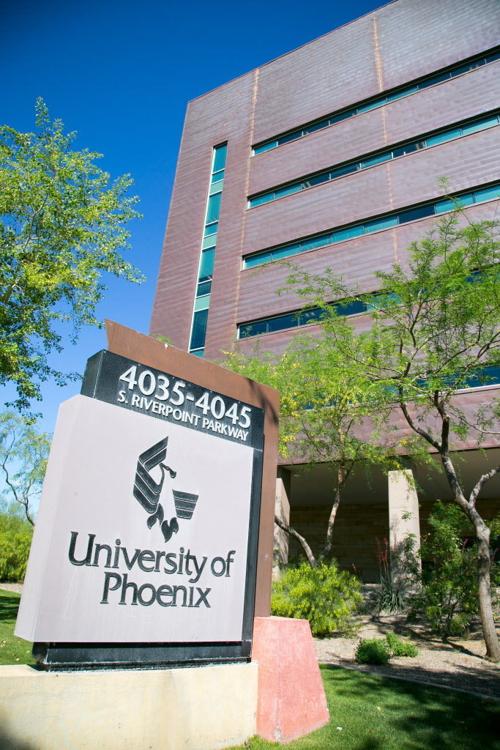
PHOENIX — Top executives of the Phoenix-based Apollo Education Group could divide nearly $22 million in cash and stock awards from the sale of the struggling company to private investors in a deal with few alternatives, financial records show.
The parent to the University of Phoenix acknowledged in a filing Tuesday that it looked for more than a year for a financial lifeline from Apollo Global Management, the unrelated New York-based equity firm that is now trying to buy the Apollo Education Group. A hostile regulatory environment and diminishing returns for investors have narrowed Apollo Education’s options, the company said.
Apollo Education’s CEO, Greg Cappelli, could collect $4.2 million in cash and $3.1 million in equity and other benefits from the potential deal, according to “golden parachute” compensation details filed Tuesday with federal regulators.
People are also reading…
The company hopes to finalize its sale by the end of the year in a deal that would pay investors $9.50 per share, or about $1.1 billion in all. Investors once had more than $14 billion staked in the company.
Apollo Education’s board of directors supports the sale while its largest shareholder, Schroders PLC of England, has previously signaled its opposition.
Apollo outlined details of the proposed deal in a 349-page filing to the Securities and Exchange Commission.
The filing outlines the financial squeeze Apollo Education operates under due to the looming expiration of its credit line, a recent $70 million loss in business value and a worsening score the U.S. Department of Education uses to permit access to taxpayer-backed student loans.
The records show that while Apollo Education has cash stockpiles, much of it could be obligated to manage its operations in the future. Cappelli has already forecast a smaller university, with enrollment expected to dip to 140,000 by next year. Six years ago, the school had more than 470,000 students.
Apollo Education’s stock has plummeted along with its enrollment. The company is only the biggest to fall in an industry that has lost more than $25 billion in shareholder value in recent years.
