


July 1, 1983:
About 2,400 Phelps Dodge workers go on strike at the then-New York-based company's operations in Ajo, Bisbee, Douglas, Morenci and El Paso.
What the strikers say:
Labor contract must include the continuation of cost-of-living adjustments to cope with double-digit inflation of the last three years.
What the company says:
With copper selling for less than what Phelps Dodge can produce it for, the company must cut labor costs to survive.
Price of copper:
The annual average price is 77 cents per pound.
Economic conditions:
The U.S. Misery Index - the unemployment rate combined with the rate of inflation - is 12.82. It was 15.87 the previous year.
People are also reading…
Picket lines:
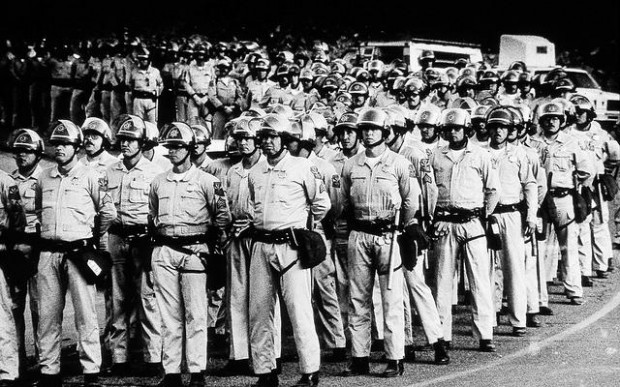
Hundreds of striking workers line the entrance roads at mines in Ajo and Morenci, shouting obscenities and hurling rocks at nonstrikers, who are escorted into the mines by officers from the Arizona Department of Public Safety and later by National Guard troops.
Violence:
July:
A strikebreaker is punched in the face after work by a union supporter. Three weeks later, the 3-year-old daughter of a known strikebreaker is shot in the head while sleeping in her father's home in Ajo. She survives the shooting. The shooter is never identified.
August:
Ten Ajo strikers are arrested on charges of felony rioting.
January 1984:
Two unidentified men fire shots into the Morenci home of a local union president; no one is injured.
June 1984:
16 people are injured and 20 are arrested at a rally in Morenci, with DPS officers firing tear gas into the crowd.
Replacements:
Phelps Dodge hires hundreds of replacement workers within a month of the strike.
Outcome:
In January 1985, all 30 local unions involved with the strike are officially decertified. The strike officially ends Feb. 19, 1986, after decertification appeals are rejected by the National Labor Relations Board.
July 1:
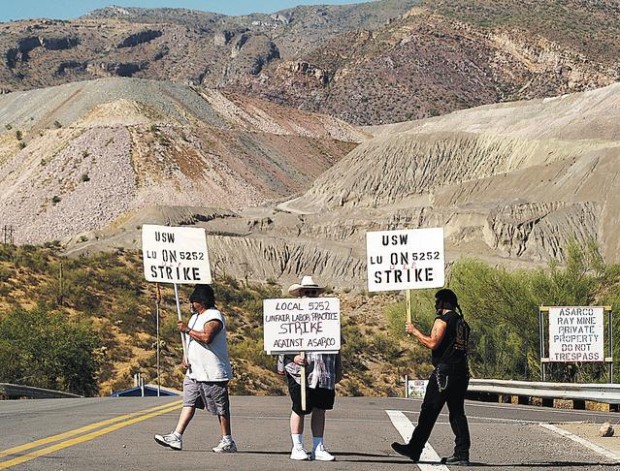
About 1,500 workers of Asarco LLC begin striking at five Arizona operations and a Texas refinery.
What the strikers say:
Asarco's refusal to budge on demands to freeze wages and cut medical and pension benefits constitute unfair labor practices, particularly when the price of copper is so high.
What the union says:
Asarco is a high-cost operation due to maintenance costs and environmental liabilities, and must cut costs to make the company profitable.
Price of copper:
The spot price currently hovers near $1.60 per pound.
Economic conditions:
June rates for U.S. unemployment (5 percent) and inflation (2.5 percent) would combine for a Misery Index of 7.5, while the index for 2004 was 8.21.
Picket lines:
Pickets at Asarco operations usually comprise fewer than a dozen workers who follow strict union guidelines on picketing procedures. Signs must be union-approved and strikers must hold signs straight up, not out, and picket and park their vehicles in the easement between streets and Asarco property.
Violence:
Law enforcement officials report no strike-related problems.
Replacements:
Asarco has not hired replacement workers. The company continues to use salaried, non-union employees at its operations and has shuffled workers from its various operations to its Hayden Smelter, which is currently operating at about 55 percent capacity, said Asarco CEO Daniel Tellechea.
Outcome:
As of today, the Asarco strike is 16 days old.