

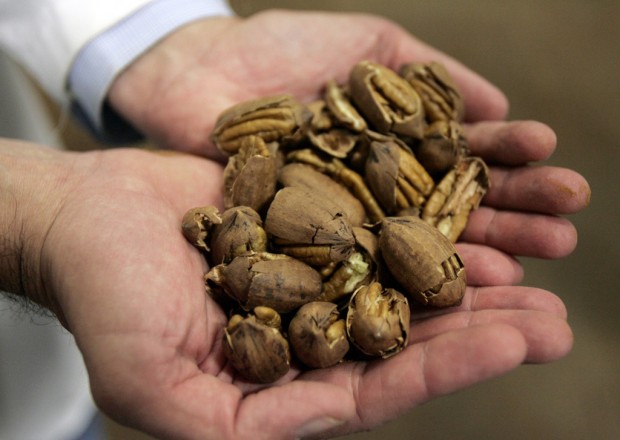
The price of pecans is going up thanks to booming demand in China for the all-American nut, with prices for in-shell pecans nearly doubling over the past three years.
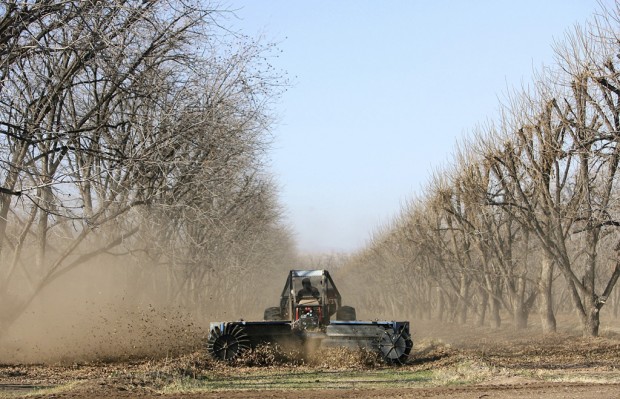
That would seem to bode well for Farmers Investment Co., Southern Arizona's own pecan titan, which grows the nuts on 4,500 acres of groves south of Tucson as the Green Valley Pecan Co.
But while other growers have rushed to embrace the emerging economic
power, FICO executives say exports to China make up only a small part of their company's business - less than 10 percent.
"We've kept a real pulse on the industry in China, but we haven't jumped in blindly, or feet first," said Bruce Caris, an executive vice president at FICO.
Pecan exports to China have gone from being almost nonexistent five years ago to hitting about 90 million pounds of in-shell nuts in 2009 - more than a quarter of U.S. pecan exports.
People are also reading…
With a finite supply of nuts, more than 90 percent of which are grown in the U.S., prices have reached more than $2 per pound of in-shell nuts, the Wall Street Journal reported.
"There is no doubt (the Chinese) have impacted the market worldwide," said Dick Walden, president and CEO of FICO. "China is going to be one our largest growth areas."
Walden and Caris both observed the Chinese pecan craze first-hand at a meeting of the International Tree Nut Council in Beijing last year.
While most of FICO's clients in Europe sell pecans in high-end grocery stores, pecans in China were everywhere: at gas stations, airports and every grocery store.
"Every store had pecans. The difference was unbelievable," Walden said.
But despite the Chinese appetite for pecans, FICO plans to approach the Chinese market slowly for a number of reasons.
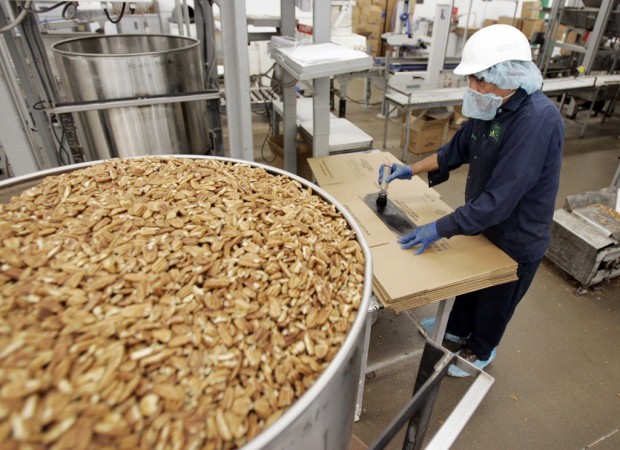
For starters, most Chinese pecan buyers are traders that buy in-shell pecans for processing in China. FICO, which shells and processes its own pecans, as well as pecans from other growers at a 50,000-square-foot facility in Sahuarita, prefers to sell its own shelled pecans to end-users, such as ice cream makers or bakers.
"We like to work with industry instead of the middleman," Walden said. "Relationships are very important."
Second, FICO exports the vast majority of its pecans to Europe, where it dominates the market. Any sudden increase in sales to China would mean cutting back sales to Europe, which FICO isn't prepared to do.
"It's safe to say we'll continue to do more business each year in China, but not at the expense of our customer base," Caris said.
In the meantime, while the rising price of pecans tends to help FICO's bottom line, nobody wants the price of pecans to go too high, Caris said.
"In the short term it's good, but in the long term this will affect demand," he said. "People will look harder at whether they want pecans as an ingredient. Our customers aren't as sure how successful they will be at selling their product at a higher price."
ARIZONA AND CHINA
China is Arizona's third-largest foreign market with exports to the country totaling about $1.04 billion in 2010. Mexico, which has long been Arizona's largest export market, led with $5.05 billion, followed by Canada, with $1.97 billion, the latest data from the U.S. Commerce Department show.
China has been steadily gaining in importance over the last decade as a market for Arizona, ranking 16th in 2000, below Switzerland and above Australia. However, China is likely locked-in as the state's third-largest market for the time being, experts say, because of the state's cultural ties and geographic proximity to both Mexico and Canada.
Agricultural products, such as pecans, made up about 11 percent of Arizona's exports to China in 2010 with about $111 million worth of products sold. The majority of the state's exports to China are computer and electronic products, which were about 55 percent of Arizona's exports to China last year, amounting to about $573 million.
DID YOU KNOW
Farmers Investment Co. has grown pecans in the Sahuarita area since 1965. The company moved to the area in 1949, planting cotton, milo, wheat and barley until it started the pecan business. The company planted 7,000 acres of pecans by 1969, but today has 4,500 acres of pecan groves; the rest is unplanted.
Contact reporter Alex Dalenberg at adalenberg@azstarnet.com or 807-8429.