

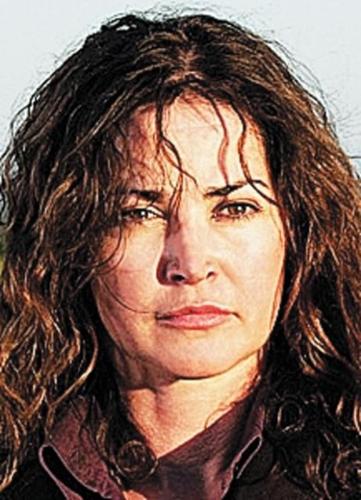
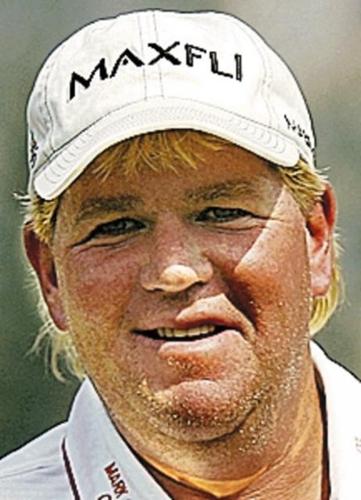
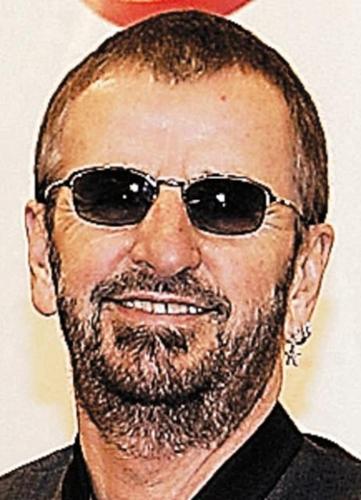
Some celebrities have freely acknowledged it. For others, it's a whispered rumor.
But one thing is certain — Sierra Tucson is one of the main places the rich and famous go for substance-abuse and other treatments.
Sierra Tucson, founded in 1983, has become an international destination for healing. And it's getting bigger, with plans announced this month to build an $8 million, 44-bed lodge expected to open next fall.
"People come here for two reasons," said Keith Arnold, Sierra Tucson's executive director. "One, we've been around a long time. And by being around for so long, we've developed an excellent reputation around the world."
More than 20,000 people have come for treatment at Sierra Tucson, 39580 S. Lago Del Oro Parkway, in Pinal County northwest of Tucson near Catalina. That includes a growing roster of celebrities, CEOs and, most recently, disgraced politicians who've acknowledged being treated at the center.
People are also reading…
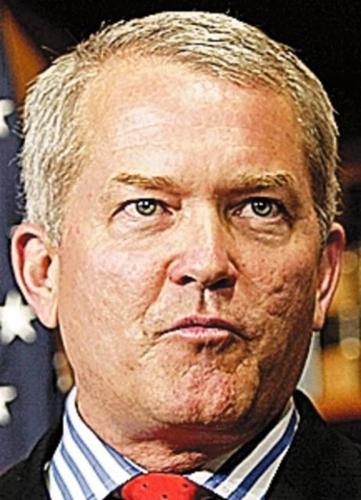
Former U.S. Rep. Mark Foley, who resigned from Congress in September, was in a 30-day program at the center in October. He went to Sierra Tucson for treatment of alcoholism after it was revealed that he sent sexually explicit messages to underage congressional pages.
In his autobiography published this year, "My Life In & Out of the Rough," pro golfer John Daly writes about his addictions to alcohol, gambling and sex and his experience at Sierra Tucson.
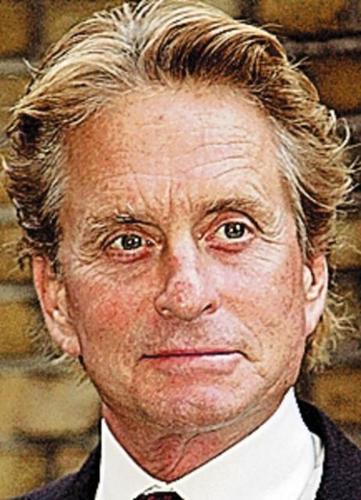
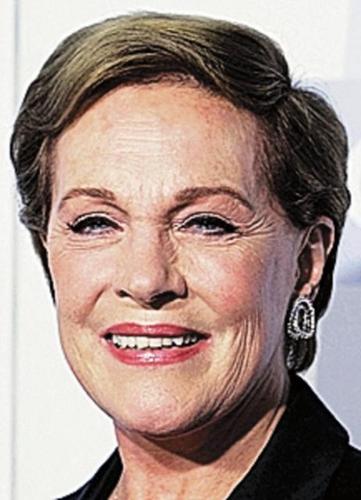
Other celebrities who've acknowledged treatment at the center include musician Ringo Starr, actor Michael Douglas and actresses Julie Andrews and Kim Delaney.
Sierra Tucson's reputation has even embedded itself in pop culture. When a character in the NBC political drama "The West Wing" sought treatment for an alcohol and Valium addiction, he went to Sierra Tucson.
It's uncertain, however, who else has been to Sierra Tucson, as officials at the level-1 psychiatric hospital, citing confidentiality rules, say they cannot confirm a patient's treatment.
"That's not what Sierra Tucson is about. People come here for the anonymity," said Christy Cessna, a spokeswoman for the center, which has about 280 full- and part-time employees. "People are drawn here because it is a safe place to get away from what they're dealing with and focus on what they need."
Still the center's officials are aware of its growing reputation for treating the well-known and the wealthy.
"Whenever anyone, a celebrity or a high-profile person, talks about Sierra Tucson, we are appreciative of it," said Arnold, the executive director. "Whether it's right or wrong, there is a culture out there that will take what they say and apply credibility. There's an implied approval that it's good enough for a certain person to go there."
"Expect a miracle"
As patients arrive at Sierra Tucson, they are promised one thing — "expect a miracle."
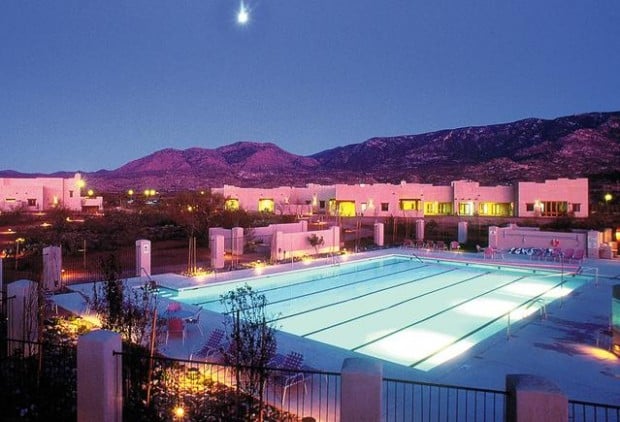
The words are written at the entrance to the 160-acre facility sitting atop a low crest near Catalina, where the nearby developments dot the horizon in the shadows of the Santa Catalina Mountains.
"We want to create an environment for people to get outdoors and feel the sun, to look up at the sun and not feel so closed off," said Dr. Michael E. Scott, medical director at Sierra Tucson. "That alone can be the spiritual side. (Patients) get to appreciate what's around them."
Small rocks, stacked by patients, lie next to winding sidewalks throughout the facility and toward the dormitory-style lodges that can hold up to 95 patients.
When patients check in, they are all treated as equals and are assigned roommates, no matter who they are. A new cafeteria serves staffers and patients communal meals.
Sports figures, actors and dignitaries who come to the center don't want to be treated as special, said Scott.
"The most famous people who come in here don't hide their identity. They just want to be part of the group with the patients," the doctor said.
They rarely get to be treated like normal people, but Sierra Tucson emphasizes it, he said.
"All the hoopla changes very quickly," Scott said. "They like that. They want to be a regular person for a while. It might be the first time in many years they've been able to do that and live without their cell phones, e-mails and all the other people attached to their life."
Why celebrities come
So why do celebrities choose Sierra Tucson?
Sierra Tucson is on the elite, "A-list" of treatment centers that entertainment personalities turn to, said Brian Dyak, president of the Entertainment Industries Council, which promotes accurate portrayals of addiction and other social ills in movies and television.
Others on the list include The Betty Ford Center and Hazelden, he said.
Sierra Tucson's connection to Hollywood can be traced back to its early years.
Not long after William O'Donnell Jr. founded Sierra Tucson, he met Dae Medman, a social worker who was director of the Entertainment Industry Referral and Assistance Center.
It was the mid-1980s, and cocaine abuse was ravaging the entertainment industry along with the rest of society, she said. At its peak, the center served perhaps 200,000 union-affiliated cameramen, makeup artists, teamsters and other behind-the-scenes workers, whose contracts allowed Medman to send them to expensive treatment programs.
O'Donnell encouraged her referrals by steeply discounting treatment at Sierra Tucson, Medman said. O'Donnell declined to be interviewed for this story.
"Bill O'Donnell was thrilled that the entertainment industry had its own employee-assistance program," she said. "They liked the fact that they could service the entertainment industry."
She shared O'Donnell's excitement.
"The thrill of this job was to be able to put a secretary, a teamster in one of the best treatment programs in the industry," Medman said. "It was like giving a middle-class person a credit card to Neiman Marcus, because you get the Neiman Marcus treatment there."
The team's approach
Using a 12-step approach, Sierra Tucson's team of physicians, nurses and wellness therapists have developed what they call a "bio-psycho-social-spiritual approach" to treat patients.
The center treats alcoholism, anxiety, chemical dependency, depression, eating disorders, compulsive gambling, trauma, abuse, and sexual compulsion.
"Often a lot of patients have dual disorders," Scott said. "They're not all separate issues, they're all tied together."
Sierra Tucson also emphasizes integrative therapies, Scott said. Those include acupuncture, Swedish massage, Shiatsu massage, Qi Gong, Reiki and yoga.
Other programs include equine-assisted therapy, access to a climbing wall and an outdoors challenge course, used as part of the integrative therapy.
Though high-profile clients have been at Sierra Tucson, "a majority of patients are like you and me," Arnold said.
"People need to find out what meets their needs," he said. "People shouldn't pick up on something they see in People (magazine). They have to do their own research and find what works best for them."
What Sierra Tucson costs
Sierra Tucson's treatments can remain out of reach for a lot of people. Typical stays range from 30 to 45 days with total costs from $32,250 to $57,825.
When managed health-care plans changed in the 1980s and early 1990s, a lot of insurance plans stopped paying for treatment at inpatient centers around the country, Arnold said.
That led Sierra Tucson to downsize its operations in the early 1990s — and led to more integrative approaches to medicine, Scott said.
"Over the years, there have been many people without the financial resources who can't pay," he said.
Today even with good insurance and comprehensive plans, patients have to show a "medical necessity," which is defined differently by various companies, he said.
A majority of Sierra Tucson's patients pay the full amount, though a few payment plans are available, he said.
For more than 15 years, Medman was able to send entertainment-industry workers who couldn't pay the full rate. That all changed in 2002.
The unions switched coverage to an HMO, and their members lost the option of having treatment at Sierra Tucson covered, she said.
Now she serves maybe 50,000 employees of four main studios, and though Sierra Tucson still offers a discount, it remains too expensive for the families to cover their share of the cost, she said.
But occasionally Medman receives calls from Hollywood agencies asking where they should send unnamed clients who are experiencing addiction or other problems. Often Medman recommends Sierra Tucson.
"I don't think they set out to be treatment for the rich and famous. It kind of ended up that way," she said. "Now, unfortunately, only the rich and famous can afford it."
l 1983 - Recovering cocaine addict William O'Donnell Jr. founds Sierra Tucson at the former Brave Bull Guest Ranch.
l 1990 - The facility undergoes a $4.4 million expansion that adds 40 beds to the existing 134. The company has approximately 190 employees.
l 1992 - Sierra Tucson lays off about 40 of its 500 employees in an effort to improve performance.
l 2002 - Sierra Tucson goes from a publicly traded company to a private concern in an $82.5 million deal that consolidates ownership of Sierra Tucson and the Miraval, Life in Balance health resort under one company, NextHealth Inc.
l March 2005 - CRC Health Group of San Jose, Calif., buys Sierra Tucson for $130 million.
l February 2006 - CRC Health Group is bought for $723 million by Bain Capital Partners LLC. and changes its name to CRC Health Corp.
Source: Sierra Tucson and Arizona Daily Star archives Compiled by Joseph Barrios and Levi J. Long