

John Cassavetes was a gifted actor who didn't want to act. Uncompromising and irascible, Cassavetes preferred to pour all of his money, sweat and soul into the independent films he directed and wrote, such as "Shadows," "Faces," "A Woman Under the Influence" and "Gloria."
Two DVDs just released present examples of Cassavetes the actor, and they remind us of how good and how influential he was.
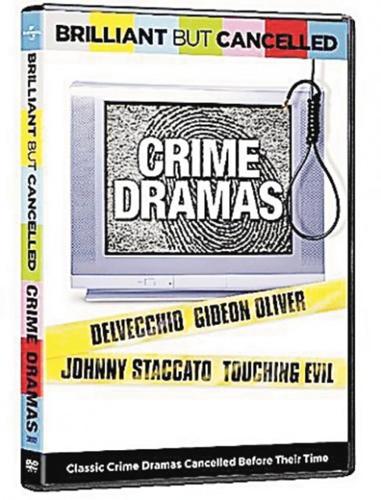
"Brilliant But Cancelled: Crime Dramas" (Universal Studios Home Entertainment, $19.98, not rated) features one episode from "Johnny Staccato," the short-lived television series Cassavetes starred in during the 1959-60 season. (The DVD also includes episodes from "Delvecchio," "Gideon Oliver" and "Touching Evil.")
Cassavetes, according to Ray Carney's book, "Cassavetes on Cassavetes," agreed to do a TV series because he was broke from trying to finish his first movie, "Shadows," and his wife, actress Gena Rowlands, was pregnant with their first child. The half-hour series was initially titled "Staccato," and starred Cassavetes as a Greenwich Village jazz pianist who also worked as a private eye.
People are also reading…
Although prime-time television at the time was dominated by Westerns, detective stories had started to emerge as an alternative. Cassavetes' series was one of four new detective shows to hit the airwaves in September 1959, joining "Peter Gunn," about a sophisticated private eye, which had debuted a season earlier.
Like "Peter Gunn," "Staccato" used a modern jazz score (by Elmer Bernstein), but Cassavetes' show was grittier, its star a street-smart New York hipster whose cases involved such contemporary issues as drug addiction, alcoholism and political vigilantism. And in Cassavetes it had as its lead one of the more idiosyncratically intense actors to ever star in a network TV series.
Constrained by the format and by what his sponsors and the network would let him do, Cassavetes first tried to improve the series by directing five episodes. Then he tried to get out of his contract.
Eventually, NBC dropped the show in March 1960, but ABC picked it up and ran the remaining episodes.
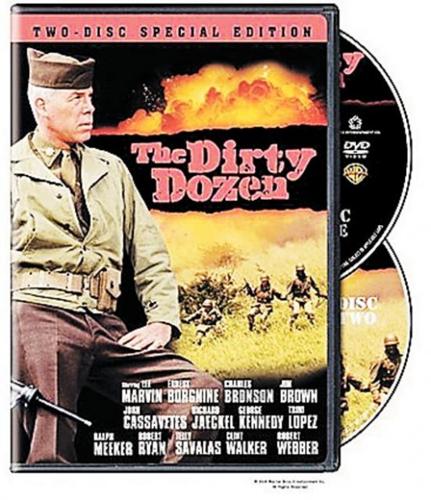
In contrast to the ill-fated "Staccato," the World War II action thriller "The Dirty Dozen," now out in a new two-disc version (Warner Home Video, $26.99, not rated), was the biggest movie hit of 1967. Cassavetes earned an Academy Award nomination for best supporting actor for his performance as one of the condemned military prisoners who agrees to go on a suicidal mission behind enemy lines in exchange for the possibility of getting his sentence commuted.
Desperate for money to complete his movie "Faces," Cassavetes returned to acting in the projects of other directors in 1966-68. He worked in low-budget thrillers and gangster movies and in Roman Polanski's "Rosemary's Baby."
But he had his greatest success and most satisfying experience in "The Dirty Dozen." Directed by Hollywood veteran Robert Aldrich, "The Dirty Dozen" connected with the young people of the late 1960s. x
Home Movies


