

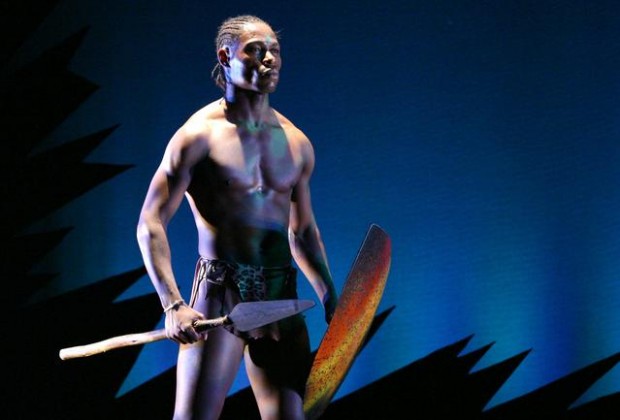
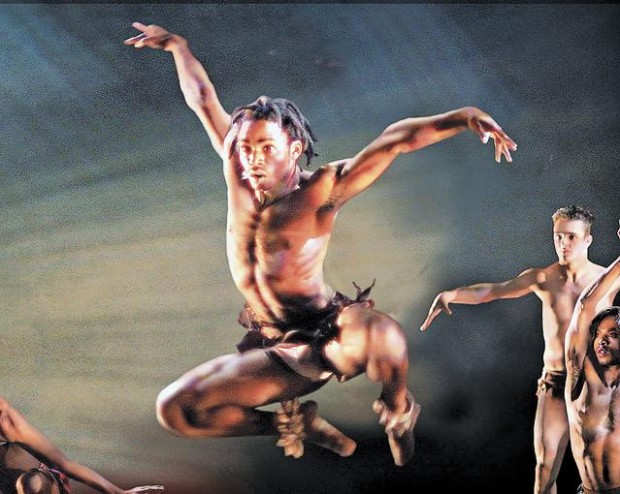
Getting the elaborate South African-born stage show "African Footprint" up and running wasn't an easy task for show creator Richard Loring. Loring, a longtime television and theater producer, thought a project like "Footprint," showcasing the culture and history of South Africa through music and dance, would be a good way to give back to a country that had given him such success.
But not everyone shared his passion for the production that makes a Tucson stop on Sunday.
"I didn't have the backers," Loring said in a phone interview last week from his home in South Africa. "A lot of people thought it was a great idea, but they weren't really sure. My house was mortgaged. Things were really on the line."
Despite financial issues, Loring soldiered on. He recruited students, many inexperienced in dance and theater, from townships around South Africa and put them through 14 months of intense training.
People are also reading…
The company's luck changed when Loring was asked to bring his dancers to perform on Robben Island, the prison off the coast of Cape Town where Nelson Mandela spent nearly two decades, as part of a Millennium New Year's Eve production that was broadcast around the world.
From there, "African Footprint" secured a venue in South Africa, where it ran for four years. It hit the road after that, and has played countless shows for audiences and dignitaries including Prince Charles and former President Bill Clinton.
Critics have hailed it as Africa's "Riverdance." The 90-minute show, based around the poetry of Don Mattera and under the direction of South African choreographers Debbie Rakusin and David Matamela, takes audience members on a whirlwind trip through the dawn of man to present-day South Africa using "Stomp"-like percussion, loud, colorful costumes and a mix of Western and African dance techniques.
The production doesn't put a lot of focus on South Africa's struggles, particularly its old apartheid practices, but Loring said "Footprint" isn't necessarily about struggle.
"Essentially, I tried to create a show that displays the energy of Africa," Loring said. "The passion of its people. The desire of its younger people to get on with their lives and make a future for themselves. There is a political message there, but you have to dig a little deeper. You will find messages that will resonate with you, that will make you feel pain and sorrow and that will make you feel like you've gone on an explosive stampede of song and dance."
Perhaps the greatest thing about "African Footprint" is the opportunities it has given to the 200-plus South African residents who have cycled through the production over the last eight years.
Many of the artists, who might otherwise have been stuck in their townships, have had the opportunity to travel the world and have gone on to perform in other dance companies and production groups in South Africa and abroad.
"We still have some of the original cast with us," Loring said. "But now they are in the role of directors, teachers, choreographers. They maintain the standard of discipline and a message of hope for South Africa.
"It was my dream. Now it is their dream."
Preview
"African Footprint"
• Presented by: UApresents.
• When: 7 p.m. Sunday.
• Where: Centennial Hall, 1020 E. University Blvd.
• Tickets: $25-$51 through the box office, 621-3341.
• Running time: 90 minutes.


