

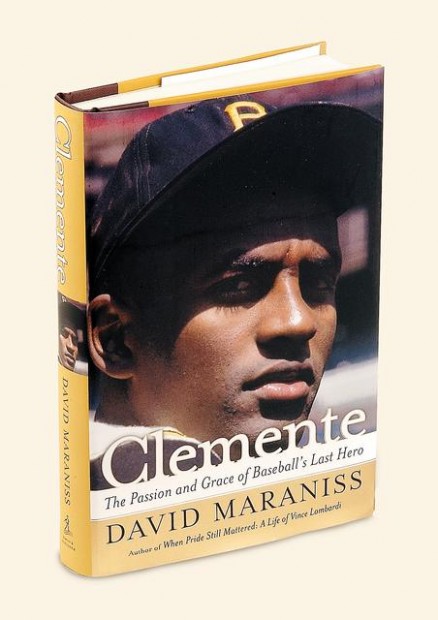
If nothing else, David Maraniss' biography of Pittsburgh Pirates great Roberto Clemente is incisive in its title — Clemente really was one of the last great heroes in baseball.
Maraniss, whose credits also include biographies of President Bill Clinton and legendary football coach Vince Lombardi, recognizes early on in the book that Clemente was far more to baseball, and to his native Puerto Rico, than just the best right fielder of his era.
And Maraniss follows through with a thorough and engaging look at Clemente, who is one of just two players named to the Baseball Hall of Fame without the requisite five-year waiting period. Clemente, killed in a plane crash in 1972, was named to the hall in 1973; the other early selection was Lou Gehrig.
Clemente grew up dirt-poor in Carolina, Puerto Rico, but showed flashes of baseball brilliance early in life. He was just as brilliant off the field, a man who would deeply feel the injustices of the era.
People are also reading…
In fact, Clemente felt them doubly — besides being a black player in the 1950s, when baseball was integrating grudgingly, he also was one of the few Spanish speakers in the game. He felt the sting of that prejudice from ignorant sportswriters as well as teammates.
After a slow start — the Brooklyn Dodgers tried to hide him in Montreal in his first professional season, so scouts wouldn't see him play — he burst into prominence in 1960, when he was a vital part of the Pirates' surprise World Series victory over the New York Yankees.
But the book covers far more than just Clemente's baseball career. Maraniss, who won a Pulitzer Prize for reporting at The Washington Post in 1993, traces his development as a leader, a humanitarian, a full-fledged hero to people on both the mainland and Puerto Rico. And he doesn't spare the details about Clemente's temper, or his sometimes tempestuous relationship with fans and media.
Some of the best writing and research comes in the chapters about Clemente's efforts to help the survivors of the devastating 1972 earthquake in Nicaragua.
He coordinated efforts to send relief to the country, and when it appeared the supplies were being stolen by the government, he decided to travel there and handle the problem.
He died when the plane crashed shortly after takeoff, and his body was never recovered.
Many of the damning details of the flight are revealed for the first time in the final chapters. The plane, hired at the last minute, had a history of mechanical problems, was being flown by an unqualified crew and was overloaded by thousands of pounds.
The stories of mourning are as moving as anything in the book.
In an era when few, if any, athletes deserve the title of hero, Maraniss has done a good job of providing a look at a fallible but heroic figure.
CLEMENTE: THE PASSION AND GRACE OF BASEBALL'S LAST HERO
By David Maraniss
(Simon and Schuster, $26)


