

Matt Tyrnauer will be the first to tell you he's not much of a fashionista, but he does love a good story.
That's what he saw in the relationship of designer Valentino Garavani and his business partner Giancarlo Giammetti. He turned that into a documentary — "Valentino: The Last Emperor."
Tyrnauer, 39, wrote about Valentino for Vanity Fair magazine in 2004 and was immediately entranced by the pair's extravagant lifestyle, dedication to each other and business success.
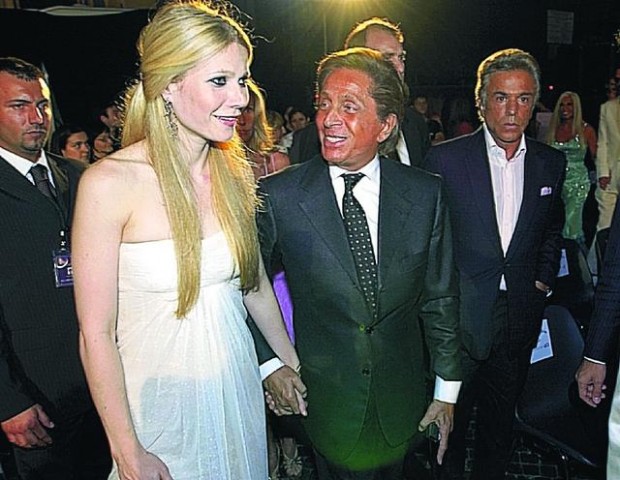
Valentino built his design house from the ground up almost 50 years ago, and along the way dressed countless celebs including Jacqueline Kennedy Onassis, Anne Hathaway, Cate Blanchett and Gwyneth Paltrow.
Valentino, among the last of the great haute couture designers to be at the helm of their eponymous lines, announced his retirement in 2008.
People are also reading…
Tyrnauer's documentary, which has been winning fans and independent film awards, is now showing on more than 40 screens nationwide; so far, no Tucson screening has been scheduled.
Did it take much convincing to get Valentino and Giancarlo on board for the film?
"They did it somewhat readily. I don't think any of us knew what it would be like. Valentino quit the movie every day and rehired himself every morning. We shot for two years, not every day, but we had 270 hours of footage. . . . Valentino is extremely difficult. I don't think he'd deny it. Giancarlo is a tough businessman. They were not always cooperative. (Valentino) would whipsaw from total cooperation to impossible fashion icon."
What was their reaction to the film?
"They hated it. I don't think I'm exaggerating when I say they freaked out. I kept it from them as long as I could. They didn't like it, didn't understand what I was doing and why. They tried to get me to change things, but I refused. I had final cut. . . . When we made it into the Venice Film Festival, it was a watershed moment. The film got a huge standing ovation. (Valentino) received it from a balcony in the theater, and there were tears of joy. He fell in love with the movie, as I predicted."
The struggle of art versus commerce is at the center of the film. That's especially pertinent right now. Was that intentional?
"When we started filming the movie (June 2005), we didn't know that Valentino would retire. We kept filming an extra year to walk up to the retirement. The company had been bought out in May 2007, so he had this looming question — was Valentino still welcome at his own company? The Wall Street Journal was writing about it. . . . (Valentino) is a great artist, the last person at the top of the fashion house he created. He built the company himself.
"His heart is couture. The movie gets into that deeply, how you make the clothes. It's an astonishing process. The world of fashion is different today. Was his hand forced? No one ever answered that question."
What surprised you the most about what you captured?
"The relationship (between Valentino and Giancarlo) is continually astonishing. The depth of it, how they did this, how they worked together and made an empire. It's a story of friendship, success, love and commitment."
Why do you think the film has resonated with viewers?
"Here are two people who live a life of absurd luxury, cut off from reality completely. The surprising thing is that you have a long-term relationship of friendship that is enduring, with common memory and love. On top of that, there is one unspeakable luxury after another. You can say there are 70 full-time servants and (Valentino's) six pugs fly private, but until you see them (in the movie), it's different."


