A Hamburg, New York, man is not giving up his alligator without a fight.
A day after the state Department of Environmental Conservation confirmed that Albert the Alligator had been moved to Texas, the attorney for the animal's owner promised that the matter will end up before a judge.

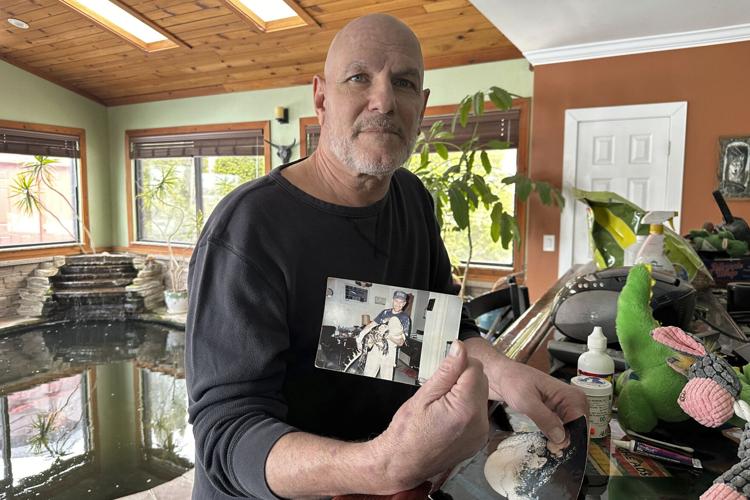
Tony Cavallaro shows photos of his alligator, Albert, on March 19 in Hamburg, N.Y.
"They never denied his permit," Michael D'Amico said, referring to the 2021 correspondence between the DEC and his client Anthony "Tony" Cavallaro in 2021 about the alleged incomplete application for a dangerous animal license renewal. "They never sent a denial or acceptance of it. So, we are going to challenge that in court."
The DEC said the animal was moved Wednesday to Gator Country in Beaumont, Texas. The facility houses more than 450 American alligators, crocodiles, different kinds of reptiles and mammals they receive through "nuisance rescues, donations, other institutions or abandonment" and provides the opportunity to "interact" with these animals.
People are also reading…
"Following an extensive examination and initial rehabilitation under licensed veterinary care in Massachusetts, DEC arranged for care at an authorized alligator rehabilitation facility in Texas called Gator Country," the DEC said in a statement shared with media outlets. DEC added that the move was scheduled after the alligator was cleared by a veterinarian and showed "substantial health improvement" after weeks of "medical care, an appropriate diet, access to necessary UV light, and other living conditions conducive to its recovery."
Since it is an ongoing enforcement investigation, the Town of Hamburg provided the required authorization to transport the animal, it added.
Albert, an 11-foot, 750-pound alligator, made international news two months ago after he was confiscated from Cavallaro's Hamburg home. Cavallaro — who said he became an "emotional mess" after losing his pet of 34 years — has been fighting to get the animal back. He has been aided in his effort by friends, relatives and others who believe he has a right to keep the animal in the enclosure that was built for him.
"It is terrible," Cavallaro told The News Thursday morning. "I don't know how they can do this to me and Albert."
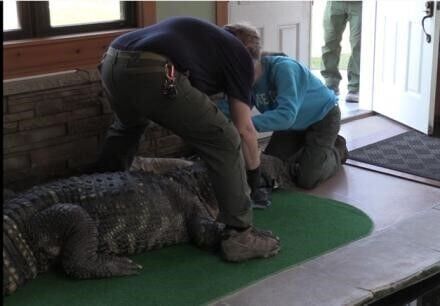
Officers from the state Department of Environmental Conservation took custody in March of a 750-pound alligator that was being housed at a residence in Hamburg.
Albert's new home — a place he reached after traveling for three days, according to television station KBMT, in southeast Texas — has attracted the ire of Cavallaro's supporters on Facebook who are criticizing the agency for sending the alligator to an "alligator adventure/theme park." The park website states that visitors can purchase a pack of four hot dogs to feed the gators with a cane pole from the decks for $5 and a bag of pellets for gators at $2.
D'Amico called the animal's new home an "amusement park."
"People can feed it, pet it, do all these things for financial gain so they can make money. I mean, the things they said Tony was doing, which he wasn't, they're doing," he told The News.
In its statement, the DEC said the alligator will continue to receive "specialized care consistent with ongoing physical maladies including blindness and spinal conditions from decades of inadequate treatment and care." The DEC statement said that the location was chosen after evaluating local and national facilities "able and willing to accept an alligator with these specific and significant medical needs."
Gary Sarge, speaking on behalf of Gator Country, said Albert developed "neurological issues in his spine" because of what he was being fed over the years, Channel 12 reported.
"You can absolutely see the curvature on his spine. It allows him not to be able to stand up and walk on all fours," Sarge told the station.
D'Amico said that was not true.
"We absolutely dispute all those allegations," D'Amico said.
D'Amico said Albert was in good health and his lethargy stems from being in brumation, a natural dormant period for reptiles to shut down their bodies and conserve energy for the cold season.

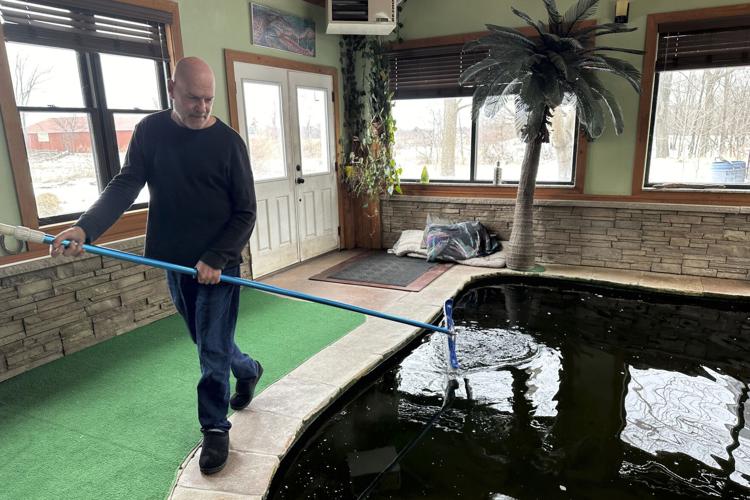
Tony Cavallaro cleans the indoor pool he built for his pet alligator, Albert, on March 19 in Hamburg, N.Y.
Albert's story went viral after he was seized from Cavallaro's home and the enclosure in which he lived, which Cavallaro described as a 24-by-22-foot room with a 15-by-17-foot gunite inground pool that had a biofilter system and a running waterfall.
In a statement to The News in April, the DEC said it “clearly, repeatedly and explicitly” informed Cavallaro that his facility was “deficient” as per updated standards for housing exotic pets. It noted that Cavallaro was given a “generous amount of time” to comply, and he did not.
“The protections included in DEC’s requirements are not based on the alleged demeanor or physical condition of the permitted animal but apply to the species possessed and in accordance with state law and regulations. It is the permitted animal owner’s responsibility to either comply or find alternate and appropriate living arrangements for the animal,” the agency added. DEC also added that exposing the animal to the public would warrant its confiscation.