In November of last year, John Calvo, a production chief engineer at Raytheon, embarked on a new project as part of his two hobbies: vibe coding and data analytics.
With coding help from Claude AI, he created a Cloudflare-based website that served as a hub for analyzing Tucson Police Department crime data. Initially, it was solely analyzing static data from past years to create a heat map of crime.
“I made that, and then I thought to myself, ‘Well, what else could I add that's publicly available?’” he said. “That’s when I thought it'd be great to add all of the scanner feeds into a separate map that shows you basically a live heat map of everything that's happening.”
On top of the live scanner feeds from across the greater Tucson area, Calvo looped in a live feed of initial court appearances, weather reports, traffic incident information, local government meeting summaries, 311 service requests and more.
People are also reading…
After working through the bugs and putting together a website he felt ready to share, he launched CitizenWatch in early April.
On April 10, TPD announced it was switching all radio communications to encrypted channels, effectively shutting down scanner feeds. The change made it harder for people who follow Tucson's police activity online to get real-time details.
In addition to Calvo’s website, several other Tucsonans unaffiliated with law enforcement have run Facebook groups and pages that monitored the scanners, providing updates on police activity. One of the groups, “Tucson Police Scanner Group Uncensored,” has amassed over 100,000 members. Other prominent groups rank in the tens of thousands. Those without their own radio scanner were able to use sites like Broadcastify, a crowdsourced network of radio feeds available to the public.
When TPD went encrypted on April 13, Calvo and others adapted to still provide as much information as they could to the public. In place of the once available scanner feeds, TPD now offers a public dashboard showing police call types, times and general locations.
"I was like, ‘Well, you know, my only option here is just to just take that dashboard and take that feed and just plug it into my site so that I can still continue to have a holistic feed of all the incidents all around town,’” Calvo said.

In April, the Tucson Police Department switched its radio communications to encrypted channels.
Other Arizona departments such as the police department in Marana and Mesa also use fully-encrypted communications. Pima County Sheriff’s Department has radios capable of encryption, but only a few radios actually use it, according to the department. Several large departments across the country, including the San Diego Police Department, the Chicago Police Department and the New York City Police Department, have made the change toward encryption over the past few years, too.
The biggest reason for TPD’s change was to protect victim information, said Anthony Shelton, a TPD data analyst supervisor. When the feed was unencrypted, some people listening in would put together sensitive victim information – like name, date of birth, address, social security number – and post it on public websites, Shelton said.
When TPD replaced their radios roughly two years ago, they then had the capability to use encryption for all department communication channels. Before then, they couldn’t use encrypted communication on a wide scale while still adhering to public records law, according to police. Encrypted communications were reserved primarily for SWAT operations.
A secondary reason for the change was for officer safety. There had been multiple instances of suspects listening in through scanners to monitor police activity, Shelton explained.
The dashboard was created to offer public information while still protecting victims’ privacy. Taking data from the Computer-Aided Dispatch system, the interface features a map of 911 calls during the last 12 hours, which users can filter by priority level. Historical data is stored on another site. As a user zooms in on the location of a report, the call disappears, hiding the exact address.
“This is way more information than what was being broadcasted on the police radio, because at the dispatch center, dispatch is only broadcasting (priority) levels ones and twos,” TPD Public Information Officer James Horton said. “Some level threes get dispatched, but pretty much anything below level two is not getting broadcasted on the radio. This is giving every single thing – every call at every priority level.”
However, some community members pointed out that the dashboard has some drawbacks. It only updates on the half hour and hour, causing a lag. It also lacks the greater context of incidents that the scanner feed provided. Another complaint is the user-unfriendly nature of the interface.
“It's really hard to understand what's going on,” Damian Enderle, the creator of 857 Tucson, said. “And it's not accurately updated with time.”
For the past 15 years or so, Enderle had been listening to the police scanner feed through Broadcastify out of curiosity. In early 2023, that interest morphed into him creating 857 Tucson, a platform designed to update Tucsonans about crime in their area.
“I noticed Tucson, Arizona, wasn't really getting the media coverage as far as how bad the crime was and what I was hearing on the scanner,” Enderle said. “I really mainly did it as a community service to let people know what's going on and kind of do the current thing versus what the local media covers.”

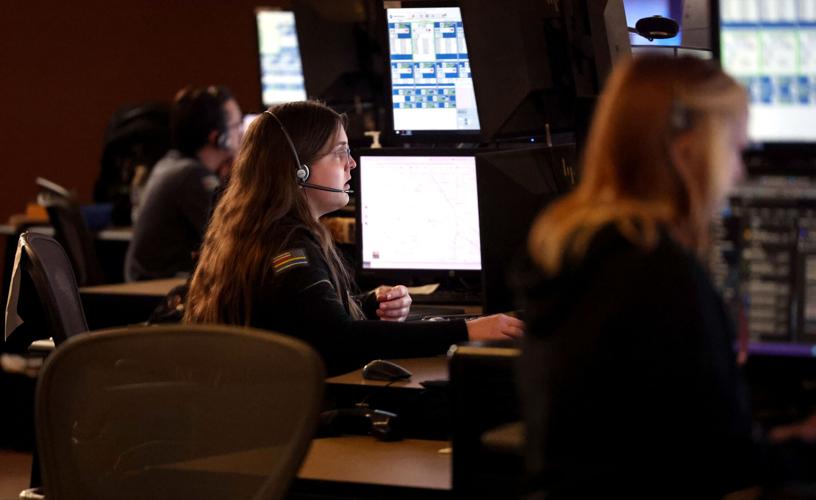
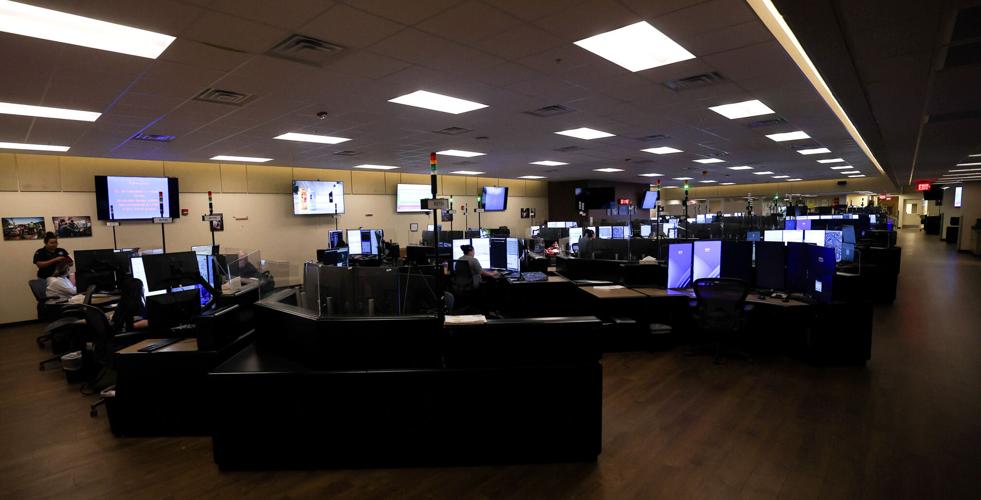
Workers staff the city's emergency call center.
Through YouTube and Facebook, Enderle posted about crime happening in Tucson from what he heard on Broadcastify. His goal was to provide real-time updates, so the community had a better idea of the prevalence and severity of crime in Tucson, he explained.
From the time he started, he had heard rumors that TPD would switch to all encrypted, so he wasn’t too surprised when the feed he would regularly listen to went radio silent.
“Due to Tucson Police encrypted radios, we are no longer able to track incidents to warn the public of incidents in your neighborhood,” he wrote in a Facebook post on April 23. “The public has been handcuffed by the new encryption of Police radios, leaving the public less safe.”
Even before the change, he started moving away from scanner updates and more towards other content, including broadcasting public meetings and court appearances, criticisms of local government and following the Nancy Guthrie case.
For scanner information, he now usually turns to the 520 Scanner Watch Facebook page. Run by Monica Miller, the page posts public safety updates throughout the day.
“Before, scanner traffic gave real-time context about what was happening,” Miller wrote to the Arizona Daily Star. “Once TPD encrypted their communications, that live context was no longer available to the public. It limited what I could post about TPD activity and made it much harder to follow incidents as they developed.”
Despite the limited access, Miller has continued to post when incidents come up. She believes that it’s an overall important service to the community and personally verifies everything she posts to avoid speculation or rumor, she explained.

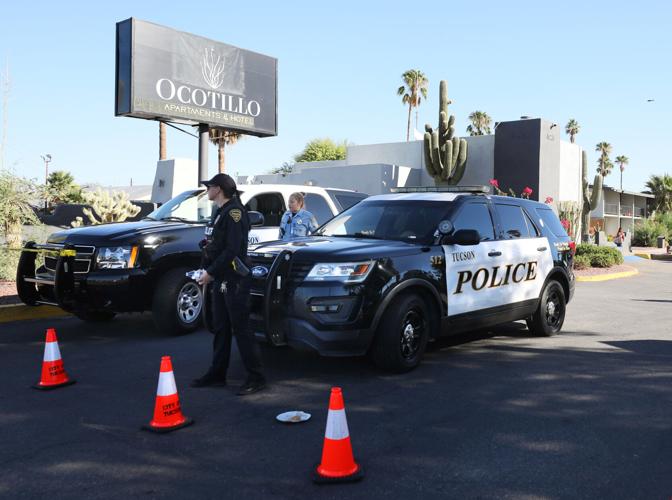
The Tucson Police Department fully encrypted its radio communications in April, effectively shutting down online emergency scanner feeds used by people who follow the department's activity online.
“I understand that officer safety and sensitive information are real concerns,” she wrote. “However, full encryption also removes a major layer of public transparency. The community loses access to real-time information about police activity in their own neighborhoods. I think there should be a better balance between safety and transparency, instead of cutting the public off completely.”
Others are happy to see the change.
Donald Wadley, a former corrections officer and member of Tucson Back the Blue Line who now runs a courier business, used to frequent several Tucson police scanner pages on Facebook. Primarily, he used them to know which areas to avoid. Some of the pages bothered him with how much sensitive information some of the pages publicized at a large scale, he explained.
“I mean me, as John Q. public, can go on these pages and watch it live stream all day long,” Wadley said. “What's to stop the suspect from doing that? Nobody knows who the suspect is. So how are they supposed to keep them from watching? You know what I mean. Like there's this certain information that should not be released – not only as an investigative standpoint but as a first responder safety standpoint.”
While Wadley believes that the public should know what’s going on in their community, some of the information available with unencrypted feeds puts police at a tactical disadvantage. Overall, the benefits outweigh the drawbacks, he argued.
“It's not all the scanner pages,” Wadley said. “I know a few of them that do have law enforcement in them – and dispatchers as well, so they know what information to put out there. They use common sense. They don't release the sensitive information. And the ones that do will always argue with you: ‘Well, it's public information. It's public knowledge.’ Well, now it's not. So deal with it.”
Calvo is continuing to fine-tune his website in hopes of filling the gap left from the encryption. He plans to eventually expand CitizenWatch to represent a larger area that includes Phoenix.
While he does feel that there is a large drawback for the community in the loss of transparency, he understands that there is a significant upside for victim privacy and officer safety.
“It's a double-edged sword, and I'm torn on it,” he said. “It's hard because I loved having that feed available because it gave us so much more information, but I understand why they encrypted it, and I understand that that's the general direction that multiple agencies across the nation are moving towards. So it was inevitable.”
Get your morning recap of today's local news and read the full stories here: tucne.ws/morning






 Nancy Guthrie's Tucson neighbors: Life with streamers 'unbearable'