

This fall, with the help of Maria Renée, a Tucson-based artist, conservationist, and grief consultant, SIA is hosting a series of talks and exercises on tending environmental grief. In case you missed the first talk, you can watch a recording. A follow-up webinar on Dec. 10 will let participants share their reflections on a series of prompts, the first of which is presented here. Scroll to “The Invitation” below to try it.
For many of us, when the experience of grief starts to arise, the last thing we want to do is move closer to it. We might distract ourselves, find distance, and search for a feeling that is lighter, easier, and more recognizable.
This is understandable. We may not have had the opportunity early in life to be guided in becoming comfortable with grief encounters. We may have even been shamed away from it, making grief terrifying or even invisible. We also might not have current-day access to time, space, or relationships that are fortified enough to welcome grief. We might not have the skills needed to be present when it comes. All of this makes grief an uncomfortable, disruptive arrival.
People are also reading…
But what if — with the right skills, community, and space — grieving could become a way back into the world? What if, through turning toward grief, we more fully feel alive and tethered to a sense of belonging? We grieve because we are connected.
David Abram, in Coming to Our Animal Senses, says:
“…grief is just a threshold, a necessary threshold through which each of us needs to step. The first moment of coming to our senses is indeed one of grief. Yet it’s as though the parched soil underfoot needs the water of our tears for new life to begin to grow again… We abruptly find ourselves in active relation and reciprocity with dragonflies and hooting owls, and with the air flooding in at your nostrils, with streetlamps buzzing as they break down, and with gravity, and beetles.”
Grieving is an act of reciprocity with the world around us. Why? Because we grieve that which we are connected to, committed to, and part of. We grieve what we love. Grief is a call-and-response with the social and ecological systems in which we are embedded. Grieving shows that we are paying attention, receptive, and giving back.
For those of us attuned to the natural world, this means we might experience grief in relationship to landscapes, species, and the changing climate. When we witness the quieting of a familiar ecosystem, the disappearance of a species, or the impacts of yet another dry season, we feel it in our bodies.
This grief answers the call of environmental loss — a healthy sign of our connection.
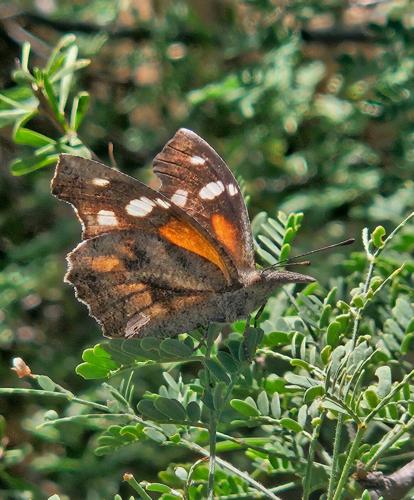
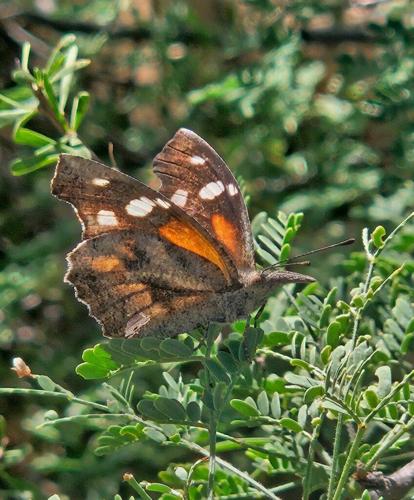
Call and response is inherent to ecological systems. If we pay attention, we see and hear it everywhere. The recent monsoon rains brought green landscapes to long-dry southern Arizona. Dormant plants revived, annuals sprouted up, and new growth proliferated. In some areas, American snout butterflies emerged in huge numbers, as often happens after heavy rains break a long dry spell. They thrive largely due to abundant new growth of desert hackberry — their main larval host plant — whose leaves are eaten by caterpillars. The adult butterflies then give back, pollinating plants such as desert broom.
We can think of expressing our grief, joy, gratitude, and care as an act of giving back to the natural landscapes that support us. Our grief might simply look like an emotional response, or it could take the shape of an offering, an art practice, or being witness to loss.
The invitation
Go to a favorite landscape, perhaps one that conjures up a sense of grief. This could be a day-long trip somewhere hours away or a shorter visit to a nearby urban landscape you have known for years. Spend some time observing the “call and response” of plants, animals, land, water, and weather. Then, in your own way, create a response to what you witness as a way to give back to this place. This could be a written poem, a drawing, an offering, or something else.
To collectively share and witness landscapes and species, both thriving and struggling, we encourage you to submit your response as a photograph or file. Responses can be submitted anonymously or with your name and will later be available for public viewing.
Thank you.


