New books by Southern Arizona authors:
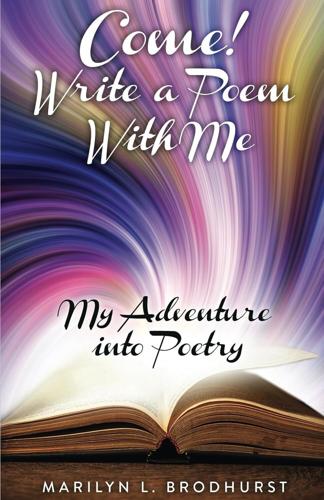
- “Come! Write a Poem With Me: My Adventure into Poetry” by Marilyn L. Brodhurst. Wheatmark 103 pp. $12.95 paperback; $9.99 Kindle.

“Because I dared to pierce the darkness/ and face the stench of unhealed wounds /” writes Marilyn L. Brodhurst, “Because I dared in a single stride to cross a continent, / …Because I dared to write a poem/ when no one called me a poet, /Because I dared…/ I now run free.”
This passage encapsulates this book’s message: Writing poetry liberates. Retired teacher Brodhurst wasn’t a poet when she wrote her first poem, and she is now.
Part poetry collection, part memoir, part workshop, “Come! Write a Poem With Me” is an unexpected gift to the reader. She begins by countering readers’ objections to trying to write — of course, you’re acquainted with poetry; you hear it all the time. Are you a teacher? Kids love poetry. Music lover? Set a poem to a favorite tune. Retiree? It’s something to do. And then she goes about teaching a mini-workshop.
People are also reading…
Brodhurst uses her own experiences as her foundation, and poems from those experiences as. She offers prompts — and even blank space in the book — for exercises and arranges them like a good teacher — by order of difficulty. Crediting a public poetry workshop led by a retired professor for her interest and success, she encourages readers to practice their developing skills in groups with other poets. She is herself a member of the Tucson and Arizona State Poetry Societies.
And that “now run free” line? It takes on intriguing meaning when Brodhurst shares with the reader a long-held secret. Sorry, folks; no spoiler here. Gotta get the book.
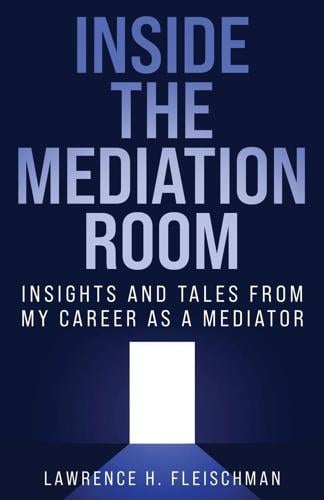
- “Inside the Mediation Room: Insights and Tales from my Career as a Mediator” by Lawrence H. Fleischman. (Wheatmark). 218 pp. $12.95.

Lawyers and judges have all the best stories. They see human situations in all their peculiarities, and this book by Tucson lawyer, judge and mediator Lawrence H. Fleischman shares some memorable ones. In an engaging voice.
“Inside the Mediation Room” also offers a convincing argument for mediation — formally, “alternative dispute resolution” — in which a neutral third person meets with parties involved in a dispute to discuss and explore options to resolve it, thus avoiding a trial. It sounds like a no-brainer, but mediation had not typically been part of the U.S. legal system.
Back in 1986, when Fleischman was a young, newly minted judge, the Honorable Richard (Dick) Bilby held his first annual conference on mediation. “Nobody in our system carries the power and respect of judges,” Fleischman quotes Bilby saying. “You need to use that goodwill to discard the robe and sit down with people to help them resolve their disagreements.” The innovative notion was viewed skeptically, but Fleischman decided to try it. He opened one of the first mediation practices in the country, and, after a slow start, has by now racked up 9,000 mediations. It is now an accepted part of the legal system and saves millions in dollars and hours preparing for and executing trials.
Chronicling his personal professional experiences — both successes and lessons learned — Fleischman divides the volume into common categories of disputes: class action, family matters, medical malpractice, construction defects, police misconduct, and — unique to him — celebrity mediation. Each relates stories.
On class settlements, Fleischman discusses administrating claims brought against the Phoenix Catholic Diocese by victims of molestation by priests. He deviates from his description of sifting through the thousands of claims against Tucson for the Colorado River water overwhelming the city's rusty old pipes to praise “judge-maker” Tom Chandler’s interviewing him publicly, in a restaurant full of lawyers.
On family matters, a divorce mediation goes off the rails when the husband proves so generous that the wife climbs into his lap and initiates passionate kissing. Construction defects? A subcontractor bills for anchors he never installed to keep a multi-million-dollar house built into a mountain from sliding down the hill.
And celebrity? Well. Fleischman did a mediation with Shaquille O’Neal and another with Andre Agassi. The Agassi-and-Nike anecdote plays out like TV law.
Fleischman continues to practice mediation in Tucson, and he observes that, while not necessarily driving the fancy Cadillacs or Mercedes of bygone days, successful trial lawyers, mediators can now make a decent living. Even, presumably, those who don’t mediate for Shaq.
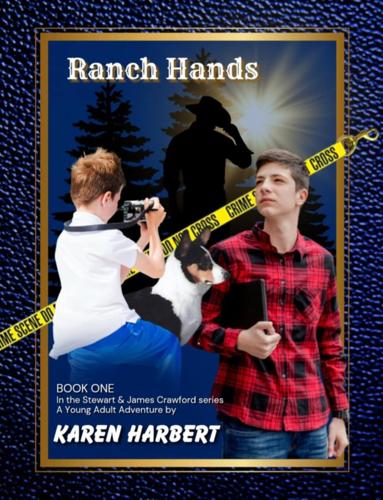
- “Ranch Hands” by Karen Harbert. Kindle Direct Publishing. 170 pp. $12.95 paperback; $9.99 Kindle.

Welsh Corgi breeder Karen Harbert knows whereof she writes in this young adult mystery featuring two Canadian boys summering on a Southern Arizona cattle ranch. This is the first YA novel the 23-book “Murder at the Dog Show” series author has published.
Teenager Stewart has had some experience in the locale and also in police investigation. The previous year, he’d gone undercover to bust an nearby outdoor adventures outfit that was abusing kids. Now, when cattle start disappearing, he begins to sleuth out the bad guys responsible. This time, he has his exuberant younger brother Jamie — with his ubiquitous camera and his champion Welsh Corgi Frodo — with him to try to nab the rustlers.
Harbert establishes a convincing setting in “Ranch Hands,” with horse and cattle behaviors, ranch tasks, and the high-desert ranching community. Both boys are appealing characters — Stewart, as the narrator, is sensitive and smart — so he’ll be welcome back as Harbert continues her Stewart & James Crawford series. “Ranch Hands” won the Dog Writers Association of America 2025 youth 13-18 competition.
- “Wanderlust and Welcome Mats: ‘The Broccoli Chronicles’” by Bill Sassenberger. Toxic Shock Publishing. 157 pp. $19.99 paperback; $9.99 Kindle.

You could almost call this new work by Tucsonan Bill Sassenberger a memoir about a memoir. It’s a sequel to “Toxic Shock Records: Assassin of Mediocrity,” a book about punk rock and Sassenberger and his wife Julianna Towns’s 34 years as owners of punk record shops and the label Toxic Shock. “Wanderlust and Welcome Mats” chronicles Sassenberger’s life after the death of Julianna and the process he underwent to complete, publish, and promote the Toxic Shock Records book.
After Julianna died, in 2019, Sassenberger found himself alone in his rambling Armory Park house, so he decided to open it to renters. Renters turned into Airbnb guests, which turned Sassenberger into a super host. The first part of the memoir becomes a recounting of interesting characters — often questionable — hanging out at Sassenberger’s. When he reconnects with old flame Sara, his life takes on a new chapter. He publishes his memoir, and the two of them travel the country catching up with old music associates, attending concerts, and promoting the book.
Sassenberger’s knowledge of punk rock history and network of musicians seems extensive. As this reader has no punk music expertise, she’ll need to promote the book instead for its free spirit and creative band names: Meat Puppets, for example; the Hickoids, Black Flag, Hot Tuna Electric, Really Red, Culturcide.
As Sassenberger himself doesn’t like reading books containing only words, he includes plenty of full-color photos, some featuring merch.
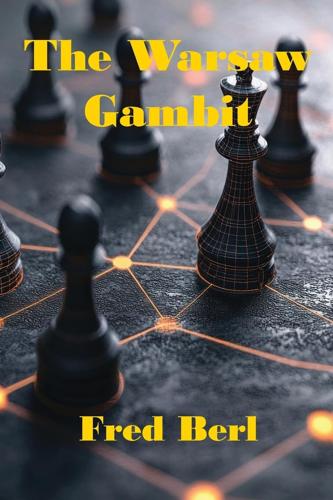
- “The Warsaw Gambit” by Fred Berl. Joshua Tree Publishing. 233 pp. $16.95 paperback; $9.99 Kindle.

Navy veteran and retired Los Alamos lab manager of nuclear weapons projects, Ukrainian nuclear power plants, and the UK’s atomic weapons establishment, Fred Berl has the creds to produce a spy novel that pushes today’s political, weapons, and technological realities into an imaginary future.
At issue is the secret invention of an AI-enhanced laser weapons system that renders battle tanks both deadly and invulnerable to enemy fire. Its inventor, Dr. Gomatan Chandra, developed his system to strengthen India on its China and Pakistan borders. A Russian agent, however, has stolen its plans and secreted them in Moscow. There’s instability worldwide as this novel opens. Europe is on tenterhooks as Putin continues his incursion into Ukraine (supported by the unnamed president of the United States), and he seems set on re-establishing a Russian empire. This is threatening to Poland and Lithuania, which feel they cannot depend on post-WW II alliances, and are concocting a defensive scheme on their own.
The Russians have killed Dr. Chandra’s wife and threaten his daughter, so he cannot go to authorities for help, so he turns to a former student of his, ex-CIA agent Carl Stockwell. Stockwell will navigate the sticky web of international espionage to lead a covert Ukrainian-Polish team deep into Russia to try to retrieve the plans.
“The Warsaw Gambit” is a complex tale with multiple settings — various sites in Ukraine, India, the U.S., Poland, Estonia, and Russia — a large cast of characters, and informed scientific, nuclear and technological elements. Of particular interest to this reader are the histories Berl includes of the regions in which these geopolitical tensions are playing out. Their global interconnected vulnerabilities speak chillingly to our time.
The top stories from Sunday's Home+Life section in the Arizona Daily Star.
Former high school and college English instructor Christine Wald-Hopkins is an essayist and longtime regional and local book critic.
If you are a Southern Arizona author and would like your book to be considered for this column, send a copy to: Elaine Encinas, P.O. Box 26887, Tucson, AZ, 85726-6887. Give the price and contact name. Books must have been published within a year. Authors may submit no more than one book per calendar year.