Newly reviewed books by local authors:
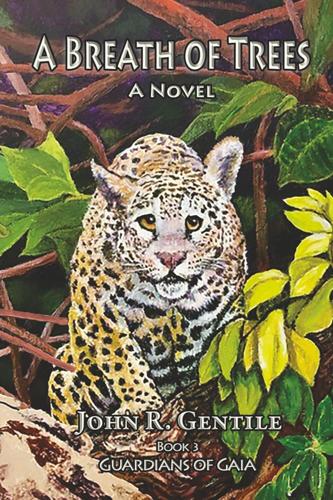
- “A Breath of Trees” by John R. Gentile. Wild Spirit Books. 399 pp. $19.95 paperback; $9.95 Kindle.
John R. Gentile’s fictional investigative reporter Emily Rosen is inexplicably drawn to bring to light the straits of the Amazon Yanomami people — The People of the Forest — in Brazil and Venezuela. So Gentile wrote this book.
This third Guardians of the Gaia action-adventure novel opens with the conservation warriors Gaia Team worried about their colleague Rosen. She’s off the grid and unreachable. Stressed by saving Tanzanian elephants from poachers, bereft over the death of her father, and haunted by dreams of a jaguar, she had broken up with her partner Jake Spinner and traveled alone into the Amazon rainforest. When she doesn’t report on schedule, Spinner and the eight other team members convene and head toward her last location, Onça Negro, a Yanomami village on a tributary of the Rio Negro in Brazil. They find her, but what they find is a cranky, unappreciative Rosen. She had, in fact, been kidnapped, but had already been rescued by the shaman from the village and … a jaguar.
People are also reading…

That rescue, however, triggers a greater need for the team: Rosen had been targeted for rape and murder by João de Reis, the owner of an illegal gold mine upstream, which has sickened the villagers and killed off their fish and wildlife. Knowing that João de Reis’s security thugs and miners would spare the lives of no Yanomami suspected of harboring Rosen, the villagers had fled Onça Negro and taken refuge on an escarpment deep in the forest. It would fall to the Gaia group and village’s handful of men armed with bows and blowguns — plus resources of the Amazon — to hold off de Reis’s 35 heavily-armed goons.
This is a terrific, multi-faceted read: a full-action page-turner, a compassionate cultural study of an endangered, thousands-years-old tribe — complete with Portuguese and Yanomami language glossaries; an alert to depredations to the Amazon region, a touch of spiritualism, a love story to big cats (yes, suspend disbelief — Rosen connects with a jaguar), and a cast of characters you hate to close the book on.
Gentile has clearly invested his heart in this work. Best of all, it informs and warns and entertains but doesn’t preach.
A portion of the profits from its sale will be donated to Survival International to support the Yanomami people and the Jaguar Identification Program.
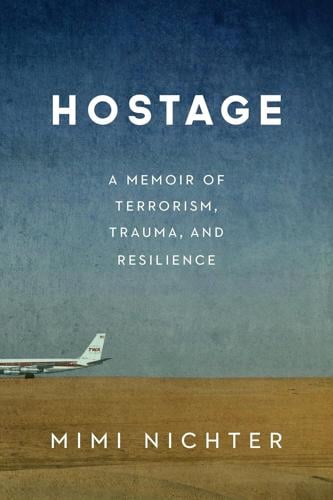
- “Hostage: A Memoir of Terrorism, Trauma, and Resilience” by Mimi Nichter. Potomac Books. 220 pp. $26.95.
It’s complicated.

When 20-year-old Mimi Nichter (née Beeber) was released from a 20-day Palestinian terrorist hijack hostage ordeal in 1970, she was hit with a barrage of “Far Out! Tell us all about it." To which, raw and overcome, she had no answers. Finally, more than five decades later, Nichter is able to address and reflect upon the trauma.
A University of Arizona professor amerita of anthropology, cultural and medical anthropologist Nichter brings an element of professional objectivity to her story in this compelling memoir.
About to enter her senior year at George Washington University, Nichter had just completed a summer in an Israeli kibbutz when she boarded TWA flight 741 in Tel Aviv for JFK. Just beyond Brussels and eight hours from New York, a man carrying a gun and a woman with a grenade rushed down the aisle, announced they were with the Popular Front for the Liberation of Palestine, and commandeered the plane. There were 145 passengers on board, including children. The plane then landed in barren desert outside Amman, Jordan, only to be joined by two other hijacked planes — a Swissaire and a BOAC — setting off an international crisis and igniting a civil war around them.
Nichter lays out her experience day by day, with physical trials alternating with psychological — limited food and water; stinking, clogged toilets; searing heat; with threats and interrogations; hopes for release raised and dashed; the intimidation of male guerrilla guards as women with children are released. As days go by, Mimi Beeber and just four other young women remained imprisoned with 17 of the original men, no longer on the plane, but in a building in a location where they feared they wouldn't be found.
A real strength of this memoir is that, in addition to recounting the story itself (which is gripping), Nichter reflects on causes and consequences of the Palestinian terrorism, on refugees from their homeland in Jordan, on competing Palestinian groups; on the natures of Jewish practice — from Zionist to secular —which Nichter applies to her own orthodox-raised secularism.
It’s complicated; it’s fascinating.
Mimi Nichter will be a featured author at the Tucson Festival of Books.
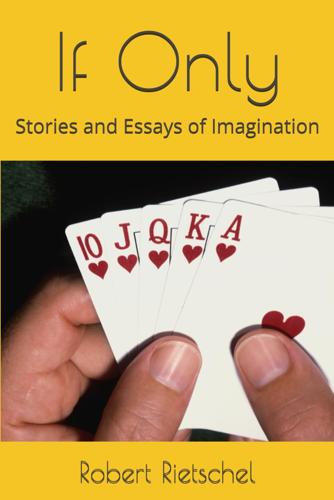
- “If Only: Stories and Essays of Imagination” by Robert Rietschel. Kindle Direct Publishing. 202 pp. $9.99 paperback; $3.99 Kindle.
Green Valley retired dermatologist Robert Rietschel entertains some intellectual and philosophical notions in this engaging collection of short stories and essays: A nineteenth century New Orleans cotton exporter and his harp-playing wife meet Felix Mendelssohn on their European tour and receive a shock when they return. A man gets so drunk he thinks himself invisible. Two culinary arts students open a college-town restaurant they call the Philosopher’s Grill that inspires spirited debate. A series of volcanic eruptions causes a natural culling of the world’s population, plants talk, and a researcher sells his cure for all diseases for $10 million.

The “if only” aspect of the collection appears as mini premises that counter each story or essay’s premise at its end. For the cotton exporter and his wife, for example: “If only the world evaluated us for what we contribute and not where we came from.” Making a satirical argument for “alternative facts,” he writes,” if only people didn’t try to manipulate us by clever rhetoric….” For the Philosopher’s Grill story (this reviewer’s favorite, for its creative philosophers’ menu items — the Hedonist is a double blue cheeseburger with truffle fries and a chocolate milkshake): “If only college students were able to pursue education independent of cost considerations….”
Issues like stewardship of the planet, access to health care, the ecological importance of diversity and cooperation, the incursion of AI into personal life dwell lightly under these tales, some of which read like fables. Another of this reader’s favorites (spoiler alert!), has travelers seeking El Dorado — the City of Gold — and actually finding it. It’s a full city, much like D.C., with monuments — Jefferson and Lincoln — and a capitol. It even has a White House, all clad in gold, adorned at the whim of a previous leader. But the city is vacant — having been determined toxic to human life. And the gold? Common as dirt. And as valuable. Need we say more?
- “Let Him Go Wild: A Coronado Trail Adventure” by Robert Ronning. Desert Paws Books. $11.99 paperback; $4.99 Kindle.
It’s tough to change your habits. If you’re in the habit, for example, of being an eco-protester, and you got arrested for chaining yourself to a federal building to protest the killing of coyotes, it’s really hard to resist breaking the law to protect a cute coyote pup that just starts hanging around. Even if you’re still on probation and risk going back to jail.
Such is the problem for Jesse Hayduke, last seen in Robert Ronning’s “Wild Call to Boulder Field.” Park ranger Wade Conrad has secured Jesse a job at a golf course along the White Mountains’ Coronado Trail — a job with few appeals to a twenty-something nature-loving boy, save for attractive Apache/Mexican concessions-cart girl Ruby, and the vulnerable, young coyote they dub Perrito. There are dangerous predators in the forests to which the golf course abuts — other coyotes, wolves, possibly even a jaguar —but the greater threat to Perrito is the trapper/black market wildlife trader who tricked and trapped Perrito’s mother and siblings.

The Coronado Trail and Blue Range Wilderness are an ideal setting for Ronning’s animal-rights motif — wildlife abound, and the trail is rugged. He captures the reader through young romance, the threat to the animals, an effectively suspenseful showdown, but, ultimately, in the hard choice Jesse must make about his beloved Perrito.
Kids' Corner
- “Good Night, What Ifs” written by Enrique Aldana; illustrated by Lee Hays. Independently published. 17 pp. $15.99.
In this appealing, rhyming picture book, Enrique Aldana and Lee Hays name children’s possible fears and show how to deal with them. The “What Ifs” (ruined birthdays, fake friends, for example) can be banished by facing them confidently or confiding in a trusted friend or adult. Then, “Snuggle in tight, with dreams on the way,/ Knowing What Ifs can’t keep sleep at bay./ You’re bigger and braver than/ they’ll ever know. /And your heart’s little light makes/ them softer and slow.” Indeed.
Former high school and college English instructor Christine Wald-Hopkins is an essayist and longtime regional and local book critic.
If you are a Southern Arizona author and would like your book to be considered for this column, send a copy to: Elaine Encinas, P.O. Box 26887, Tucson, AZ 85726-6887. Give the price and contact name. Books must have been published within a year. Authors may submit no more than one book per calendar year.