So you went to Spirit Halloween, Home Depot, Lowes and a few other places and spent enough on talking skeletons, twitching zombies and cackling witches to make your financial adviser scream. What'll you do with all this stuff?
"My first tip is to choose your ‘flavor’ of Halloween, since there are so many options," says Britta Peterson, who writes in Eerie Elegance, a magazine and blog devoted to Halloween. "Do you want cute, spooky, elegant, scary, gory or truly terrifying?"
"Start with something you genuinely love, like a horror franchise, a classic creature, a specific film, rather than grabbing whatever's on the shelf," says Miranda Enzor, editor of Spooky Little Halloween, a website and magazine.
"A yard built around one strong idea is always more memorable than one with a lot of Halloween stuff scattered around it," she says.
People are also reading…

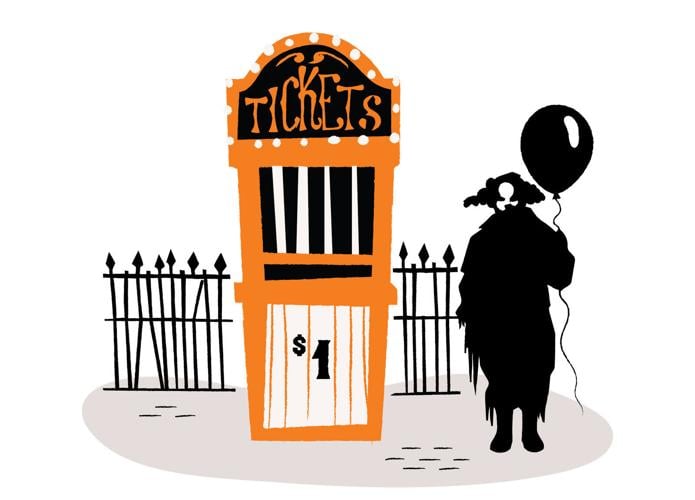
- Haunted carnival: Figures depicting scary clowns and sinister fortune-tellers; dilapidated ticket booth; crooked carnival signs.
1. Commit to a theme
"The same principle that makes a great Halloween party makes a great Halloween yard — commit to a theme and let every decision flow from it," Enzor says.
"You don't need to spend a lot to pull this off. You need intention," she says. "That's the thing that separates a decorated yard from an actual experience."
You want passers-by to take notice.
"Your street view is your invitation. It has to make someone stop and look," Enzor says. "Your yard is where the story lives. It's your main visual payoff. By the time someone is standing on your porch, they should feel like they've walked into something special."
Examples for possible themes include:
Haunted graveyard: Tombstones; skeletons, ghosts; a Grim Reaper.
Haunted house: Flickering lights and ghostly silhouettes inside; cobwebs on windows and door.
Horror movie: Figures depicting Dracula, Frankenstein’s monster, werewolves and others; movie-set-inspired props such as coffins or mad scientist tables.
Haunted carnival: Figures depicting scary clowns and sinister fortune-tellers; dilapidated ticket booth; crooked carnival signs.
Witches’ gathering: Figures of witches; brooms; cauldrons, spiderwebs.
2. Divide the yard into zones

- The driveway or walkway, with the main attraction.
You can adapt and modify ideas from theatrical set design and divide the space into zones. Consider what you’d see from:
The street, with something that attracts attention.
The driveway or walkway, with the main attraction.
The front porch or at the door, with interesting details.
3. Decide what goes where
Using a haunted graveyard motif as an example, you could place decorations something like this:
Driveway view
More tombstones, some cracked or toppled, and the main action scene, a large ghost or skeleton beckoning you in or a zombie climbing out of a grave.
Street view
Tombstones, a crooked entrance sign and sections of broken fencing establish a cemetery setting. A spooky groundskeeper off to the side would add to the illusion.
At the door
A small table with a skull, an electric candle, a moving hand and a rat or two. An unexpected movement could provide the final scare.
4. Don't forget color
"Your color palette is your editing tool. Pick two or three colors and use them as a filter for everything," Enzor says.
"A yard that commits to black, orange, and bone white looks designed. The same decorations in five different colors just looks like a lot of stuff."

Keep your yard free from obstacles and tripping hazards.
5. Be scary, but be safe
Make sure your yard is free of actual dangers. You don’t want anyone getting hurt.
A simple guide is to keep decorations from becoming obstacles. Make a clear path to the door that keeps visitors away from tripping hazards. Ensure that decorations won't be knocked down by wind.
Make sure there’s enough light for walking. You can use downward-facing lights to illuminate the path without distracting from decorations.
Secure any electrical cords to your decorations and eliminate tripping hazards. And while you’re at it, don’t forget to:
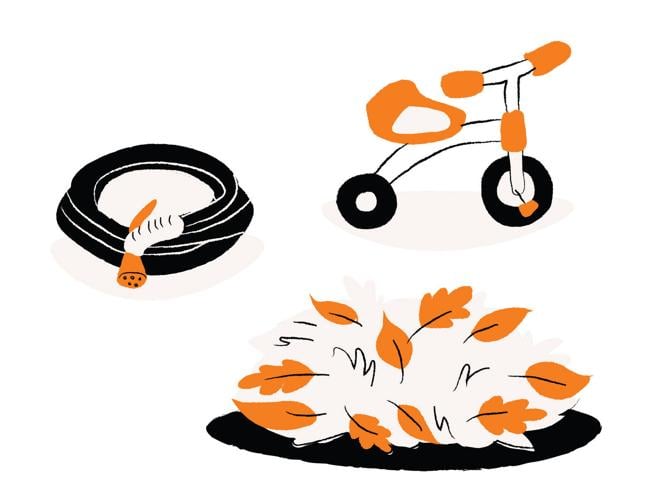
Put away tools, garden hoses and stray toys.
Sweep up steps and walkways.
Clear away fallen leaves.

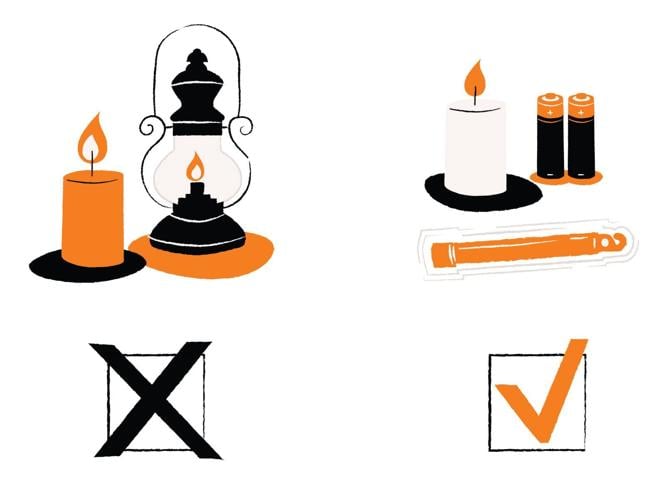
Reduce risk of fires by using battery-powered lights or glow sticks instead of candles or lanterns.
6. Don't use candles or open flames
To prevent fires, use battery-powered lights or glow sticks instead of candles or lanterns for your decorations and jack-o'-lanterns.
An average of 835 home fires were started by decorations each year from 2020-2024, according to the National Fire Protection Association.
The fires caused "an annual average of three civilian fire deaths, 29 civilian fire injuries, and $18 million in direct property damage," the NFPA says.

Sources: USA Today Network reporting and research; eerieelegance.blogspot.com; spookylittlehalloween.com; U.S. Consumer Product Safety Commission; National Fire Protection Association; National Retail Federation; hsi.com