

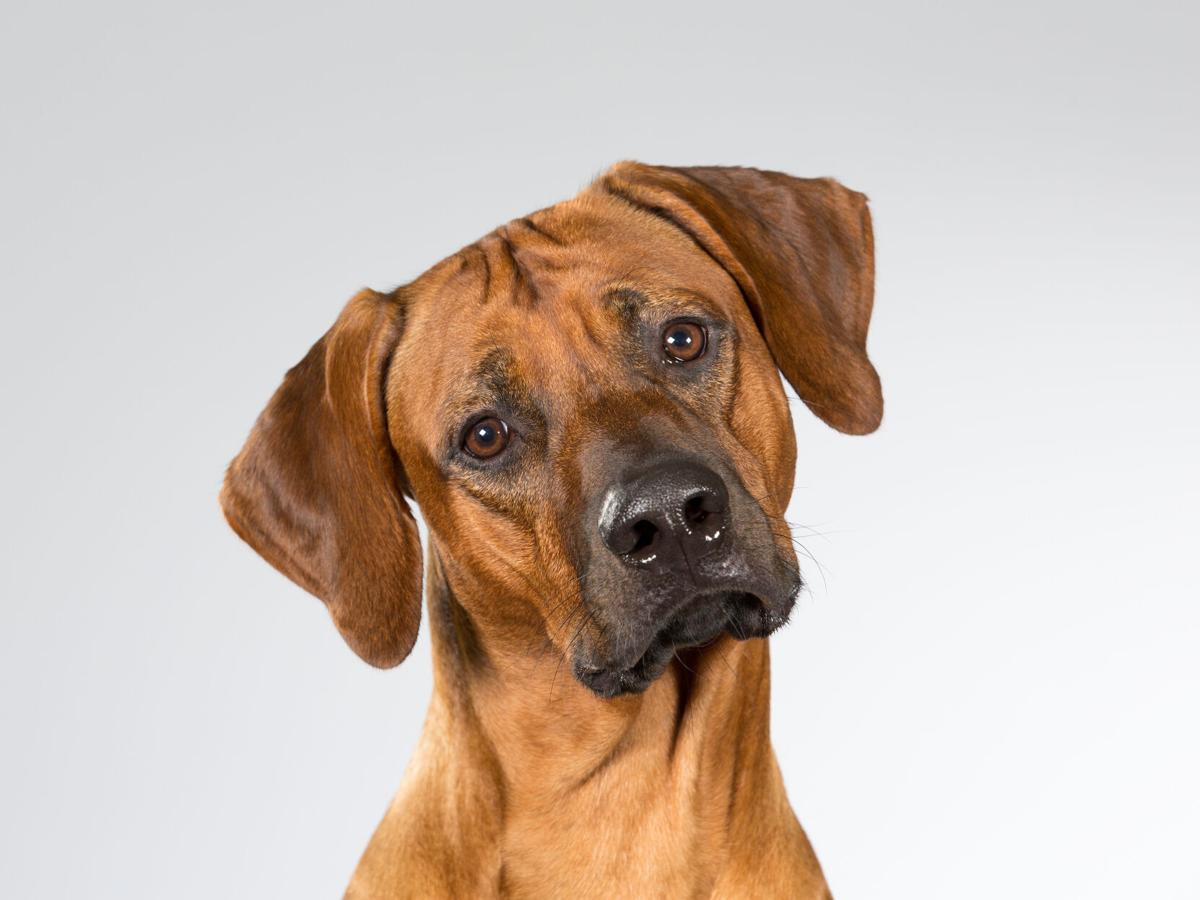
Dogs experience many of the same emotions we do, and many of us would love to know exactly what our dogs are feeling. Though dogs have facial expressions, it can be hard to tell what they are trying to communicate.
The American Kennel Club offers the following tips for interpreting your dog’s facial expressions:
Position of your dog’s ears and head
Head tilt: This head position could be related to vision or hearing. It indicates a dog is gathering information and is curious.
Lowered head: This indicates they are feeling unsure, and they are trying to appease you.
Pulled-back ears: If your dog pins their ears to the side of their head, this means they are scared, anxious or stressed. This also can be used as an appeasement signal in either a happy or fearful dog.
People are also reading…
Perked-up ears: When a dog’s ears come closer together across the top of their head, it is safe to assume they are thinking something positive.
Forward ears: If your dog’s ears are held upright and more forward than usual, the dog is likely aroused and alert. This could be due to frustration or aggression.
Shape of your dog’s eyes
Whale eye: When a dog shows the whites of their eyes, it means they feel stressed or anxious. This is known as whale eye. It is important to know when you are pushing your dog out of their comfort zone, as this can be a sign they are about to snap or bite.
Squinting: When a dog squints, it can mean they are so relaxed that their eyelids close almost all the way.
Hard eyes: If a dog’s eyes turn cold as they turn a hard stare at you, this is a signal they could turn aggressive quickly.
Staring: This is a direct sign of love, if it is with soft eyes. But if their eyes are cold, back off as they could become aggressive.
Blinking: A slow blink is a sign of them being comfortable and happy, while rapid blinking can be a sign of stress or frustration.
Puppy dog eyes: This adorable and well-known face can indicate they are sad or that they want something.
Your dog’s mouth
Lip licking: When your dog licks their nose or lips, it can indicate they are stressed or a sign of appeasement.
Tongue hanging out: If your dog’s tongue is hanging out of the side of their mouth, they are happy and relaxed. However, if their tongue is short and sticking out straight, it can indicate stress.
Open mouth: Relaxed dogs often let their mouths hang open a bit. In contrast, a closed mouth sometimes can indicate tension.
Yawning: When a dog yawns, it can signal stress or anxiety. Don’t be surprised if your dog responds to your yawn with one of their own.
Panting: While dogs usually pant to cool down, rapid or shallow panting can signal stress.
Several facial expressions have multiple meanings, so it's important to assess their entire body language. If you can learn to read the whole dog, you’ll be far more successful at understanding dogs’ emotional states and intentions.


