

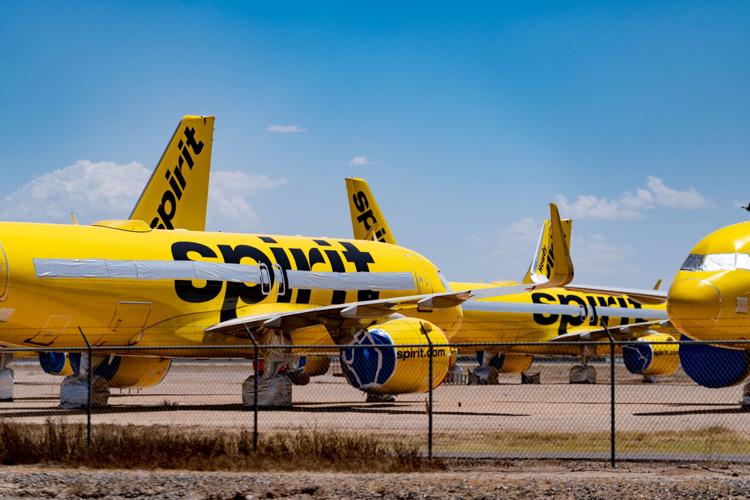

When the low-cost Spirit Airlines ceased operations May 2, it created an opening for other carriers to grow.
Here’s what analysts say likely will happen:
Ticket prices will rise
Airfares are likely to go up, especially in markets where Spirit competed with other airlines. Airlines struggle with higher fuel costs because of the Iran war, and the exit of a low-cost competitor means other companies don’t have to compete as strenuously on price.
“That will make it a lot easier for carriers that remain to raise prices to cover the higher costs they’re experiencing. It’ll accelerate the rate at which they can raise prices,” said Robert W. Mann Jr., a former airline executive officer and current president of R.W. Mann and Co., an independent airline consultancy.
People are also reading…
He warned that as airlines raise prices, they also may cut off some demand, especially as more cost-sensitive travelers get priced out of the market.
Ahmed Abdelghany, associate dean for research and professor of operations management at Embry-Riddle Aeronautical University, said travelers will need to be ready to pay more.
Spirit's "low price was helping the consumer and forcing other airlines in many markets to match that low fare in some of their booking classes,” he said. “You are not losing capacity permanently for sure, but what you are losing permanently is the lowest price point in the market.”
Rivals to expand
Airlines are likely to work overtime to fill the gaps left by Spirit, particularly in profitable, popular Florida markets.
JetBlue, one of Spirit’s biggest competitors in the Sunshine State, already announced aggressive moves to expand there. The company announced 11 new routes from Fort Lauderdale, a former Spirit hub, on May 4.
Abdelghany said the move wasn’t surprising and already was telegraphed by JetBlue and other airlines as Spirit contracted its operations during successive bankruptcies in the past few years.
“It’s happened before: The shutdown of Spirit Airlines didn’t happen overnight. It was cutting routes and cutting destinations over the last few months,” he said. “This is going to be mostly absorbed in the markets. Another airline will come and fill those routes or expand in those markets.”
Mann said JetBlue is probably the best-positioned airline to benefit from Spirit’s shutdown, since it already has such a solid foothold in Florida.
It also makes it more likely that JetBlue will be acquired by another airline down the road, Mann said. Spirit’s exit from the market gives JetBlue, which had financial struggles of its own in recent years, an opportunity to capture some additional revenue and make itself a more attractive takeover target.
Reuters reported the Trump administration signaled in April that it would favor more consolidation in the airline market, suggesting a potentially major antitrust roadblock may not be much of an obstacle.
Aircraft to be redeployed
As aircraft manufacturers face delays in delivering new planes to customers, there will likely be a scramble for Spirit’s all-Airbus fleet. But, Mann warned, the redeployment of Spirit’s planes won’t happen overnight, and likely won’t help add capacity during the peak summer travel season, at least this year.
He added that it can take a month or more just for planes to be inspected, repaired and retrofitted when a new company brings them on board.
According to data from aviation analytics company Cirium, Spirit had 172 planes in its fleet when it shut down. Of those, 95 were in active service and 77 were in storage, largely in Arizona; 124 of Spirit’s planes were leased, which means they’ll be returned to the lessor.
Some of the 48 owned planes were signed over to a lessor previously, meaning the bankruptcy proceedings will only result in a direct sale of a few of the aircraft in Spirit’s fleet.
Still, Abdelghany said, airlines around the world will be happy to take them on.
According to Cirium, Frontier Airlines, another all-Airbus American ultra-low-cost carrier, is one of the likeliest companies to directly benefit from Spirit’s aircraft. Other airlines globally, including in the Asia-Pacific and Latin American regions, could wind up with some of the airframes, as well.
Frontier Airlines did not immediately respond to a request for comment on its plans.
Workers may be rehired
An airline winding down its business often leaves thousands of workers without jobs, but in the tight aviation market, many of those professionals — especially pilots and flight attendants — are likely to be able to get hired at other carriers as former competitor airlines look to expand in markets Spirit once served.


