

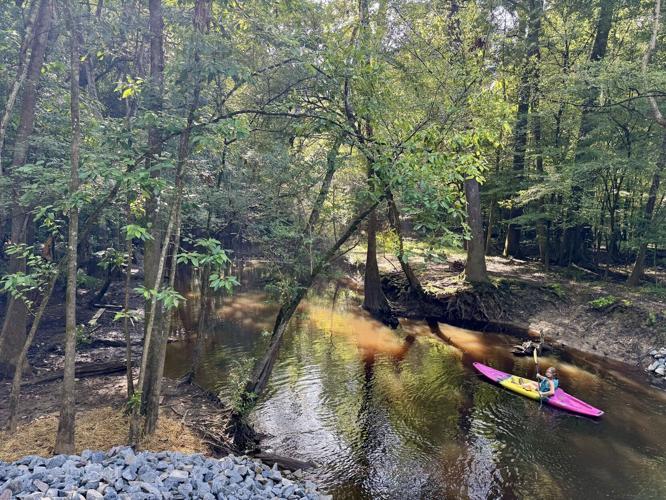
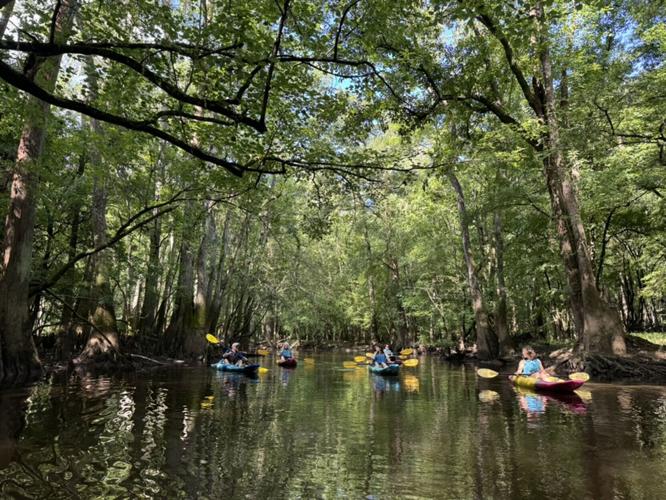
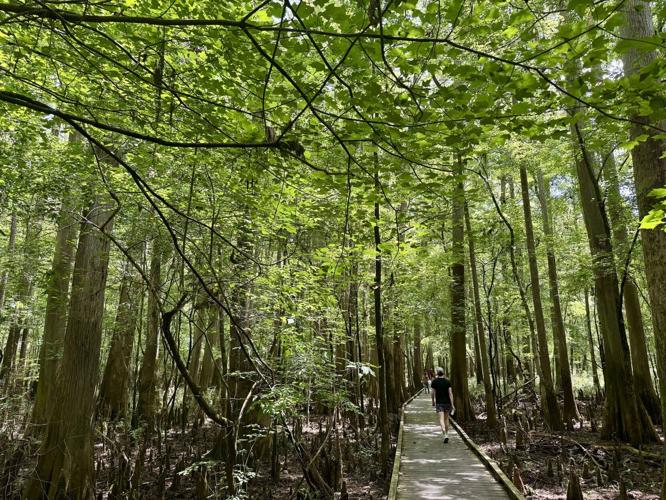
The buzz of cicadas and a hefty dose of South Carolina humidity filled the air as I paddled a kayak through Congaree National Park. Towering bald cypresses and tupelos flanked my route along serene Cedar Creek, where a football-sized turtle basked in the sun on a fallen tree.
This kind of woodsy, watery landscape once covered tens of millions of acres of the southeastern United States. These days, the country’s largest remaining swath of old-growth floodplain forest sits right here in Congaree, one of the least visited national parks.
Paddling in Congaree and hiking its 25-plus miles of trails are just a few of the outdoor pursuits you’ll find in this part of the Palmetto State — the part that doesn’t command prime Atlantic Coast real estate like Myrtle Beach, Charleston or Hilton Head Island. But the more lightly touristed interior has plenty to offer when it comes to alfresco adventures, vibrant downtowns and South Carolina’s famed cuisine. All of it can be found in and around the capital city of Columbia and further northwest in Greenville, an Upstate gem at the foothills of the Blue Ridge Mountains.
People are also reading…
“That’s a yellow-bellied slider,” said my kayak guide, Alan Kelso, as we slowly paddled past the sunbathing turtle. “You see a lot of different wildlife out here. It’s so peaceful and quiet. Hard to believe we’re so close to a city.”
Congaree’s visitor center is only 20 miles from the South Carolina State House in downtown Columbia. And the state capitol is a short walk from one of Columbia’s newest hotels, the Lantern. The 59-room property opened earlier this year in a historic firehouse.
Part of the Lantern’s employment model calls for training and hiring people with intellectual and developmental disabilities, many of whom studied hospitality at the nearby University of South Carolina’s flagship campus.
The boutique hotel’s Ladder 13 restaurant has a wood-fired pizza oven that cranks out tasty pies in the former firehouse engine bay. For lunch, drop by the Spotted Salamander cafe on Richland Street. James Beard Award semifinalist Jessica Shillato’s fried chicken is the special on Tuesdays. On Fridays, it’s burgers. And every day is a good day for her deviled eggs and oatmeal cream pie.
Barbecue fans in town on the weekend should head to West Columbia for Texas brisket and Carolina pork that’s worth lining up for. And there will be a line. Pitmaster Robbie Robinson, a James Beard finalist in 2024 and 2025, only opens his City Limits Barbeque for nine hours a week; six on Saturday and three on Sunday.
Roughly 100 miles northwest of the capital, Greenville is another buzzy food city well positioned for outdoor fun. The Michelin Guide chose Greenville to host its inaugural American South awards last year, when the city’s French bistro-inspired Scoundrel snagged a Michelin star.
The greater Greenville region has grown into a cycling mecca, both for mountain bikers and those who prefer to push the pedals on pavement. Former pro bike racer George Hincapie chose to live and train here because the rolling hills and challenging climbs reminded him of Europe, where he competed in 17 Tours de France.
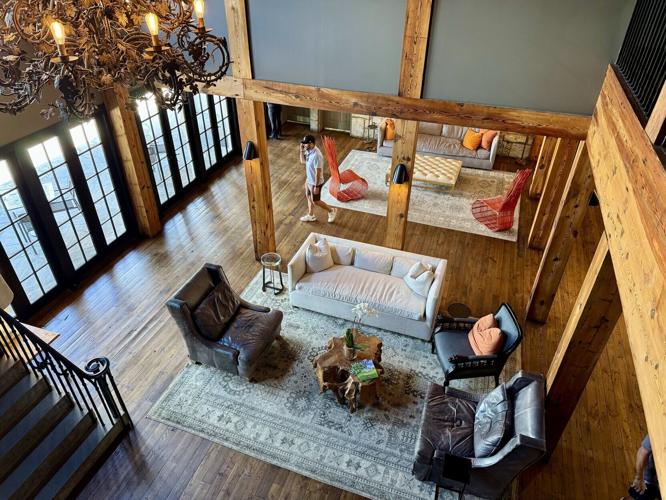
Hincapie is a co-owner of Hotel Domestique, a 13-room inn at the foot of the Blue Ridge Mountains. The intimate property spans 30 acres in a secluded part of Travelers Rest, a small town on the outskirts of Greenville.
Hotel Domestique isn’t exclusively for cyclists, but it caters to that cohort. Guests can rent gravel and road bikes and hit Hincapie’s favorite training routes, with or without a guide. A basket in the lobby is stocked with slippers for people wearing cleated cycling shoes that can damage the wood floors. Many of the guestrooms are named for classic Tour de France summits, and they all come equipped with massage guns.
The hotel is the center of action for the annual Gran Fondo Hincapie – Greenville, Oct. 16-17. More than 2,000 participants from around the globe pedal routes ranging from 15 to 85 miles during the autumn cycling event.
Chef Haydn Shaak wasn’t a cyclist in 2018, when he started helming Hotel Domestique’s Restaurant 17. But he quickly caught the biking bug.
“I was late to the party. Now I love it so much, I sometimes ride to work,” said Shaak, whose other favorite outdoor pastime is foraging for mushrooms. He’s licensed to do the latter. His foraged finds sometimes end up on the restaurant’s seasonally driven menu.
“I’m lucky to be somewhere that I can pull so many ingredients from all these local farms and providers,” he said.
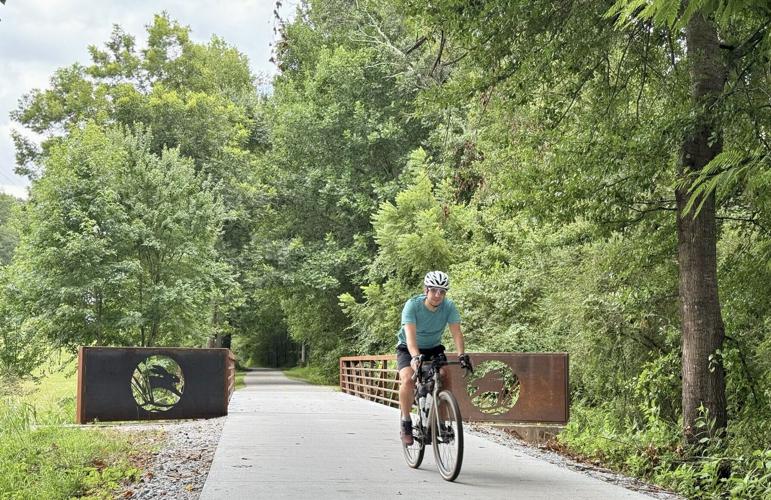
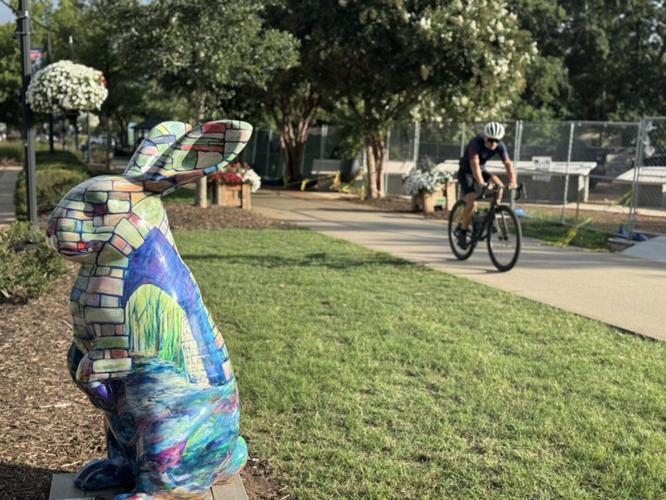
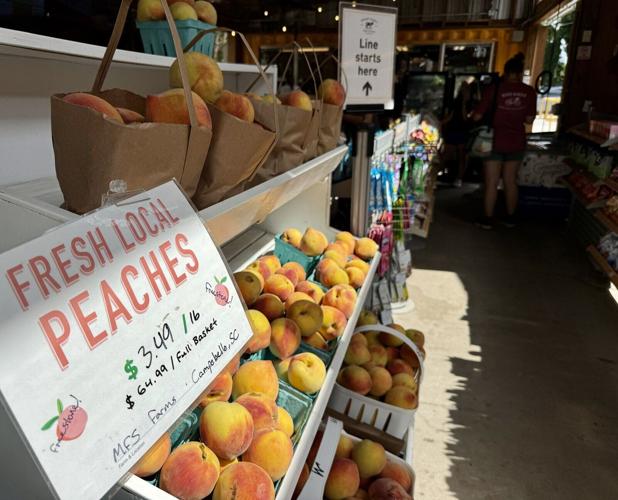
Local food makers and farmers — more than 300 of them — supply stock for the bustling Swamp Rabbit Cafe & Grocery in Greenville. This convivial spot sits next to the Swamp Rabbit Trail, a 32-mile multi-use path connecting Greenville and Travelers Rest.
Fuel up with a peach almond scone or any of the cafe’s fresh-baked treats and join the walkers, joggers and cyclists on the greenway. You might come across other critters, too. I saw a river otter, deer and the trail’s namesake rabbit on a recent two-wheeled trip.
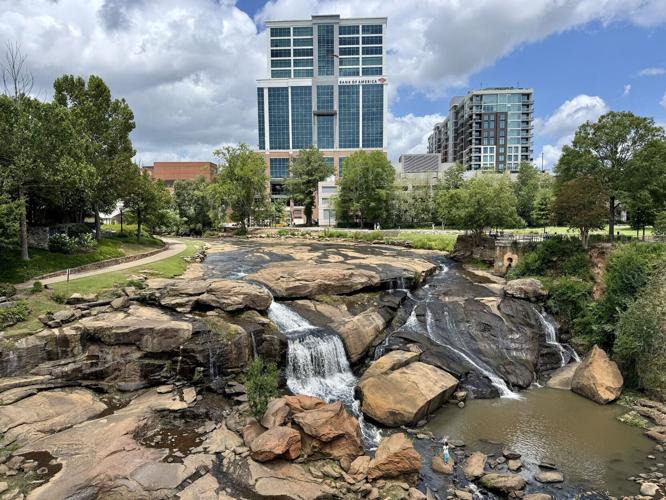
Give yourself time off the trail to linger in downtown Greenville’s Falls Park, where you can take in views of the Reedy River’s urban waterfall from a sleek suspension bridge. Pull over for a cup of locally roasted Methodical Coffee at The Commons. The food hall fronts the trail in Unity Park, a 60-acre expanse that merges two historically segregated parks.
The north end of the trail follows an old railway line through downtown Travelers Rest, or TR, as the locals call it. It passes right by chef Adam Cooke’s acclaimed Topsoil Kitchen & Market, one of five Greenville-area restaurants that got a shout-out in the new Michelin Guide American South.
Topsoil’s bread, pastas, desserts — everything is made in-house, in the newly expanded kitchen. Dishes on the ever-changing menu can include beet hummus, acorn squash in mole negro and pork belly with smoked onion gastrique and seared peaches.
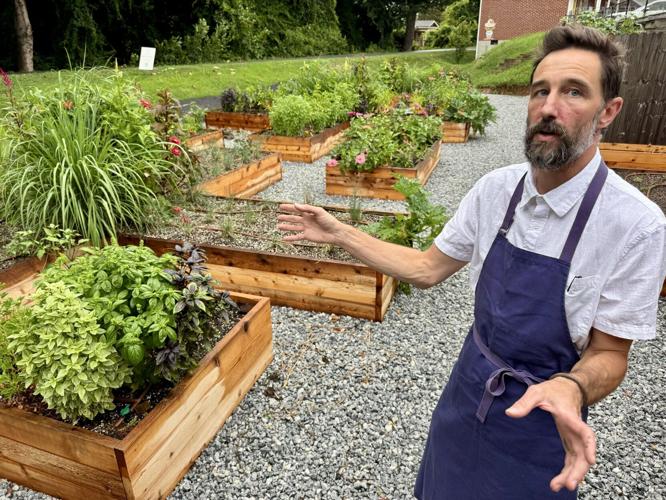
The hyper-local offerings lean heavily on produce from nearby farms and, as of this summer, the restaurant’s new trailside garden. Cooke and his resident farmer grow fairy tale eggplant, banana peppers, spinach and more in the garden’s raised beds.
“Now the cooks can just go right down there and get what they need, when they need it,” Cooke said. “The nightly salad can be based on whatever is ready to pick.”
Topsoil’s weekend brunch has become super popular. Same for Sunday night’s surprise five-course tasting experience, billed as “a culinary trust fall.” Make reservations in advance.
“We’re not the kind of place that pulls a ton of business from the trail, but I’m glad it’s there,” Cooke said. “It’s created some of the vibe for this healthy, outdoor lifestyle that seems to draw people here.”
_____


