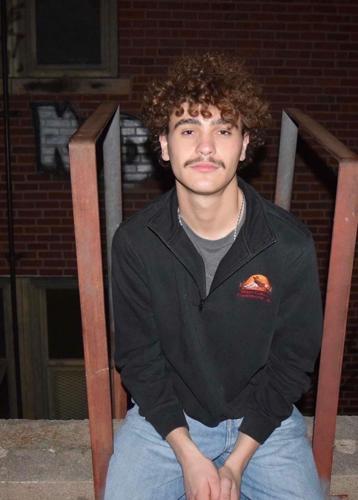
Evan Bartholomew looked forward to his 21st birthday in August.

Evan Bartholomew, 20, died after taking a synthetic form of kratom, which the Oklahoma State Department of Health labeled as a public health concern.
A graduate of Yukon High School, Bartholomew went to the University of Oklahoma and hoped to be a dentist, but he didn’t have the money to finish school. He passed a state exam for his life insurance license and thought about turning his passion for photography into a side gig.
He died June 25 after taking a single pill of synthetic kratom he bought at a gas station. He died from an overdose 10 days later in a hospital's intensive care unit.
His death is one of at least 58 in Oklahoma tied to kratom products since January 2025.
His 22-year-old sister Peyten and their mother, Miranda, don't know how to move forward.
“His presence and spirit was just really bright and contagious, and I miss him so much,” Miranda Bartholomew said as she cried. “I just don’t understand, and I have so many questions for God, but I just have to trust that he’ll be the person I get to see when I get to Heaven.”
People are also reading…
Weeks after Evan Bartholomew died, Oklahoma authorities issued a public health alert warning people about the dangers of kratom, a drug derived from a tree in southeast Asia.
The chemicals found inside the plant are used for pain relief, mood enhancement and relief from symptoms of opioid withdrawal. However, Oklahoma’s anti-drug agency warned the public about synthetic kratom products containing high levels of 7-hydroxymitragynine, or 7-OH, which authorities say is 10 to 30 times more potent and addictive than natural kratom.

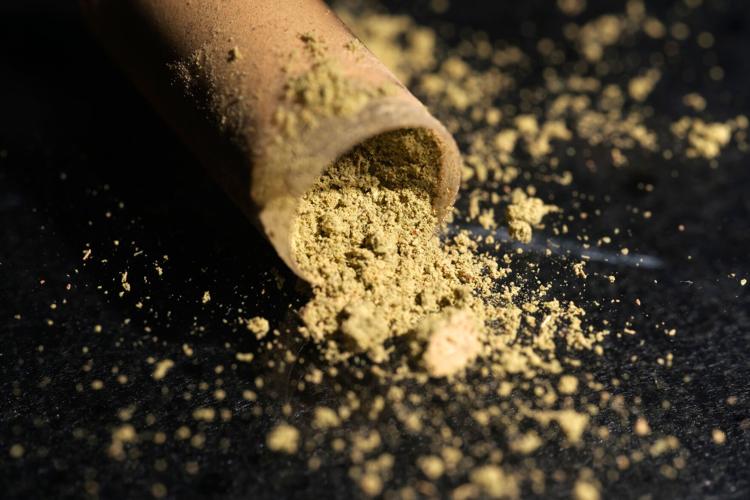
An open capsule of kratom is shown.
State law prohibits the sale of any kratom products testing above 1% 7-OH, but lawmakers and officials say enforcement is limited due to 7-OH not being a Schedule 1 drug. Those are controlled substances that are considered highly addictive with no health benefits.
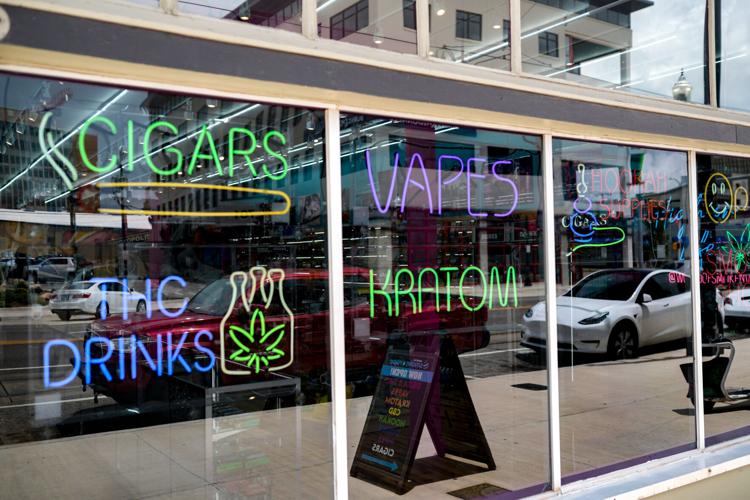
Kratom products can easily be found at gas stations, convenience stores and smoke shops.
A tall man at 6 foot 4, Evan Bartholomew sometimes complained about pain in his lower back. He heard about kratom on TikTok, and his phone showed he tried to use ChatGPT to research kratom before his death, his family said.
According to his mother and sister, Bartholomew’s ChatGPT and Google search results likely led him to believe a potentially fatal outcome with kratom use was “highly unlikely.”
Peyten later found him unresponsive in his room in the family's Moore home. She said paramedics initially assumed her brother used heroin. When she told them he only took a 7-OH kratom pill, they seemed unaware of what that was.
Their mother hopes greater awareness about the risks of synthetic 7-OH products can keep more people safe and bring about stricter enforcement against 7-OH. She said she does not want another family to suffer what hers experienced because of another child’s “false sense of security” that synthetic kratom doesn’t carry the same risk as opioids such as fentanyl.
“He had a good head on his shoulders, and I think that he just made this mistake because he thought, ‘Oh, it can’t be bad — I can get it at the gas station,’ you know?” Miranda Bartholomew said.

World of Smoke and Vapes displays a sign for kratom July 16 in Oklahoma City.
Oklahoma’s Kratom Consumer Protection Act, passed in 2021 and updated twice, mandated regulations for the sale of kratom, including age restrictions, labeling requirements and potency caps.
Still, the dozens of kratom-linked deaths in Oklahoma signal that illicit products are sold in the state, said Mark Woodward, a spokesman for the Oklahoma Bureau of Narcotics and Dangerous Drugs Control. He said retailers need to be aware whether the product on their shelves is compliant with state law.
“That is the responsibility of the stores, to know what they’re selling, to know whether it is legal, and if they have any doubt, to pull it immediately and test it themselves to make sure that they’re not risking the health and safety of their customers,” Woodward said.
He said officials believe the surge in sales of synthetic 7-OH kratom products is responsible for the spike of recent deaths in Oklahoma. Prior to 2025, there were 14 fatal kratom-linked overdoses in 2023 and six in 2024, according to data shared by the state narcotics bureau.
Rep. Daniel Pae, a Lawton Republican and the primary author of the state’s kratom regulation legislation, believes it’s a matter of enforcement. He said the best way to empower law enforcement agencies to better tackle synthetic 7-OH is to make it a Schedule 1 drug, which the federal Drug Enforcement Administration filed notice of its intent to do, at least on a temporary basis.
“I think we should do that at the state level, and it’s my intention to file legislation when the time comes,” Pae said.
State Senate Bill 860 attempted to update the state's list of drugs classified as Schedule 1 controlled substances, which under the new proposal would have included concentrated and synthesized kratom products.
While the bill passed in the Senate last year, it died in the House. Pae said he thinks a version of the same bill deserves another try.

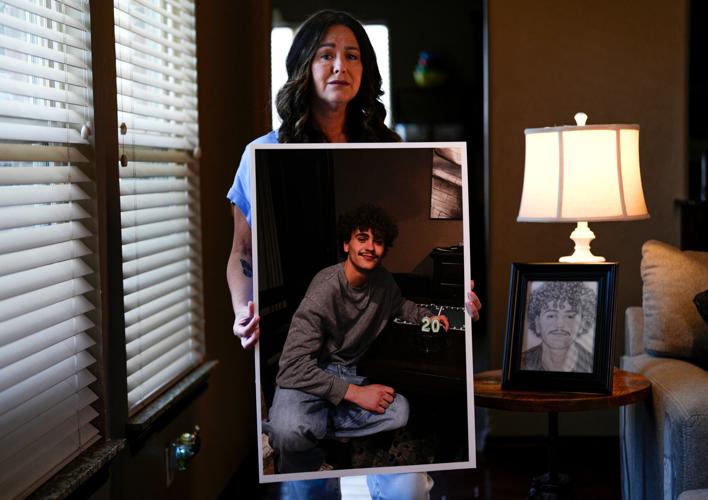
Miranda Bartholomew holds a picture of her son, Evan Bartholomew, on July 17 in her home in Moore, Okla. He died after taking a synthetic form of kratom.
Miranda Bartholomew said it’s hard to do anything else other than grieve for her son, but she said she would eventually like to become an advocate against 7-OH.
“Evan would just want people to know — just not to do it. Not to take it, because you just can’t trust it, because it’s poison and it can kill you,” she said.
A surgery service worker at the Veterans Affairs hospital, Miranda said she finds some comfort in the fact that her son’s organs were donated, per the designation on his drivers license. Hospital staff were able to save his heart, kidneys, liver and lungs.
Nurses held a June 27 honor walk for Evan Bartholomew. His mother said goodbye to her son. Though he had no brain activity, Miranda knew his hearing would have been the last sense to go.
“I was praying for a miracle the whole time in the hospital, because I just wanted my baby to be OK,” Miranda said. “And I know that there are other moms and families praying for miracles too, and they got to get theirs because he gave that to them, and I’m really proud of him for that.”
Miranda said her son's friends came to visit the family in the ICU waiting room. Family and friends will remember him as a friendly person who loved his cat Oliver, looking at the moon and connecting with nature.

Evan Bartholomew, left, with his sister Peyten as children.
Bartholomew had an appreciation for music and a drive to help people, even as a young boy. Miranda remembered when he was 8, he would offer his meal to unhoused people outside a drive-thru, and when teachers told her he would finish his coursework early and dance in class.
Miranda, Evan and Peyten navigated some traumatic events amid Miranda's divorce, but he always managed to make his family smile. His laugh was infectious.
“He even wrote me a letter — he was such a sweet boy — and he said, ‘I know you’re going through things that it feels like winter, but just know that I’m going to be your coat, always,’” Miranda recalled. “That’s just the kind of boy he was.”