
Here's a figure that might help put things in perspective if you attend the 24th annual Tour of Historic Florence Saturday: $29,000.
That's how much it cost, in 1891, to build the stately, tower-topped Second Pinal County Courthouse — one of the sites on the tour.
The cost of the building, which is known for its American Victorian architecture, was so laughably low by today's standards that it underscores just how much things have changed between then and now.
The full self-guided tour, which takes in 12 public buildings and private homes dating to Arizona's Territorial Period, is almost certain to deepen that historical perspective.
See the cover story inside for a preview of some of the sights on the tour as well as directions, prices and other useful information.
People are also reading…
FLORENCE — Countless thousands of people journey to Florence every year to see the birthplace of the grand revival of art and learning known as the Renaissance.
That Florence, alas, happens to be in Italy.
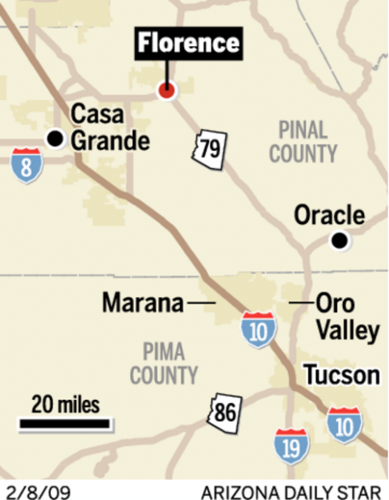
Ah, but this Florence, about 70 miles northwest of Tucson, has its own claim to historic fame — a veritable townful of historic buildings dating to the Arizona Territorial period of the late 1880s and early 1900s.
On Saturday, the town — with more than 120 buildings listed on the National Register of Historic Places — will show off some of its most notable structures at the 24th annual Tour of Historic Florence.
The tour "will highlight 12 public buildings and private homes built between 1870 and 1930," said Jennifer Evans, manager of the Florence Main Street Program.
"People come from all over the state for the self-guided tour," Evans said. "We'll have docents — some of them third- or fourth-generation residents — at each site to help visitors learn about the stories behind the buildings."
Sites on the tour range from historic public structures such as the 1891-vintage Second Pinal County Courthouse to private homes such as the 1870s-era George A. Brown house with colorful links to the past.
Today, we bring you a sneak peek preview of some of the buildings on the tour. See the "If you go" section for information on tour hours, maps, prices, directions to Florence and use of a free trolley service for the tour.
Pinal County Historical Museum
The museum, at 715 S. Main St., is one of the stops on the tour and offers a good opportunity to get a taste of Florence history before visiting other sites.
"There's some pretty amazing stuff here," said the museum's Chris Reid as she conducted a whirlwind tour of exhibits one day recently.
"Here's some cactus furniture — made from saguaro," Reid said. "And here's the Tom Mix display" — focusing on a Western film star who was killed in a car accident south of Florence in 1940.
Visitors, Reid said, might also be interested in an extensive exhibit about the Arizona State Prison in Florence, including a rather sobering display of actual nooses used in hangings there.
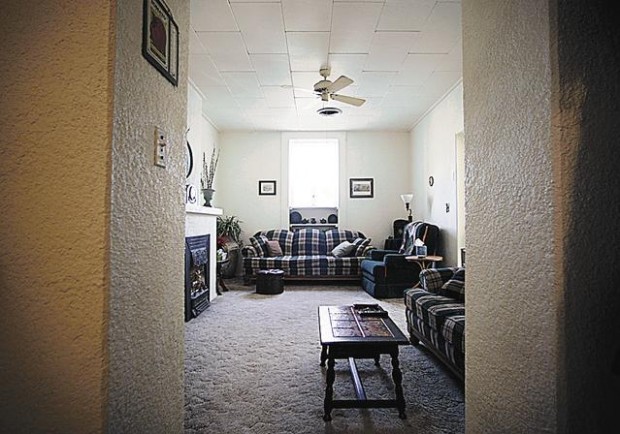
Other exhibits range from guns and bullets to quilts, antique clothing and a Victorian parlor setting that might fit well into some of the homes elsewhere on the tour.
Silver King Hotel
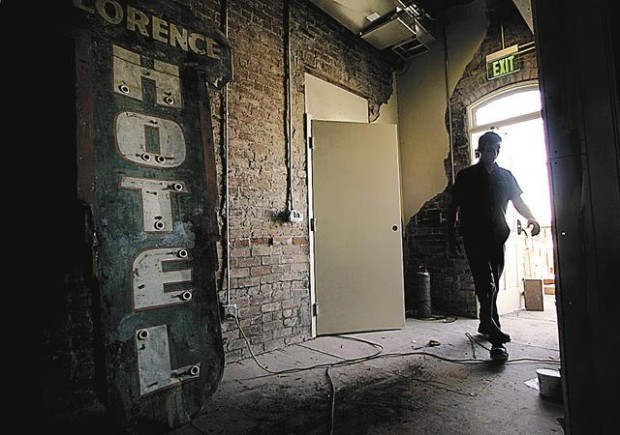
This building, at 24 W. Sixth St., is an 1895 brick structure that replaced the original hotel built a couple of decades earlier.
The town of Florence purchased the hotel about two years ago and has pumped some $700,000 into stabilization and renovation work, said town information officer Jess Knudson.
"The hotel will be on the tour, so people can get a look inside the building," Knudson said. "The plan is to attract commercial tenants and use it as a business incubator. We hope this will provide an anchor for the downtown district."
What is an old hotel without a resident ghost?
Enter Dan Dunn, project superintendent with a construction company working on the hotel renovation.
Dunn, shaking his head as if perplexed by the memory, said he witnessed a brief, ghostly appearance of "a little girl" during one of his visits to the site.
"It was weird," Dunn said. "I'm not a ghost hunter who goes around looking for that stuff. It was crazy."
George A. Brown House
The original version of this dwelling, at 125 W. Ruggles Ave., was a simple but sturdy room with 18-inch-thick adobe walls.
Built in 1875 by George Adelbert Brown, a Wells Fargo agent in Florence, the house has been expanded over the years with additional rooms and conveniences.
"It's a wonderful place, and it's on the National Register of Historic Places," said Chris Reid of the Pinal County Historical Museum, who currently lives in the house.
Tour visitors who come to the house will get a close-up look at the thick adobe walls and other features of the original room — and might also learn a bit about its builder.
Reid provided a nugget of written history, including this: "Brown was a very colorful character with his handlebar mustache, meticulous record-keeping, impeccable handwriting, grand storytelling abilities and his propensity to preface every comment with the expression 'By God!' — hence earning him the nickname of By God Brown."
McFarland State Historic Park
The park, at 24 W. Ruggles Ave., is centered on the First Pinal County Courthouse — a large adobe building dating to 1878.
"It's the oldest courthouse in the state and over 5,000 square feet in size," said park manager Christopher DeMille.
"There's a lot of history in this old place," DeMille said, noting that the building served as the county's courthouse from 1878 until 1891, when the second courthouse was opened.
The building then was used as a hospital for nearly 50 years and later housed county offices, Demille said. It also served as a museum before becoming a state park in the 1970s.
Among tour events at the park, which is undergoing stabilization and renovation work, will be an adobe-making demonstration and appearances by re-enactors in costume.
One good reason to visit the park soon: It has been mentioned as one of several state parks that could be closed because of budget shortages, said State Parks spokeswoman Ellen Bilbrey. She emphasized that it's not certain which, if any, parks will be closed.
Second Pinal County Courthouse
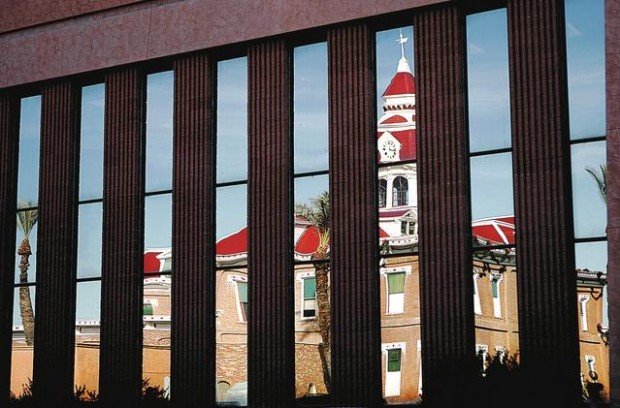
This stately edifice, built in 1891 at 135 N. Pinal St., is considered by many to be the most important architectural landmark in Florence and a superb example of the American-Victorian architectural style.
With a solid brick exterior, clock tower and lush grounds, it is currently unoccupied because of leaks in the roof and other problems. Plans call for continued repair work so the building can be opened to the public on a daily basis in addition to the annual historic tour.
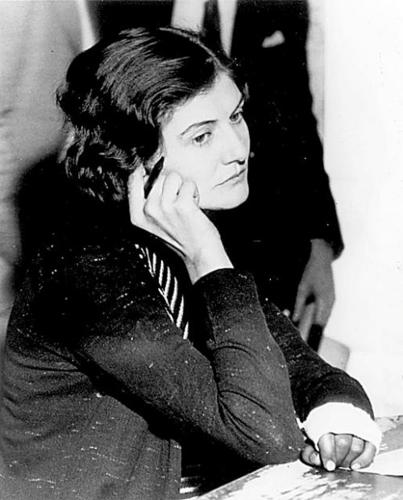
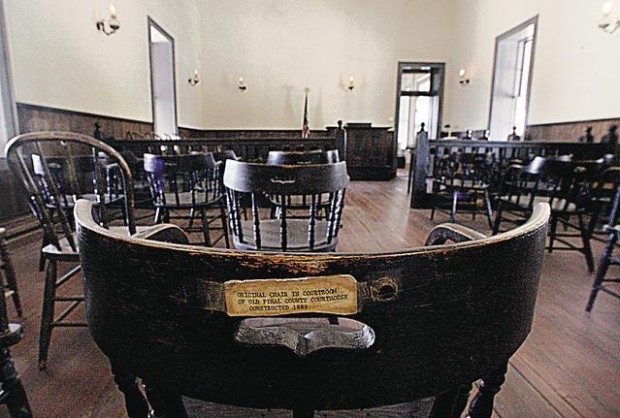
Among several well-known defendants to appear in the courthouse during its active days was Winnie Ruth Judd, known as the "trunk murderess" for dismembering her victims' bodies and shipping them in trunks.
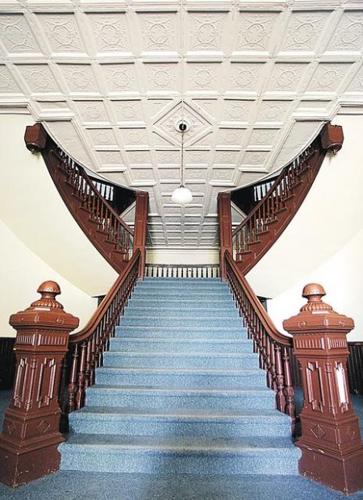
The interior of the building, which will be open for the tour, features spacious rooms, grand staircases and exceptional decor — lots of splendor considering the structure's 1891 construction cost of $29,000.
One quirky feature: The clock tower lacks real clocks. Because of a shortage of funds, the "clocks" are metal installations with the hands permanently set at 11:44.
Additional tour sites
Among other sites included in the tour are the Chapel of the Gila, the Brunenkant Bakery Building and the Jesus Preciado de Luna House.
Tour participants will receive a brochure with a map and a complete listing of tour stops.
If you go
• What: 24th annual Tour of Historic Florence
• When: 9 a.m. to 4 p.m. Saturday.
• Where: Florence, about 70 miles northwest of Tucson. Go north out of Tucson on Oracle Road, which becomes Arizona 77, and follow it to Oracle Junction. Turn onto Arizona 79 and continue northwest to Florence.
• Tour details: The tour begins at the Florence Visitor Center, at 291 N. Bailey St. in downtown Florence. Pick up a brochure and map there. Trolleys will provide free transportation to tour sites.
• Cost: $10 in advance or $12 on the day of the tour for participants 18 or older. Those 17 or younger attend free.
• Information: Go to www.florencemainstreet.com or call toll free at 1-866-977-4496.
Did you know
Among the many architectural styles in Florence are the Sonoran, American Victorian, Mission Revival, Neo-Classical Revival and American Bungalow styles.