

They held live wrestling matches in the studio, organized a paint-the-station day and ran a 24-hour "Star Trek" marathon that sparked a run on blank videotapes.
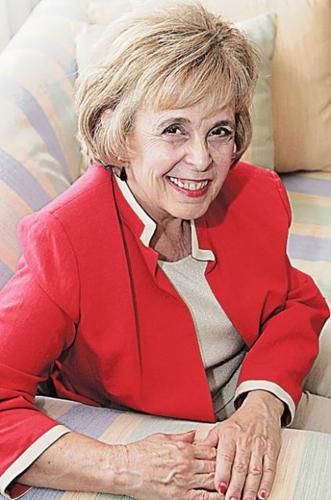
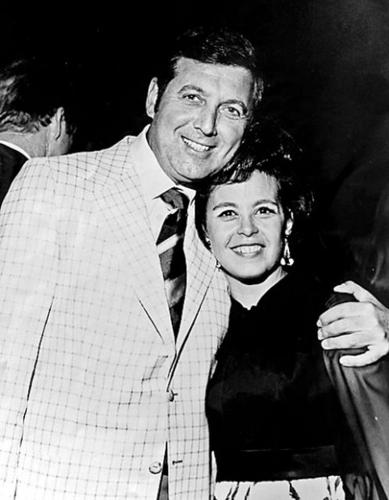
"All the stores in town were mad because they ran out of videotape," says Ellen Adelstein, who along with her late husband, Gene, once ran something pretty much akin to a mom-and-pop television station.
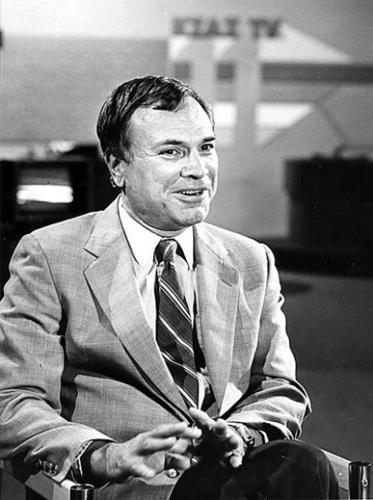
From 1970 through 1984, Gene Adelstein first managed and then with Ellen owned KZAZ-TV, Channel 11. Today, you know it as the Fox Network affiliate KMSB, home to such blockbusters as "24" and "American Idol."
But turn back the dial three decades and it was "Facts of Life" and "Gilligan's Island."
"We had the afternoon kiddie block," says Ellen. "Gene would ask Ilysha, our youngest daughter, which she wanted to watch, 'Facts' or 'Gilligan,' and he'd go buy it."
People are also reading…
High school sweethearts from Clayton, Mo., the two arrived in Tucson with their infant son, Evan, in 1961. Armed with a brand-new broadcast journalism degree from the University of Missouri, Gene went to work as news editor at KVOA-TV, Channel 4.
"Gene was making $400 a month, and out of that we were paying out $100 for college loans and $100 for rent," says Ellen.
In 1963, he moved to radio station KTKT as assistant news director. "I was a disc jockey and he was my newsman," says Ray Lindstrom. "He had a telephone hooked up to a tape machine and he'd call people and interview them. Unlike just about everybody else who would rip and read, he would generate his own stories."
Asa "Ace" Bushnell, who covered the police beat for the Tucson Citizen from 1962 to 1964, regarded Gene Adelstein as both friend and competitor. "Was he ever a hard worker," says Bushnell. "He never let up."
In 1964, Gene Adelstein moved to news director of KOLD-TV, Channel 13. Four years later, he became the city of Tucson's first public information officer. His pay: $12,500 a year, which generated a scornful editorial, says Ellen, in the morning paper.
By 1970, Gene, then only 30, was casting his lot as general manager at KZAZ. Licensed in Nogales, Ariz., in 1967, its studios were located in a former Safeway supermarket on North Tucson Boulevard.
"It was $2 million in debt and there was a terrible signal problem," says Ellen. "You could get up on the roof and attach a thing that looked like a coat hanger to the antenna and it would work fine. At first we gave them away, then we sold them for a dollar."
Once ensconced at the station, Gene started up a newsroom. One of his first hires was John C. Scott, who along with the late George Borozan held forth on an issues-discussion program for much of the '70s.
"Gene wanted to do the news even though the station did not have the resources to do it," says Scott. With no outside cameras, they were "reading the news."
Scott also got nabbed for extracurricular duties. "Gene asked me to chaperon his son, Evan. Gene was out of town. He asked me to pick up Evan and his girlfriend and take them someplace. By golly, I did."
That sort of family atmosphere also extended to painting chores. With no money to hire professionals, the station bought the paint and employees painted it over the weekend, says Ellen.
"We were total family. We were the smallest independent station in the country and we were No. 4, the last station in town. We had to try harder."
Meanwhile, inside the station, kiddie show host Uncle Bob Love held forth for years.
"We also had live wrestling in the studio every Saturday night," says Ellen. "We had a local promoter, with a ring and an audience. "
But it was basketball that really had viewers crawling up on their roofs to adjust their antennas.
"We struggled and struggled," says Ellen. "And then Fred Snowden came to town."
The first black head coach of a major university, Snowden came to Tucson in 1972 and began turning it into a basketball town. In 1976, the Wildcats won the Western Athletic Conference and advanced for the first time to the NCAA Sweet 16.
Gene Adelstein, who had played basketball in high school, saw it coming long before.
"Gene loved to go to basketball games," says Ellen. "He said, 'There's a new coach in town,' and got me to go with him."
Before long, Gene had talked his boss into carrying the games, with Gene doing the broadcasting. "It was a turning point for the station," says Ellen.
Channel 11 also ran tape-delays of the UA football games, with Gene hustling up sponsors for both football and basketball.
Early basketball sponsors included car dealer Jim Click and George Kalil, president of Kalil Bottling Co.
"We started doing those commercials in 1972. We'd do them right in the studio. We got a great response," says Click.
Kalil, who may be the No. 1 fan of UA basketball, remembers an away game in Wyoming when Channel 11's camera truck froze up.
"They brought it into the arena, or field house, and it thawed out in time for the game.
"There's no question that TV helped the basketball program," Kalil says. "Gene brought a personal touch to the whole thing, where everybody felt like they knew all the players, knew the coach."
The Adelsteins and Snowdens soon became close friends, weathering hate calls from what Ellen later learned was the Aryan Brotherhood.
"This man called and said, 'We're going to kill you N-loving Jews.' I was so shaken, I called the police. Later on, I learned the FBI was keeping an eye on us."
So, it turns out, was neighbor Joe Bonanno, the underworld crime boss who spent his last years in Tucson.
"An FBI man told Fred Snowden that Joe Bonanno's people were looking after us. He loved those basketball games."
With Channel 11's debt retired through aggressive ad sales and Wildcat viewership, Gene decided to act. In 1977, he and Tucson attorney Edward Berger bought the station — with about 270 investors.
"The owners were asking $1.8 million," says Ellen. "Ed put up $25,000, Dennis DeConcini put up $25,000 and we put a second mortgage on our house to get the $25,000." The rest came from individuals putting up $1,000 each for one unit.
"Gene and Ed were general partners; the rest were limited partners. It took us a year and a half to raise the money," says Ellen, who pushed for making sales pitches over the airwaves, including Channel 11's. "We had to buy time. Then we had meetings at the Doubletree Hotel."
There, investors were told they would have no say in how the station was run. Even so, Ellen sold one unit to the bellhop at the Plaza Hotel, another to her pharmacist at Walgreens.
"Our largest owner was an Alaskan pipeline welder. He bought 15 or 20 units. He would go to Alaska, make big money and buy a unit."
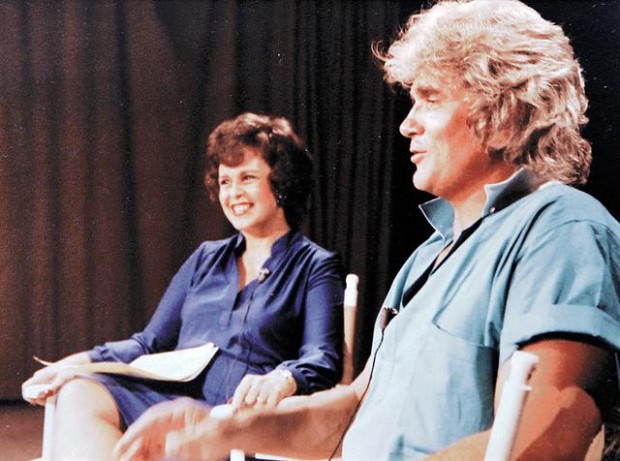
Besides selling ownership in the station, Ellen served as public-affairs director for Channel 11, where she hosted weekday shows, as well as a weekend show, "Talk It Over," that focused on in-depth issues.
Guests ranged from Casa de los Niños founder Sister Kathleen Clark, to Sen. Barry Goldwater, actor Michael Landon, and the Rev. Jerry Falwell.
While in Cairo, she also snared an interview with the first lady of Egypt, Jehan Sadat, as well as Boutros Boutros-Ghali, future secretary-general of the United Nations.
Despite such successes, "we were always lacking in money," says Ellen. Plus, there were those investors to think of. "They had been patiently standing by, receiving nothing except two nice dinners a year."
And so they sold the station. Price tag: $13.6 million. "I still run into people who tell me it was the best investment they ever made," says Ellen. "They made six times their investment, plus it was a tax write-off."
Unfortunately, her husband was also investing, this time in radio stations, as well as a TV station in Spokane, Wash.
"I went up to Spokane and did a show, and I asked the two mayoral candidates what the biggest problem was in the town. They said it was the 10 percent unemployment. I knew then it was a big mistake."
Less than two years after he sold Channel 11, Gene Adelstein, 45, died of heart failure on March 1, 1986, after playing tennis in West Palm Beach, Fla.
"He was down there trying to put together another deal," says Ellen. "I was a widow at 43, trying to hold the employees together in Spokane. I had an 11-year-old daughter at home. It was a horrible mess. It took me 10 years to clean it up."
She did so by declaring business bankruptcy. "I am convinced the stress I went through gave me breast cancer."
Today, Ellen is a healthy 67-year-old, still involved in community causes, still living in the home where she and Gene raised their children, Evan, Tracey and Ilysha.
"I'm a survivor," says Ellen, who's now busy marketing the new DVD release of her 1981 interview with "Star Trek" creator Gene Roddenberry.
It first aired, of course, on Channel 11. "I look back at the audacity of two 'kids' taking on this job. Our dream was to one day own a TV station."
And so they did.
DID YOU KNOW
The former KZAZ-TV, Channel 11 studio at 2445 N. Tucson Blvd. now houses a Tucson Association of Realtors office.
PSSST, KEEP THIS UNDER YOUR HAT
For his pioneering work in supporting and telecasting University of Arizona sports, particularly men's basketball and football, Gene Adelstein will be inducted into the Pima County Sports Hall of Fame in October.
His name, along with those of 11 other 2009 inductees, will be announced at a press conference at 3 p.m. June 10 at the Holiday Inn Palo Verde, 4550 S. Palo Verde Road.