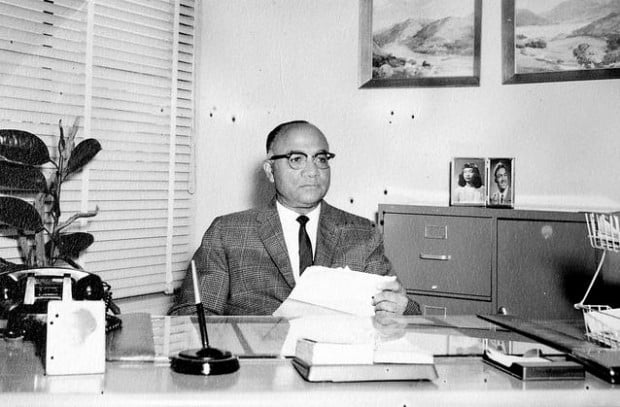
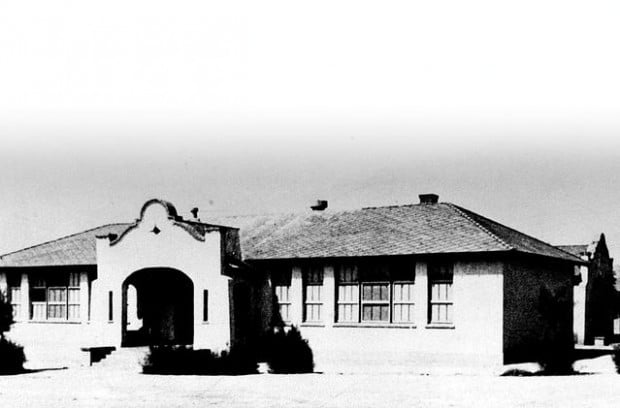
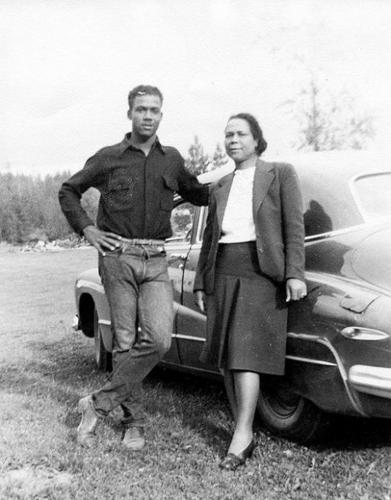
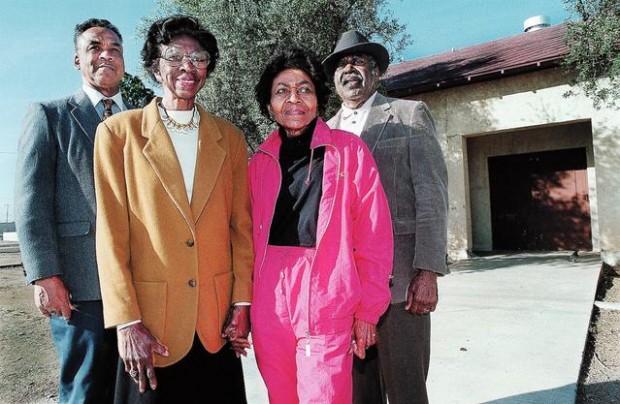
Morgan Maxwell arrived here in 1940, ready to elevate Tucson's only all-black school from second to first class. During his nearly three decades as principal, Dunbar School collected its first musical instruments, entered its first round of district-wide competitions and built its first auditorium and cafeteria.
He mentored a slew of students who would become influential citizens.
The Maxwell family's leadership in education and later in civil rights resonates in the Old Pueblo.
The new principal struggled for months to get the district to replace the castoff textbooks, his son says. Frustrated, he set the old ones on fire and threatened to do the same with the rickety, hand-me-down desks. By his third year, his pupils had new books and desks.
A more dramatic change would come in 1951 when Dunbar welcomed its first white, Hispanic and Asian students.
People are also reading…
Limited career choices for blacks
When Maxwell moved here from Topeka, Kansas, with his wife and two children, he settled his family less than two blocks from the school near East Speedway and North Main Avenue.
Morgan Maxwell Jr., 76, says that education commanded his father's attention.
"It's the only way out of the ghetto," Maxwell told his son and anyone else who would listen.
"At that point in time," Maxwell Jr. says, "you had two choices as a black person: doctor or janitor."
Or you could be a teacher. Maxwell recruited a talented team of instructors, helped by the pigeonholing of educated blacks. Unlike the white schools, Dunbar required all teachers to have a master's or be working on one.
The teachers were positive role models for the kindergartners through eighth-graders because of the intimate link, forged by segregation, between the school and black community.
The male students, Maxwell Jr. recalled, had no choice in the annual father/son banquet.
"Everyone had to come with a man," he says, a smile spreading across his face. "If a kid couldn't find a father, they'd find someone for him."
The staff, who saw their students in school, in church and at the park, reinforced the need for higher education at every possible turn.
"Even if you were just a mediocre student, they still pushed you to do better," Maxwell Jr. says with obvious pride. "Then you'd get to Tucson High, and the white teachers didn't really care. . . . A lot of them thought we should take vocational training and become really good cooks. "
Not the principal of Dunbar School.
Cressworth Lander first met his future principal in the summer of 1939 when Maxwell showed up at the grounds for an exploratory look.
Lander, now 80, helped Maxwell slip into the empty school. Today Lander regularly revisits the old stomping grounds. He's president of the Dunbar Coalition, a group dedicated to giving the building new life as a black history museum and community center.
Within a few months, Maxwell "became more or less one of my idols," says Lander, who headed Tucson's Community Services Department before spending a few years in Washington, D.C., where he was instrumental in deregulating the airline industry.
Lander, like many others who knew Maxwell, says the principal never stopped teaching and mentoring.
"He was always in a hurry," says Olivia Guess Smith, who spent nine years at Dunbar. "He'd drive up in his car and run into the building."
Anna Jolivet attended and taught at Dunbar. The career educator, named an assistant superintendent of Tucson Unified School District in 1989, credits Maxwell with giving her opportunities.
He asked her to display her talents by organizing musicals and Christmas pageants. Maxwell also praised her to the superintendent whenever he could, Jolivet says.
"I didn't feel like I got special treatment," she says, echoing sentiments by Smith. "He was like that with everybody."
Dunbar, named for black poet Paul Laurence Dunbar, produced an impressive list of alumni, including Charles Stewart, who photographed John Coltrane and other jazz greats; Joel Turner, a well-respected dentist; and children's author Sadie Pitts.
In 1951, Arizona passed legislation that opened the door for voluntary integration. Robert Morrow, superintendent of what was then called Tucson District No. 1, had been looking for the opportunity and moved quickly, integrating classrooms three years before the Supreme Court mandated it.
Maxwell led his staff and students smoothly through the process after unsuccessfully challenging the school's name change to John Spring Junior High School. Spring became Tucson's second public school teacher in 1872.
The Dunbar staff wanted to integrate but worried they'd lose their jobs, says Charles Todd, who taught at Dunbar at the time.
Maxwell took care of them, Todd says. When the dust settled, white teachers folded into the staff, and displaced Dunbar teachers were hired at other schools. They still had work.
Maxwell became the first black principal to oversee an integrated school in Arizona.
A leader of the community
Maxwell's father, Calvin, was a slave in Tennessee who settled in Kansas after he was freed.
Maxwell was born in Kansas, and later returned there, with his wife and two children, from Oklahoma to become a principal.
Todd was a neighbor and student of Maxwell's in Kansas.
Despite Todd's impressive list of degrees — a bachelor's in both math and art education and a master's in fine arts — no white school would hire him.
Maxwell, who had an eye for aptitude, came across Todd's résumé and wrote an energetic letter, asking Todd to teach at Dunbar. Todd, now 90, would spend 30 years educating Tucson students.
Maxwell kept tabs on former students, said Smith, who as an adult ran into Maxwell at a funeral. They chatted, and she told him her daughter attended John Spring.
"What's her name?" Maxwell asked Smith. "I have to check on my grandchildren."
But Maxwell's influence, and that of his wife, Kathryn, and children, Morgan Jr. and Kathryn, extended far beyond the school's walls.
During World War II, Kathryn Maxwell supervised Red Cross handouts to ensure black soldiers on the trains rumbling through town had coffee and doughnuts and could mail letters to family and friends.
She taught school in Marana, where she often returned on weekends to knock on the doors of absent students.
"She'd say, 'What is more important? Picking cotton or getting an education?' " Maxwell Jr. recalls.
On Halloween, the family handed out money instead of candy. Smith thinks they wanted children to learn to how to handle money.
"We were coming out of the Depression," she says. "None of us had ever had any money."
She describes family members as leaders and role models. "They led by example."
The elder Maxwell, a charter member of the Tucson Urban League, never stopped mentoring his former students.
"Be sure to buy land. Own your home," Lander says Maxwell told him often in his later years.
Most Dunbar students couldn't afford to attend a concert or show, so their principal lured world-class performers and other role models to the school.
Nobel Peace Prize winner Ralph Bunche; singer Lena Horne; military great Benjamin Davis, the nation's first black general; and poet Langston Hughes, among many others, spoke to the children, encouraging them to achieve.
Jolivet remembers a visit from the opera star Marian Anderson. Since the school wouldn't get an auditorium until 1948, Anderson's rich, sultry voice filled a hallway.
" 'Have a star and try to reach its heights,' " Jolivet says Anderson told the students. "We had a banner in the hallway that said that."
The struggle for equality
Dunbar students, like black students across the land, began most days with "Lift Every Voice and Sing," the Negro National Anthem. They only sang "The Star-Spangled Banner" for visitors.
The Maxwells passed pride and dignity to their children.
Maxwell Jr. was the first black person to have a meal in the UA student union.
Stewart and Morris Udall, two hugely popular students who would go on to national political prominence, came to the fountain at Old Main, the hangout for black students. The brothers wanted a volunteer to help them force integration in the student union.
Maxwell Jr. stepped forward.
The towering trio — two basketball players and a track talent — entered the Coop, the main dining facility on campus.
Says Maxwell Jr.: "Mo got up in the manager's face and said, 'Serve Morgan. We're not leaving here till you serve my friend.' "
He ate a hamburger, fries and vanilla milkshake. From that point on, black students could do the same.
After graduating, Maxwell Jr. struggled to enter the real estate appraisal business.
Despite his excellent credentials, the Federal Housing Authority and Department of Veterans Affairs refused to add him to the list of appraisers.
"I had advanced degrees," he says. "A lot of the white appraisers hadn't even gone to college."
He spent months trying to change minds, sending letters and making a personal visit to the Phoenix office. He'd all but given up when the FHA gave in following the Watts riots in 1965.
He quickly earned a reputation for low-balling houses that flew a Confederate flag, carefully providing written rationales for his conclusions, Maxwell Jr. says.
The bank began cautioning its customers to treat the appraiser with respect.
Still, there were times he wasn't allowed inside homes, which forced him to appraise from the roadway out front.
"Naturally," Maxwell Jr. says, "they came in low."
Like his father, he opened doors for other young black men by hiring them and taking them under his wing.
"I was an example," he says. "If I made it, others could make it."
In the late '60s, Maxwell Jr. joined Lander to fight redlining and other housing discrimination by building low-cost homes in the old Dunbar neighborhood.
Taking advantage of an FHA regulation, Maxwell Jr. allowed families to use "sweat equity," or labor, in lieu of a down payment and subcontracted the jobs to local black businesses who hired local labor when possible.
Today, the houses Maxwell Jr. sold for $15,000 fetch well over a $100,000.
He's not bothered that the traditionally black neighborhood he helped build has lost its racial identity.
"It's not a ghetto," he says. "It's not a slum. The people in the neighborhood know its history."
Maxwell Jr. attacked the systems that impeded civil rights.
His sister's struggles were more personal.
While living in Washington, D.C., in the mid-1950s, Kathryn Dixon took a job with longtime family friend Sen. Barry Goldwater despite his unsettling stand on civil rights.
Though Dixon disagreed with many of Goldwater's political decisions, she says she cared for him deeply on a personal level.
They challenged each other often, she says, but always as friends, never as enemies.
And the Republican candidate for president in 1964 admired her, as well. Goldwater sent her a personal letter, positively glowing with praise, when she was appointed by the governor to the Arizona Women's Commission.
The two corresponded until he died in 1998.
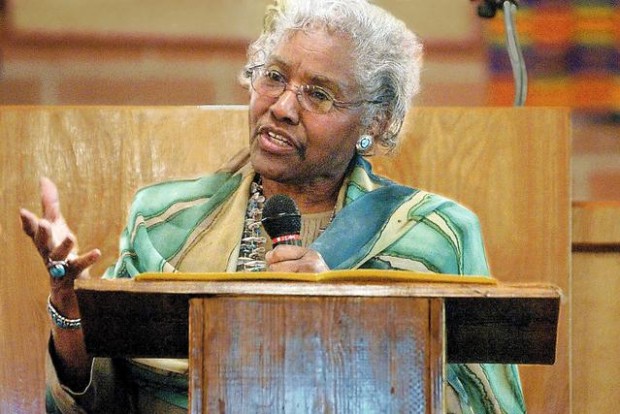
Dixon, who still lives here with her husband, Melvin, would have a more direct effect on public policy.
In 1970, a Tucson police officer pulled over Dixon for unsafe driving after she backed out of her husband's dental business onto Speedway.
"I'd been doing that since my husband had been practicing there," she says. "At that time, the traffic was not heavy."
She refused to sign a citation that identified her as a Negro. Though she was alone, the officer called for backup. She still refused. He arrested her.
The local press jumped on the story, and less than a week later, Mayor James Corbett and the City Council asked the police department to get rid of the race identifier.
As time went on, Maxwell Jr. and Dixon took up new causes.
Dixon helped establish the Tucson Children's Museum. Maxwell Jr. spends days each week volunteering for the Dunbar Coalition, an organization led by Lander that is turning the old school into a black history museum and community gathering place.
Contributions that last
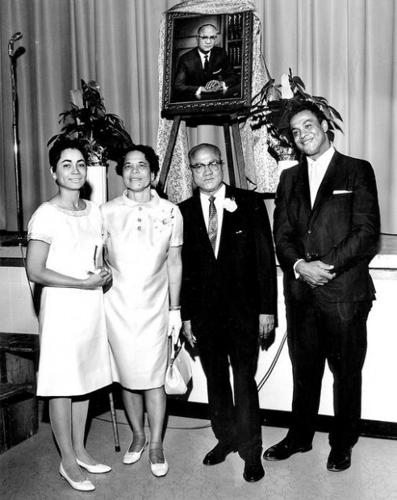
Tucson's first black principal felt that his life had come full circle when the district named a West Side school for him, his son and daughter say. The dedication of Morgan Maxwell Junior High School was an honor that soothed the long-held wounds of losing the name-change battle at Dunbar so long ago.
Judging the impact he and his family had on Tucson isn't easy, Smith says.
How, she asks, do you measure the ripples of a life devoted to teaching and mentoring? How do you calculate the significance of example?
You can't, she says. You can only look at the impact that continues.
● 1918 — Two-room Dunbar School built.
● 1940 — Maxwells arrive in Tucson. Morgan Maxwell becomes the principal of the all-black Dunbar School. Kathryn Maxwell teaches black students in Marana.
● 1946 — Maxwell Jr., with the help of Stewart and Morris Udall, integrates the main dining facility on the UA campus.
● 1948 — Auditorium, cafeteria and 23 classrooms added to Dunbar School.
● 1951 — Tucson schools integrate. Dunbar School renamed John Spring Junior High School.
● 1963 — Maxwell Jr. and his sister, Kathryn Dixon, along with many others, picket Tucson's Pickwick Inn until it serves black customers. Maxwell Jr. later picketed the State Capitol and the house of the UA president over unfair substandard housing for blacks.
● 1964 — The Dixons become the first blacks to buy property in the Catalina Foothills.
● 1967 — Maxwell Jr. becomes the state's first black deputy treasurer.
● 1974 — Morgan Maxwell Junior High School (now Morgan Maxwell Middle School) is dedicated. Maxwell is the first black Tucsonan to have a school named for him.
● 1987 — Maxwell dies at the age of 84. His wife, Kathryn, dies the next year.
● 1987-88 — Maxwell Jr. collects thousands of signatures to recall Arizona Gov. Evan Mecham.
● 1995 — The Dunbar Coalition buys the old school from TUSD for $25, beginning the effort to turn it into a black history museum.