
With all our monsoon rain, it feels more like a rain forest than a desert around here. Even mushrooms have burst from the wet soil. They remind me to appreciate the overlooked but important workers of nature's clean-up crew, the decomposers.
These animals, plants, fungi and bacteria eat dead stuff and help it break down. Without them we'd be up to our eyeballs in fallen branches, dried leaves, cactus skeletons, dead grass, animal dung and carcasses.
Decomposers such as bacteria and fungi work overtime when the rains come — water helps them break down waste material quickly. But some desert decomposers operate even in dry times.
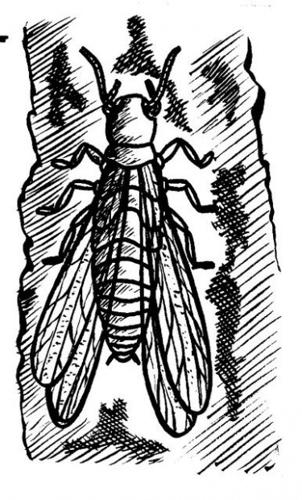
Take termites. Humans don't like them because they eat wood — not good if your house becomes a termite snack bar. But termites (there's an illustration of one, above right) eat a variety of dried plant material, including dead wood and grass.
People are also reading…
Plants get their structure from a substance called cellulose. Plant products like wood, paper and cotton contain lots of cellulose — it's what makes them sturdy. Cellulose does not break down easily and is not very good to eat. Most animals, including termites, cannot digest cellulose. Termites need help from tiny creatures called protozoa that live in their guts and produce an enzyme that breaks down cellulose. When termites chew up cellulose material, their gut protozoa break it down into sugars that both use as food.
Cows are similar. When cows eat grass, they cannot digest the cellulose without help from gut protozoa. A lot of cellulose passes through in their cow "pies."
In the Sonoran Desert, there are more than 40 species of termites. Different kinds specialize in particular types of food. One feeds mainly on saguaro skeletons, another on palo verde wood and yet another on dead grass.
Like ants, termites are colonial insects with a complex social structure. In each termite colony, a queen and king produce young, soldiers defend the colony and workers collect and process plant material to feed the whole colony. When a colony reaches a certain size, it raises winged termites called alates that leave the nest and mate to start new colonies.
Termites nest in the ground or in dead wood. Nests provide protection from the hot, drying sun. Termites also build protective earthen tubes through which they travel and eat. You can often see these covering blades of grass, pieces of wood or saguaro bases.
As they dig through soil to build their nests, termites aerate the soil. And, as they eat what other living things do not, their waste products enrich it.
Without termites breaking down dead plant litter, space would be limited for new plant growth, soils would rapidly become impoverished and animals would run out of food. The desert needs its decomposers! Read the fabulous facts to meet more.
B.Y.O. Brain
Answers:
1. compose
2. rose
3. deer
4. pose
5. reed
Word Puzzler
Decomposers break up dead material and return it to the soil, where it can again be used by living things. You can make several new words out of the letters in "decomposer." Take the word apart and use the letters to make new words. We've found five words for starters. Here are some clues to figure out what they are. (Confused? The answers are upside down under this column.) Try and come up with your own!
1. Another way to say "to write:" __ __ __ __ __ __ __
2. A beautiful-smelling flower: __ __ __ __
3. A hoofed animal found in deserts or mountains: __ __ __ _
4. Strike a __ __ __ __ for the photographer.
5. A hollow grass sometimes used to make a flute: __ __ __ __