

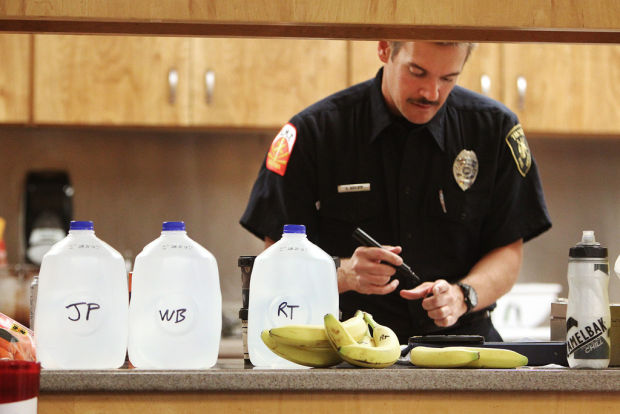
The kitchen is sizzling at Tucson Fire Department’s Station 7.
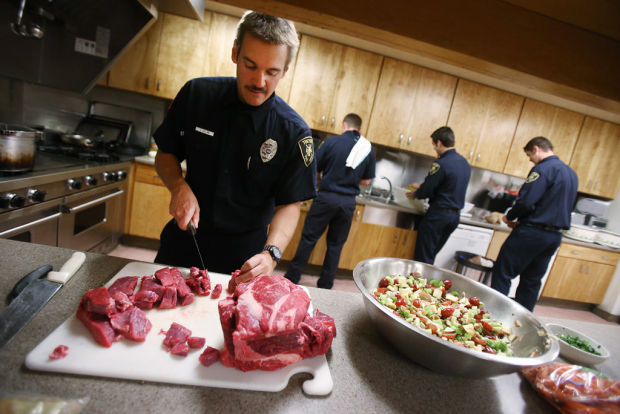
Chuck steak, onions and garlic sauté in butter for the evening’s beef stew while firefighters grill, chop and mix ingredients for lunchtime chicken salad.
A call over the loudspeaker brings the slicing and dicing to a halt. The crew members set down their knives and sprint to the garage.
“Dice up the meat, and I’ll finish it when I get back,” firefighter and EMT Jason Adler calls to the men left behind.
The engine is called out to a woman in distress. In her 36th week of pregnancy, she feels her baby moving, but not as much as in previous weeks — a common occurrence in later stages of pregnancy. The crew checks her vital signs, reassures her and suggests she call her doctor.
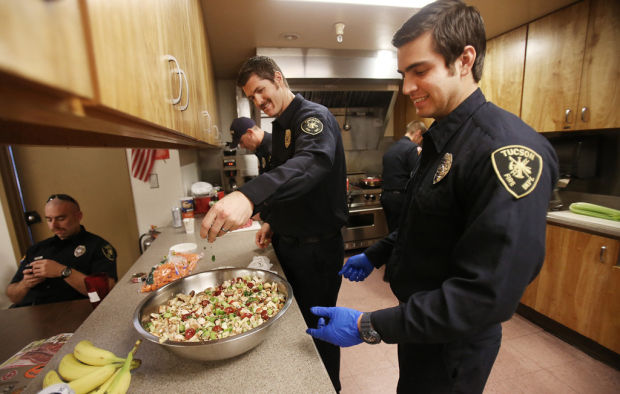
The engine heads back to the station, 4902 E. Pima St., where the chefs swing back into action, mixing up the giant chicken salad before the shift of about 14 men sit down to eat.
People are also reading…
For firefighters, cooking and eating together builds a sense of family and camaraderie that aids them in their critically important and often stressful work.
“Eating together decompresses the various calls they go on,” said Battalion Chief Chris Anderson. “These guys are on the frontlines of some tragic situations. They are expected to take that call and go on to the next one. It’s 24/7.”
Like a family, shopping and cooking responsibilities are divided among the crew. Many of the duties fall to the newest members of the team.
At the start of every 24-hour shift, firefighters chip in to pay for the day’s groceries. While the public often assumes the department pays for meals, firefighters are responsible for all food expenses.
This makes firefighters very good at finding sales.
“We’re great shoppers,” said Capt. Barrett Baker. “Anything on sale is better. It’s disappointing when you get the ad, and there is nothing that you want on sale. Your creative juices really have to flow.”
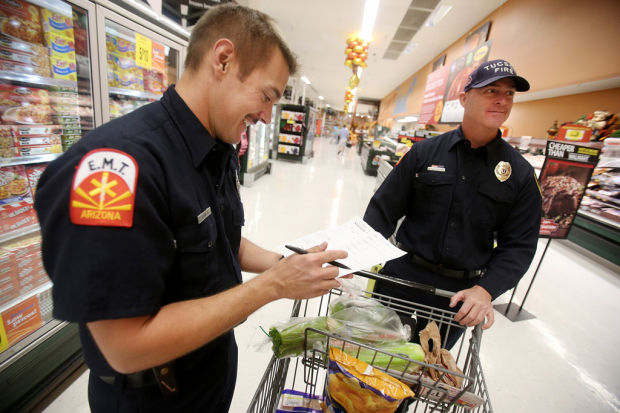
Firefighters peruse the newspaper, looking for specials, and write out a shopping list. They buy enough to cook for 14 every day they are on duty. On a normal day, firefighters chip in $14 each for four meals in a 24-hour shift. Steak days are more expensive.
On a recent morning, the crew was called out to respond to a report of a sick person, but as they were rushing to the scene, the call was canceled. They wheeled the engine around and headed to a nearby Fry’s Food Store.
Adler, Capt. Rodney Turner and firefighter and EMT Casey Johnson grabbed the shopping list and a cart and set to work.
The firefighters efficiently hunted down every item on the list, looking for the best prices. They filled their cart with meat, produce, ice cream, staples and just about every flavor of coffee creamer possible — an important item for a crew that’s on duty for 24 hours straight.
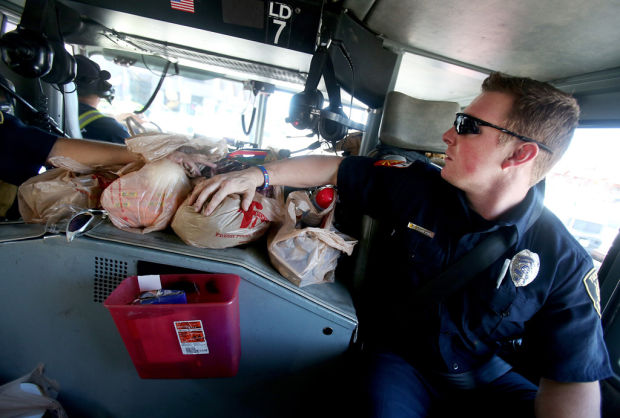
After forking over $181.18, the guys loaded the bags into the fire engine and headed to the station.
Then Adler and Johnson got to work, knowing they could be called away at any minute.
These guys know their way around the kitchen.
Adler likes to cook dishes at the station that his family enjoys at home. At 36, he’s not the youngest on the crew, but one of the newest. The former accountant became a firefighter earlier this year.
“I have a few go-to recipes that are cheap, filling and semi-healthy,” Adler said as he skillfully chopped fruit for the chicken salad. “Firefighters are known for chili and fried tacos, but we’re trying to get healthier.”
He trimmed the fat from 8 pounds of boneless, skinless chicken breasts and prepared to boil them for the salad. But after the third firefighter asked why he wasn’t grilling, Adler headed out to turn on the grill.
He and Johnson, 23, prepped both lunch and dinner. Beef stew, an Adler specialty, was headed for the slow cooker.
The chicken salad recipe was handed down to him when he joined Tucson Fire Department earlier this year. His beef barley stew is a family favorite, and he increases the recipe to feed his firehouse family.
Johnson, whose father is a captain with the Tucson Fire Department, knew all about firehouse food growing up.
“I always liked hanging around the kitchen with my mom because I knew I’d get snacks,” he said as he trimmed the beef.
He has helped other new firefighters learn to cook — a required skill as they start their careers. Often the hardest thing for them to learn is choosing produce, Johnson said.
When cooking for 14, it’s critical to adjust recipes so you have more than enough to feed a hungry crew.
“The worst thing is if you run out of food,” Johnson said.
After getting the stew in the slow cooker, Johnson whisked together the ingredients for his aunt’s oatmeal cookie recipe, to top off dinner.
The crew was called to lunch, and lined up to fill their bowls with the savory, crunchy, sweet chicken salad, a big hit in the firehouse.
As they finished lunch, another call came in, and the paramedic crew hustled out. Everyone left behind pitched in to load the dishwasher.
“Some stations bring their own food, but we try to keep it together,” said Mike Creamer, firefighter and EMT. “It’s more like a family this way.”