


By Jamila Robinson
St. Louis Post-Dispatch
ST. LOUIS — It seems as if Buddha is watching from lots of places these days. Gold, stone, clay and even porcelain renderings of the spiritual symbol can be seen peering from bookcases, anchoring gardens and offering peace to dining rooms.
The prevalence of Buddha is one example of the steady influence of Asian interior design. With styles as diverse as the countries, languages and people, the Asian design aesthetic is enjoying a resurgence.
"With the world getting smaller, there is a global and intercultural influence that we find in music and the arts, and certainly in home décor," says Gil Williams, the owner of an Asian décor boutique in St. Louis. "The Indian and Chinese influences are growing in the world, and it is nice that those cultures and traditions are getting attention."
People are also reading…
Asia is vast, extending from China and Korea to Indonesia, and is home to two-thirds of the world's population. It's only logical that Asia would continue to influence the design world.
American companies that once produced furniture in the United States are moving production to China and Vietnam. According to the International Trade Administration, China imports accounted for nearly $12 billion in household furniture and accessories in 2005.
"Thirty or 40 years ago you were hard-pressed to find a lot of Asian décor," says Philip Hu, associate curator for Asian art at the St. Louis Art Museum. "Now, companies like ABC Carpet & Home, and Neiman Marcus, the online catalogs, and even the lower-end retailers like Ikea and Bed, Bath & Beyond are stocking a lot more Asian merchandise. People just have so many more visual reference points."
Hu says Asian goods are especially affordable, but beauty is the main reason for the high interest in Asian aesthetic.
"Things from Asia are incredibly beautiful. Ming (dynasty) furniture blends well with things from the 19th century. And there is often a use of natural material that blends very well with contemporary furnishings. It's the visual attractiveness that makes people pay attention."
Williams says that beauty is evident in the rich colors and the high-quality craftsmanship of Asian goods. "The use of primary color is very inspiring," he says. "In the Tibetan tradition, there is a lot of blue, white, red, green and yellow. Because of the organic dyes, colors have a power and a richness that is elegant and understated. Then, there is a lot of interest in the wood carvings of Bali or India, which are unparalleled anywhere in the world. It is such a lovely style with beautiful teak and mahogany."
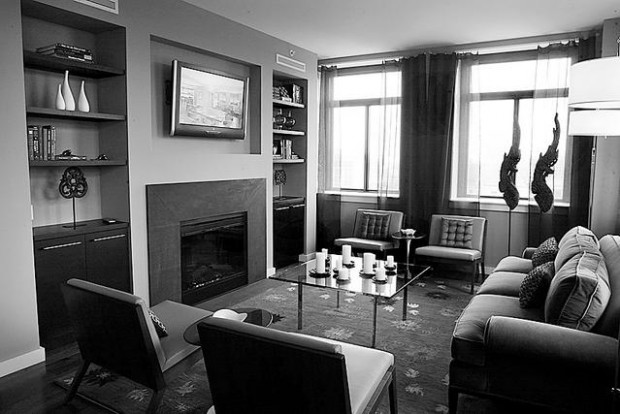
Modernists are often attracted to some styles of Asian design because of an emphasis on simplicity with platform beds, screens and a neutral color palette with splashes of red and gold. The straight lines and minimalism are essential contemporary décor.
"This kind of design clarifies the clutter," says Sunamita Lim, the author of "Chinese Style: Living in Beauty and Prosperity" (Gibbs Smith Publisher, $39.95). "The influence is from Japan, where space is at a premium. It's a style that forces you to edit."
Traditionalists, however, may be more attracted to chinoiserie style, featuring furniture with graceful cabriole legs and claw feet, hand-painted cabinetry with black lacquered finishes, or china patterns with real and interpreted scenes of Asian countryside.
Because of common materials such as bamboo and silk, goods from different Asian countries can be used together. Tapestries from India work well with headboards from Korea, which can be accented by celadon pottery from Thailand, then anchored by an Angi mountain rug from China.
But Asian furniture and accessories shouldn't be arranged capriciously. Feng shui guides that became popular in the mid-90s have mainstreamed the ancient concept of qi (pronounced chee), the positive and negative energy moving throughout living space. Though some design professionals argue that feng shui is just common sense, Lim says placement that maximizes positive energy is paramount in Asian design. Scenes of nature and wildlife and religious images, including Buddha and pagodas, are said to maintain balance and harmony.