

Ten-year-old Caden Thiessen taught his parents about the health virtues of the moringa tree that can grow in the Sonoran Desert.
Kaylie Anderson, 11, feels confident that she now knows enough to grow a garden at home.
Logan Leister, 9, gained some pretty basic gardening skills. “I learned about keeping plants alive,” proudly says the home-schooled student.
They and 14 other students recently became certified junior master gardeners, learning a wide range of techniques for growing plants.
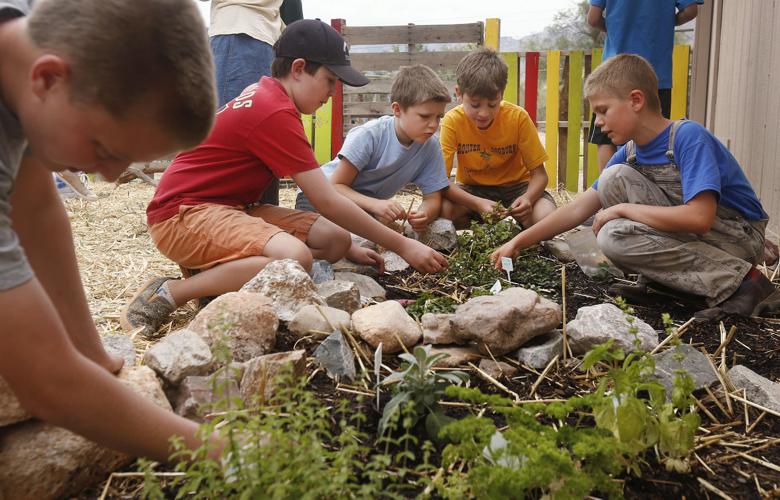
Working from a curriculum offered by Texas A&M University, the home-schooled students, ranging from first to 10th grade, spent last school year planting and tending various gardens at the Tucson Christian Youth Farm.
People are also reading…
“The farm was something I dreamt of doing for 10 years,” says its director, Leigh Anne Albright. She used barnyard animals from her own property near Marana High School to create the nonprofit educational farm in 2013 and later began classes at its current location near the Foothills Mall.
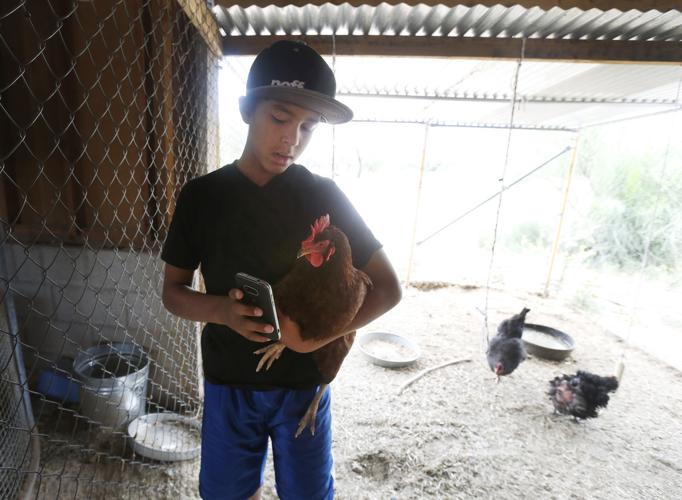
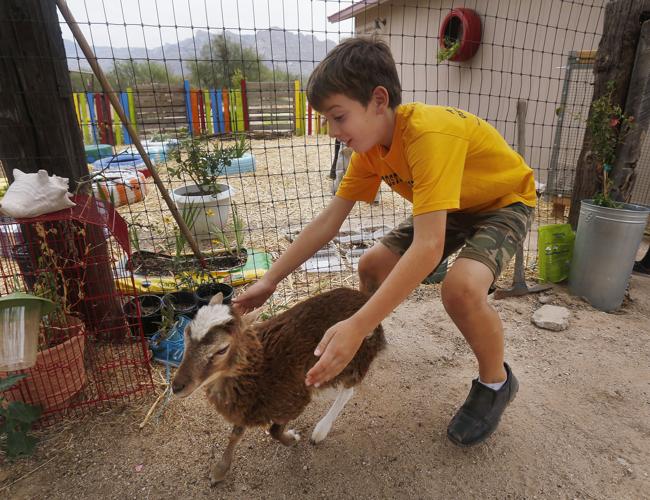
Albright started offering tours that allow children to touch and care for the animals, which include goats, chickens, a tortoise and a horse.
Then Albright met Rebecca Thai, founder of the QUEST Science Club and QUEST for the Arts. The nonprofit organizations offer academic and fine arts classes to the public, but primarily to home-schooled students.
“Our classes are hands-on and Christian-based,” says Thai.
Thai had taught a version of the junior master gardener program many years ago, she says, but focused only on six weeks of activities to very young students.
“Leigh Anne proposed a joint effort to create a program for kids that would be a little more than drop by and see,” says Thai. “We wanted to create an educational experience.”
Albright, a seasoned educator in church- and charter-school settings, took the international Junior Master Gardener level-one curriculum and incorporated desert gardening methods. “The Tucson environment is a whole other ball game,” she says.
Texas A&M developed the Junior Master Gardener program as part of the university cooperative extension network, but it is available to other groups and to schools.
It is not offered by the University of Arizona Cooperative Extension’s Pima County office. Sources at the extension could not recall having implemented a junior master gardener program.
Instead, it trains adults to become master gardeners, who are certified gardening educators.
Like the adult program, the children’s version covers basics such as how plants grow and what makes good soil for gardening.
Students complete nearly 100 activities and projects to earn certification.
At the Tucson Christian Youth Farm, those projects included planting and maintaining in-ground winter and summer gardens, creating a straw-bale garden, experimenting with layered gardening and starting an orchard with trees bearing apples and avocados.
The first project, the winter garden, “grew like crazy,” says Albright. It yielded romaine lettuce, spinach, kale and snap peas, among other crops.
As the students were ending their school year, their bell peppers and strawberries were going strong.
The students also took care of the animals, which wandered around the barn they used for classroom work. The experience taught the kids to keep the barn neat because the animals would try to eat anything that fell to the ground. Loose papers easily became goat food.
The junior master gardener program goes beyond teaching how to grow food, says Thai.
“They have a lot of pride in their work, which is a very good kind of thing to cultivate in these kids,” she says. “(The class) develops work ethic and responsibility.”
The class–formally titled “Botany I/Junior Master Gardener”–also covers science skills such as observing, taking measurements and solving problems. It fulfills academic standards for science, math, language arts and social studies.
It teaches participants how to work cooperatively and introduces careers related to gardening and plant production.
It is “quite popular” among QUEST’s 18 science classes for school credit, Thai says.
“Many of our families are into healthy living, so organic farming is very important to them,” she says.
Most of the kids in this first class were in families that already have home gardens, Albright observes, so they’ve been able to quickly apply what they’ve learned.
For instance, Emma Faye, 10, says that she can now “help more. I would like to help (my parents) with the watering and keep plants alive.”
Junior master gardeners can return next school year for advanced certification, a class that Albright and Thai added. Once the kids finish the advanced level, they can then start to teach other youngsters gardening.
