

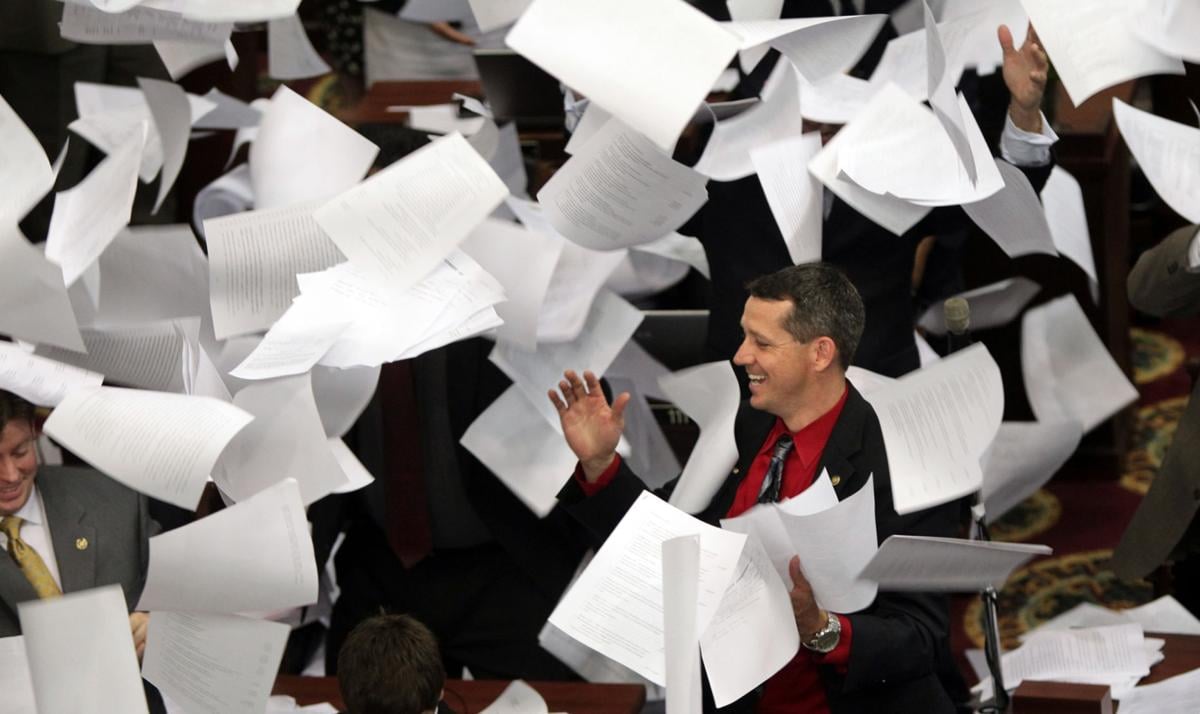
The Missouri Legislature will convene its annual veto session – an opportunity for lawmakers to override Gov. Jay Nixon’s vetoes – on Wednesday.
Override attempts need 109 votes in the House and 23 votes in the Senate to be successful, and they must start in the bill’s originating chamber.
Here are some of the bills that could come up:
Elections: Requires a special election to fill the lieutenant governor’s office if there is an early vacancy due to resignation, death or impeachment. (HB110)
Taxes: Reduces the corporate and individual income tax rates over 10 years; cuts business “pass-through” income; and creates a tax amnesty program for those who owe back taxes. (HB253)
People are also reading…
Federal holidays: Bars government entities and public places from restricting celebrations of federal holidays (HB278).
Sex offenders: Allows some juvenile offenders’ names to be removed from the public sex offender registry, among other changes. (HB301)
Uninsured motorists: Prohibits uninsured drivers from seeking damages against insured drivers after automobile accidents. (HB339)
Guns: Declares some federal gun control laws unenforceable, prohibits the publishing of the name of any gun owner, lowers the minimum age required to obtain a concealed weapons permit to 19 from 21 and allows concealed weapons to be carried by designated school personnel in school buildings. (HB436)
Unemployment: Alters the definitions of "misconduct" and "good cause" used in unemployment claims. (HB611 and SB28)
Doe Run: Exempts certain mining sites in St. Francois County from punitive damages in civil lawsuits if sites are being cleaned up and otherwise caps punitive damages at $2.5 million per suit. (HB650)
Paycheck deductions: Requires certain public labor unions to obtain annual consent from members before withholding dues and fees from their paychecks. (SB29)
Child custody: Establishes custody and visitation rights of a deploying military parent. (SB110)
Public meetings: Allows elected members of governmental bodies to cast roll call votes via videoconference. (SB170)
Agenda 21: Bars state and local governments from attempting to implement policies related to the United Nation’s non-binding 1992 resolution on sustainable development. (SB265)
Sharia Law: Renders court rulings unenforceable if based on foreign laws deemed "repugnant or inconsistent” with the state and U.S. constitutions. (SB267)


