

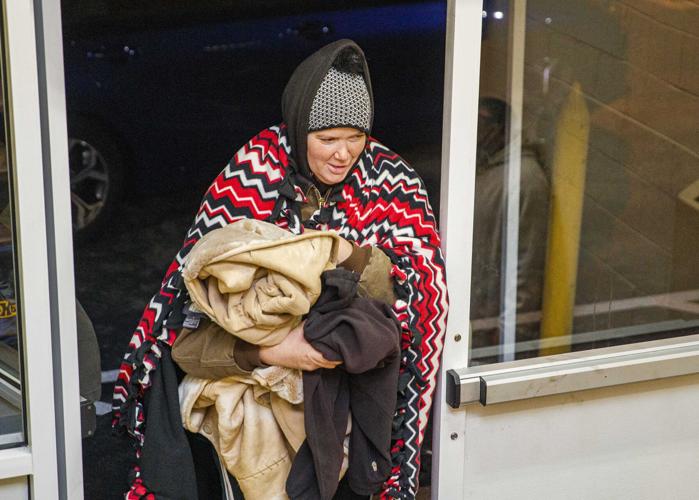
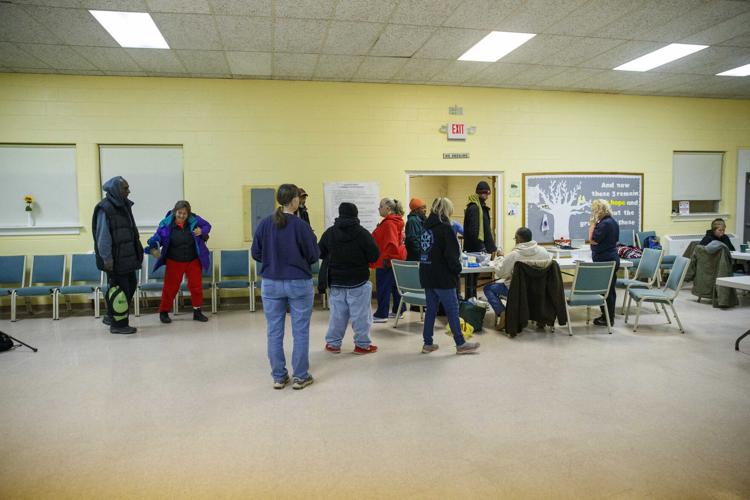
MILLVILLE — It’s a cold, clear Thursday night at Trinity United Methodist Church. A Cumberland County sheriff’s bus pulls up in the parking lot.
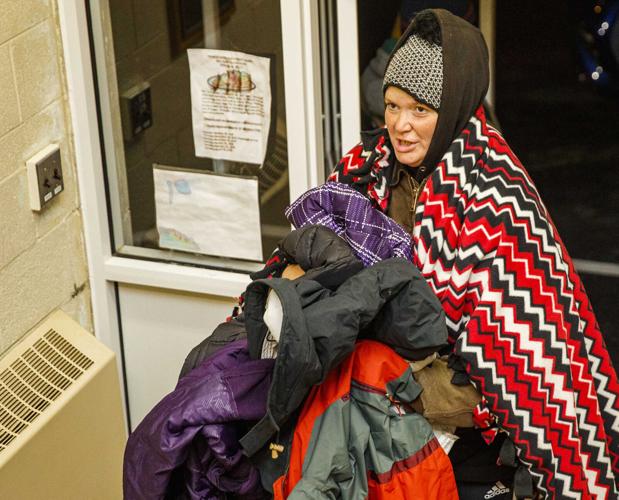
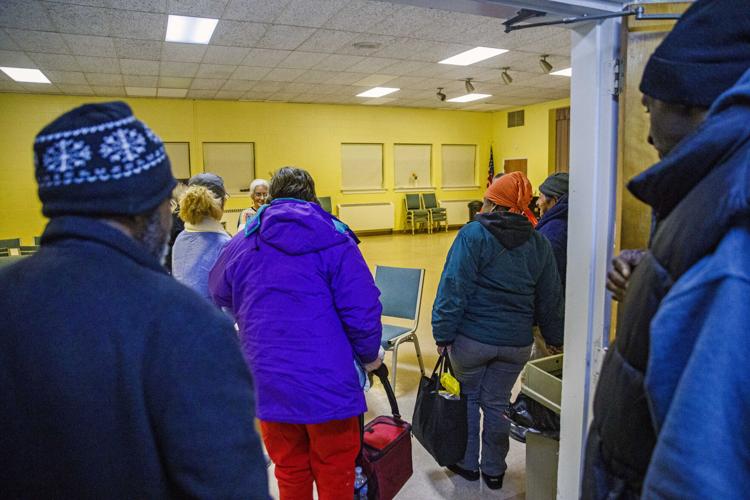
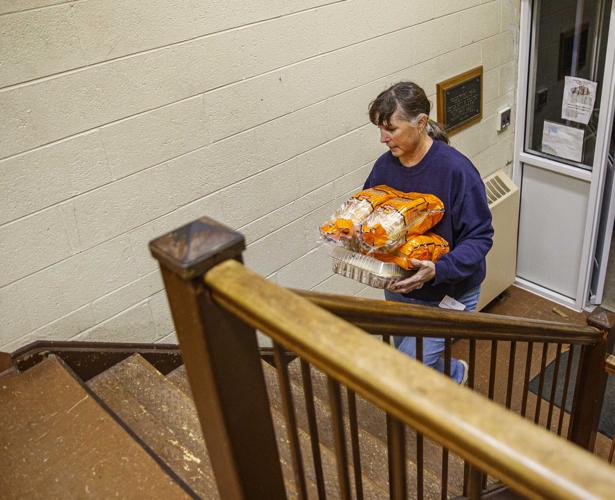
One by one, about 15 people, some with bags in their hands, some with just the clothes on their back, walk up the flight of stairs.
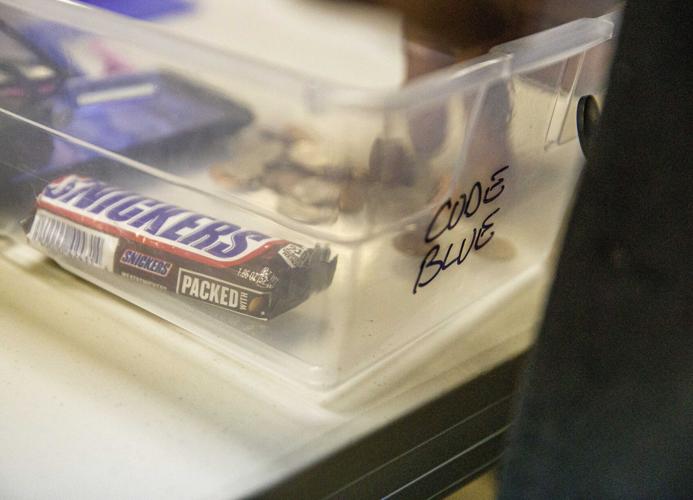
They put any change or valuables in a clear bin and get searched for metal.
“Turn around,” said Doris Morgan of Deerfield Township, shift supervisor for the night.
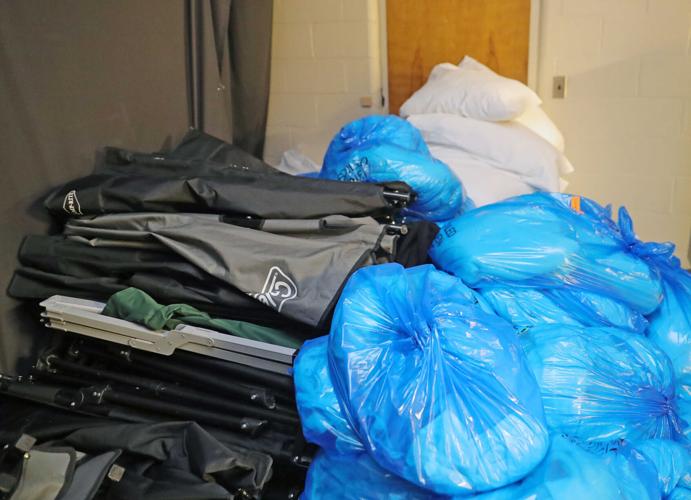
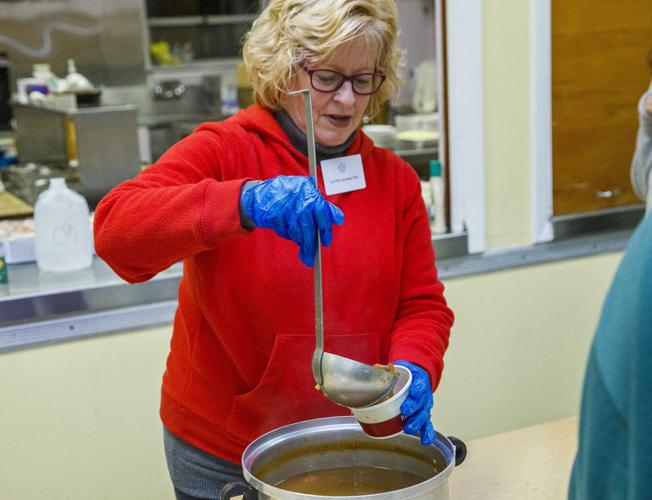
It’s a Code Blue night in Cumberland County, which activates warming shelters for those who do not have a warm place to sleep. In Millville, 25 people will not just have a warm cot, but food, games and an opportunity for worship.
“They’re professional and efficient,” said Donald Hood, 63, a guest for the night.
People are also reading…
A proposed new law would create more nights like this, but volunteer groups and government officials have concern over what it will mean for them.
Currently, a Code Blue is enacted whenever the air temperature is below 25 degrees without precipitation, below 32 degrees with precipitation, or there’s a wind chill below 0 for at least two hours.
The proposed legislation by New Jersey Assembly Democrats, A-6056, would enact a Code Blue when the low nighttime temperature hits 32 degrees. The Assembly Appropriations Committee advanced the legislation on Dec. 12 and it is now on the desk of Assembly Speaker Craig Coughlin, D-Middlesex.
“Even if snow or sleet do not accompany cold weather, 32 degrees is still a potentially lethal temperature for people with certain medical conditions or without a home to protect them,” said Eric Houghtaling, D-Monmouth, a co-sponsor of the bill.
The current law only states that a public location just needs to provide a warm place to stay during these nights.
Rob Weinstein, president and founder of the M25 Initiative, hosts extra amenities at its two locations, but he is concerned the group will not be able to keep up with the proposed legislation.
The M25 Initiative, is a nonprofit organization that runs Code Blue shelters in Millville and Bridgeton.
“I was one of the people in the initial legislation. I’m a big supporter of whatever we can do for the homeless population. My hesitation for the legislation is what support and resources are being brought to help?” Weinstein said.
The sentiment is shared with others in the organization.
“As much as I want to see the homeless protected in the brutal elements, because we’re all volunteers and we operate on donations, if we change the criteria ... it’s going to stretch us really thin,” said Denise Arrigo, board secretary for the M25 Initiative and chairperson for the Cumberland County Code Blue Coalition.
Last season, there were 30 declared Code Blue nights in Cumberland County. According to the National Oceanic and Atmospheric Administration, 99.5 nights per year, on average, experience a low temperature below 32 degrees in Millville.
“One night of Code Blue costs approximately $500 for the county, utilizing volunteer forces. ... At 32 degrees, that’s a full fledged government operation to figure that out.” Weinstein said.
The organization would need $49,750 to cover expenses in both locations using the average temperature data in the proposed law.
Some government officials, like Vince Jones, director of the Atlantic County Office of Emergency Management, says there would be some impact on how towns would respond to the increase in alerts.
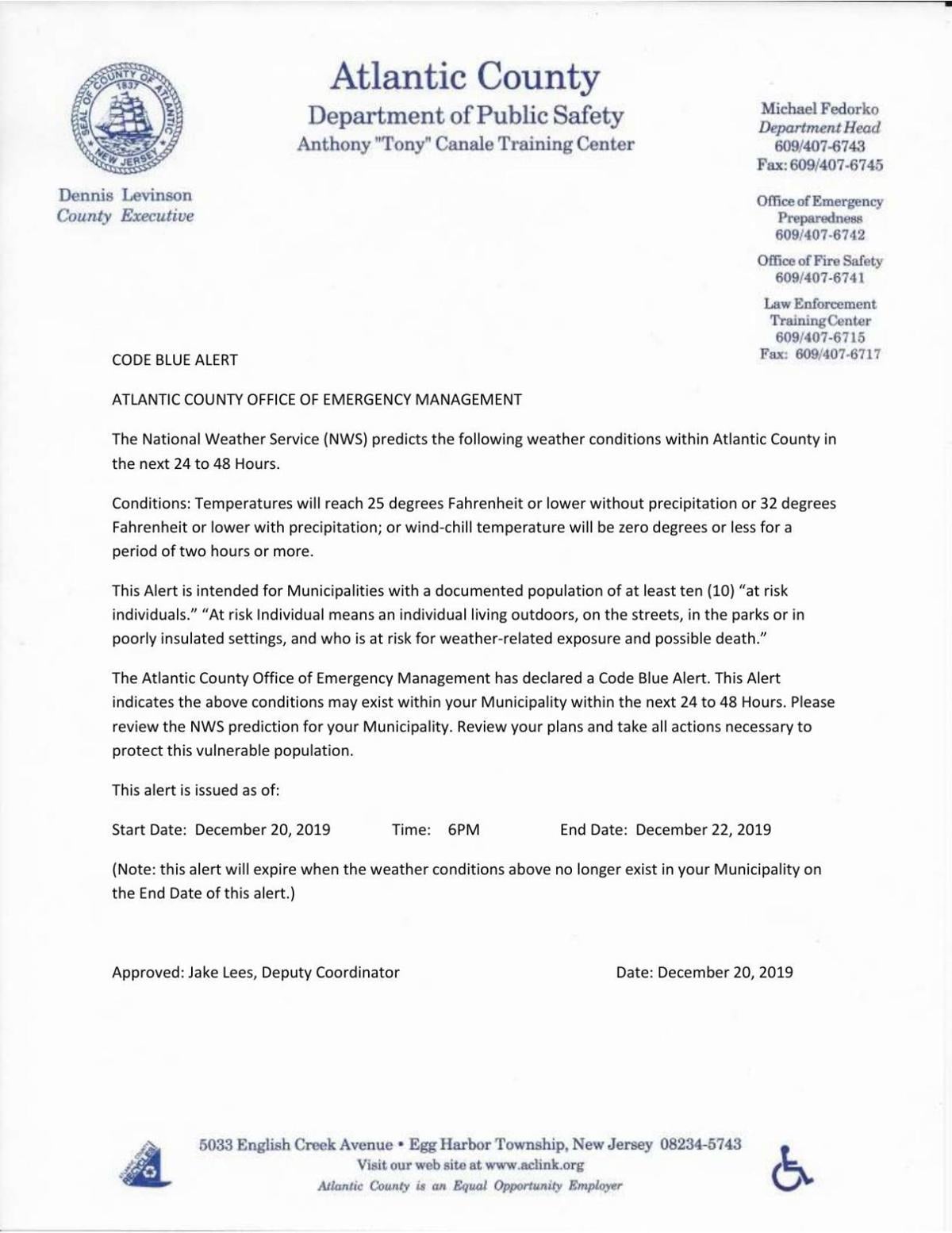
“The more requirements that are placed on the towns to go out and locate these individuals, the cost to shelter them will increase as well,” Jones said.
There were 31 declared Code Blue nights in Atlantic County last year.
“The law is well-intentioned and was to address the homeless and at-risk individuals during cold weather, but there were no provisions, such as funding sources for the operation of warming shelters or requirements for warming centers or shelters for staffing, food or other humanitarian needs for these individuals,” Jones said.
The New Jersey Association of Counties, in conjunction with the New Jersey Emergency Management Coordinator’s Association, has proposed an amendment to the bill that would create a task force to review and recommend best practices and guidelines.
A study would address what weather conditions would be most productive to issue a Code Blue. Sources of permanent funding will be addressed as well, according to the group’s proposal.
Furthermore, it would define what the Code Blue will mean for different levels of government, nonprofits and social service agencies.
CAPE MAY COURT HOUSE — Cape May County is set to spend $161.2 million this year, under a budget that will increase the tax rate by a fraction of a penny per $100 of assessed value.
Olga Roig, 51, a volunteer from Vineland, said she’ll come out as much as she can, regardless of the number of Code Blues issued. For her, it’s personal.
“I was one of them. I wanted to give back what was given to me so freely. I had a calling,” Roig said.


