

JEFFERSON CITY • Tax credits, liquor legislation, spending disagreements. Missouri lawmakers face a hefty helping of issues heading into their final day of the 2013 legislative session.
Legislators have until 6 p.m. today to attempt to resolve some lingering, and familiar, disagreements between the Republican-controlled House and Senate.
On Thursday, the House approved a last-ditch effort to trim historic preservation and housing development subsidies, sending its proposal to the Senate for consideration one more time.
The House’s proposal calls for a gradual reduction of the yearly cap on low-income housing tax credits from the nearly $135 million the state currently allows to $110 million. It also aims to scale back historic tax credits from $140 million a year to $90 million.
“I understand the debate of wanting to have some reasonable controls on our budget,” said House Speaker Tim Jones, R-Eureka. “We need to limit some (tax credits) and cap them, and that’s exactly what this House is doing.”
People are also reading…
But both of the House-approved caps are higher than the Senate has agreed to this session. Speaking from the House floor Thursday afternoon, Jones challenged the Senate to approve the legislation today.
“We’re giving the upper chamber an opportunity to take an up or down vote on significant, meaningful, some would say painful, tax credit reform. I hope they take action,” he said.
In addition to the tax credit reform, lawmakers have been deadlocked over a contentious liquor bill that attempts to regulate the relationships between liquor suppliers and distributors, making it more difficult for their deals to be severed without financial compensation.
The House has passed the liquor bill, but it faced a filibuster in the Senate that sent it into further negotiations.
The proposed legislation, the result of a 2011 federal court ruling that changed how Missouri’s liquor industry operates, has led to intense lobbying at the Capitol this session, with St. Louis Mayor Francis Slay and St. Louis-based distributor Major Brands pushing for its passage.
The liquor legislation has been tied to a relatively noncontroversial beer bill that would allow home-brewers to pour their beers at festivals and other events, following an unexpected ban on home-brewed beer at last year’s St. Louis Brewers Heritage Festival.
In the final day of the session, legislators could attempt to alter the liquor portion to address some senators’ concerns, the liquor portion could be stripped entirely to pave way for the home-brewed beer bill to move on its own, or the entire bill could fail.
Lawmakers also have not yet reached a compromise to fund programs threatened by a disagreement between Republican legislative leaders and Gov. Jay Nixon over a tax credit program for low-income elderly and disabled renters.
Nixon, a Democrat, vetoed the Legislature’s repeal of the so-called “circuit breaker” tax credit program on Tuesday, but the nearly $25 billion state budget lawmakers approved last week relies on that repeal to fund special education programs, health care for blind Missourians and health clinics for the poor.
The Senate has added provisions to several bills to instead provide funding for the programs from the state’s general revenue, but none of those bills has received final approval in the House.
House Budget Chair Rick Stream, R-Kirkwood, called the move a “last resort.”
Despite work that’s left on the table, the House and Senate have each spent long nights at the Capitol this week, working past midnight to push through bills.
But even with today’s deadline looming, the week has had its lighter moments. During a late-night session Wednesday, House members spent time debating whether Rep. Chris Molendorp’s ascot met the chamber’s dress code, which requires members to wear neckties.
And on Thursday, the Senate celebrated “pie day” by enjoying a spread of 150 pies for Capitol visitors.
Lawmakers also checked off some key priorities that leaders set at the beginning of session.
On Thursday, the Legislature sent a bill to Nixon that attempts to fix the state’s insolvent Second Injury Fund, which provides payments for workers who suffer serious injuries on the job.
Under the Legislature-approved bill, businesses will face higher surcharges on their workers’ compensation insurance premiums to help replenish the fund. Those payments were capped in 2005, which led to the financial struggles the fund currently faces.
“This will be one of the crowning successes of this legislative session,” Jones said of the Second Injury Fund compromise. “Failure is not an option at this point. It simply drives the state deeper into an already dreadfully failing system.”
The legislation also addresses an ongoing fight over chronic disease claims. A 2005 court ruling pushed those claims to the court system. The latest bill will put them back under the workers’ comp program.
Nixon vetoed similar legislation last year, but Sen. Scott Rupp, R-Wentzville, said he believes the governor will sign the latest version because of compromises that have been made.
“It’s a win for the injured employees and I think it’s a win for the taxpayers of Missouri,” Rupp said.
Attorney General Chris Koster and state treasurer Clint Zweifel, both Democrats, released statements Thursday supporting the bill.
“There is no such thing as a perfect compromise, but I do think this is a fair one for Missouri workers,” said Sen. Scott Sifton, D-Affton.
The Legislature also passed a bill Thursday that would block welfare recipients from using benefits at liquor stores, casinos, strip clubs and other adult-oriented establishments.
“These are taxpayer dollars, and we have to be responsible for them,” said Rep. Casey Guernsey, R-Bethany.
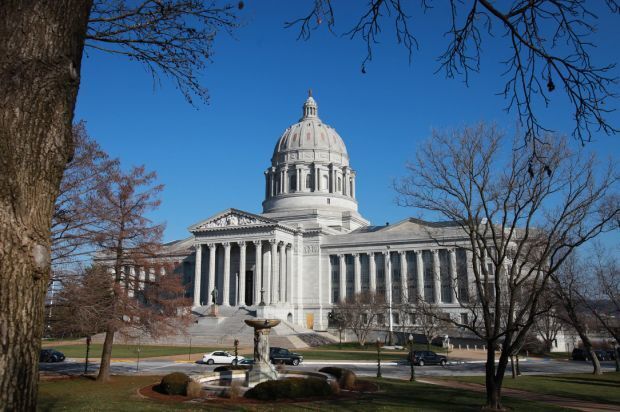
The Missouri state Capitol building in Jefferson City. Photo by Brian Sirimaturos
Elizabeth Crisp covers Missouri politics and state government for the Post-Dispatch. Follow her on Twitter at @elizabethcrisp.


