


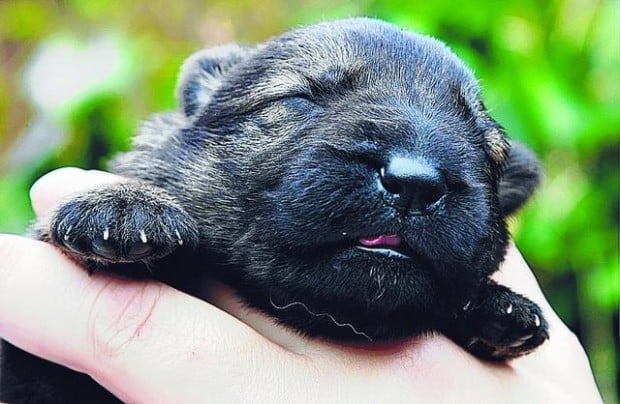
BERLIN — Gerlinde Schultze beamed as she lifted up her week-old puppy. "This is Xaver, a purebred East German shepherd," she said proudly, kissing the dark whelp on its wet snout.
"You can't possibly find a better bloodline anywhere — especially not in West Germany."
As the country celebrates 17 years of reunification on Wednesday, some animosities between the formerly communist East and the capitalist West remain — and few are as contested as the fight over whose shepherds are superior.
One thing nobody denies is that in the more than four decades of Germany's division, the dogs did develop different looks: Eastern shepherds are mostly dark gray or black, while the Western dogs have the better-known yellow-and-black appearance.
West German shepherds also have a characteristically sloped back, while their East German counterparts have a straighter back — which their proponents say is less prone to the hip problems that can plague the breed.
People are also reading…
Schultze, 46, has been breeding shepherds on the eastern outskirts of Berlin for more than 20 years and is convinced that the East German bloodlines are better than those of the West.
"Our dogs are healthier and have a better personality," she said. "Those overbred shepherds in the West are merely about good looks."
Heiko Grube, a West German shepherd aficionado and the spokesman of the national German Shepherd's Club, strongly disagrees.
"It is absolutely not true that the bloodlines of the East are better," he said. "After all, it was the East Germans who weren't allowed to leave their country, while in the West we had an open market for the fresh blood that's needed for successful breeding."
Though German shepherds are very popular in the U.S., the American Kennel Club was not aware of a similar debate there.
First bred by Max von Stephanitz in 1895, the dog is Germany's most popular canine, with more than 2,200 local shepherd dog clubs across the country, according to the national German Shepherd's Club.
The debate over which type is superior is fueled by the near mythical status the shepherd has in Germany, where it is celebrated for embodying such traditional German virtues as loyalty, reliability and resilience.
Because of this, the claim for the better dog at times sounds more like a battle over moral superiority between the East and the West than breeder rivalry.
Grube called the claims from the East German breeders an "obvious case of Ostalgie" — a sentimental nostalgia about life in former East Germany, which went out of existence in 1990.



 Tucson's iconic Arizona Inn to add rental homes to its property


