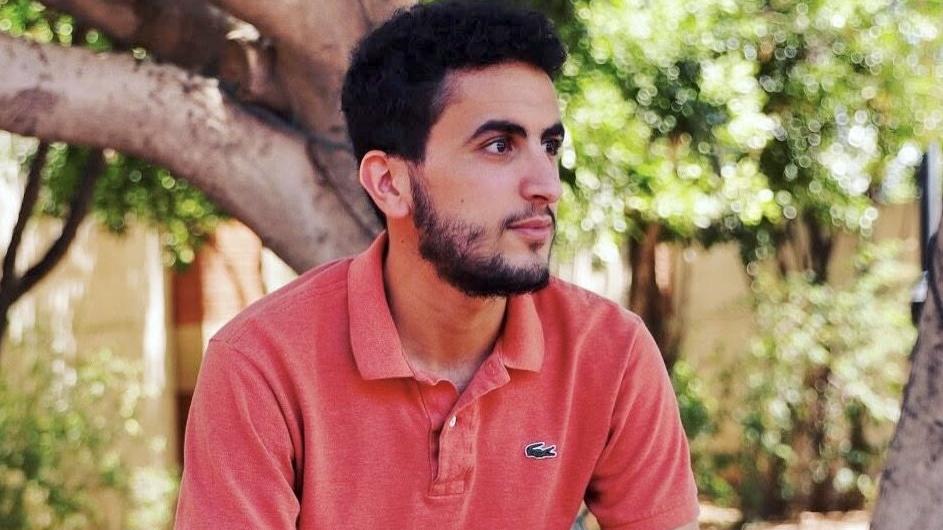
An immigration officer appears to have falsely claimed, in a sworn court filing, that the U.S. government was unable to return an Arizona man to the U.S. this week because a U.S. flight scheduled to arrive in Equatorial Guinea Friday had been "cancelled."
In reality, the flight landed in Equatorial Guinea on Friday, remaining for a couple hours before taking off again — without Ahmed Soliman, 31.
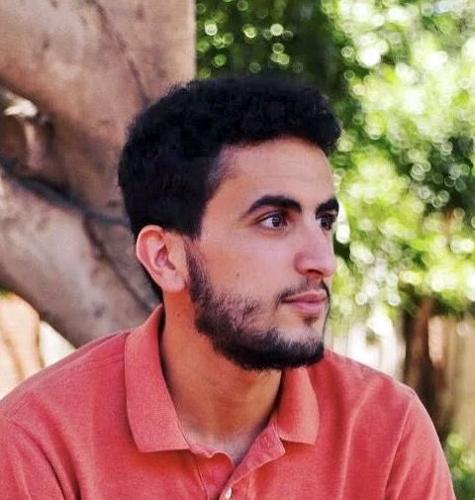
That's according to lawyers for Soliman, who grew up in Phoenix after his family fled Egypt when he was 4. In a sworn filing Friday in federal court, Soliman's attorneys cited the work of a journalist who tracks ICE deportation flights and identified the flight in question when it landed in Equatorial Guinea.
Locals on the ground also confirmed the flight's arrival in the Central African nation.
"It was sort of unbelievable that the government would be so brazen," Dana Camilleri, one of Soliman's attorneys, said Friday. "Less than 12 hours ago, they filed an affidavit claiming it was cancelled."
People are also reading…
In a Friday evening court filing, ICE official Fernando Valenzuela acknowledged the flight had landed in Equatorial Guinea. He said the flight was there to drop off two Equatorial Guinea nationals, not to carry out third-country removals of immigrants with no ties to Equatorial Guinea, like Soliman.
He said Soliman couldn't be returned to the U.S. on that flight because ICE hadn't gotten his paperwork in line yet — more than two weeks after a federal judge issued an order for ICE to return Soliman to the U.S.
Soliman "could not return on this flight because ICE had not yet adjudicated the parole request, and the return transportation letter had not been issued. The aircraft, which was operating on a scheduled mission, could not wait for those steps to be completed," Valenzuela wrote.
Attorneys say the incident is the latest example of the U.S. government's failure to comply with a federal judge's Oct. 6 order to locate and facilitate the return of Soliman to the U.S. The judge's order cited Soliman's "unlawful" deportation and the "irreparable harm" he continues to suffer in Equatorial Guinea, where he's been imprisoned despite not having been charged with any crime there.
On Friday afternoon the same judge, John C. Hinderaker, of U.S. District Court in Tucson, responded to ICE's apparent misrepresentation about the flight cancellation.
"Plaintiff’s representation that a DHS-contracted aircraft landed in Malabo today appears to contradict the declaration Defendants (the U.S. government) filed yesterday. Defendants must address this discrepancy," Hinderaker wrote, still unaware the flight had already left without Soliman.
Hinderaker ordered officials with the U.S. Department of Homeland Security and the U.S. State Department to explain themselves, reminding them that affidavits are sworn documents, "made under penalty of perjury."
"If a government-contracted aircraft is on the ground in that same city today, Defendants must explain why it is not reasonable to expedite Plaintiff’s parole authorization and travel documents and ensure his placement on that aircraft," he wrote. "The Court reiterates that these representations must be made under penalty of perjury by an individual with personal knowledge of the matters stated."
In the contested filing, ICE deportation officer Andrea N. Chiriboga Villacis had claimed the flight to Equatorial Guinea had been canceled, citing ICE's Enforcement and Removal Operations. "Therefore, that mission is not available as a means to transport (Soliman) to the United States," Chiriboga Villacis wrote.

Judge John Hinderaker
When Camilleri learned the flight had actually landed Friday — a Boeing 767 with tail number N703KW, according to documentation obtained by journalist Gillian Brockell — Camilleri scrambled to file a temporary restraining order, or TRO, to try to prevent the plane from leaving without Soliman.
Citing the documentation and flight data obtained by Brockell, who tracks ICE deportation flights and is reporting on Soliman's case, Camilleri also noted the flight contained dozens more people the U.S. was deporting to Africa, including 25 people destined for Equatorial Guinea in third-country removals.
That contradicts Valenzuela's claim that the stop in Equatorial Guinea was only to "repatriate" two individuals who had been born there.
U.S. appeals return order
The Star emailed detailed questions to DHS and ICE about the agencies' lack of progress in complying with the judge's Oct. 6 return order and the apparent falsehood in ICE's sworn filing Thursday. The Star also asked whether ICE was continuing to deport people to Equatorial Guinea, despite the well-publicized abuses experienced by U.S. deportees already removed there.
On Friday, an unnamed DHS spokesperson replied with a seven-word email: "DHS complies with all lawful court orders."
The U.S. State Department also ignored the Star's questions, sharing a general, unattributed statement: "As Secretary Rubio has said, we remain unwavering in our commitment to end illegal and mass immigration and bolster America’s border security," the statement said.
DHS moved to appeal the judge's Oct. 6 return order this week, filing an emergency request with the 9th Circuit Court of Appeals to stay Judge Hinderaker's order to return Soliman, pending the outcome of the appeal.
Hinderaker said he still has jurisdiction in the case, unless an appeals court grants the stay.
Under "well-established case law," in order to be granted the stay, the U.S. government would have to prove it would suffer "irreparable harm" if Soliman is returned to the U.S. and that it's in the public interest to keep him in Equatorial Guinea, said Camilleri, of Green Evans-Schroeder. That's the Tucson law firm representing Soliman in his civil complaint, filed Sept. 15 in U.S. District Court in Arizona.
Small steps after judge's filing
Camilleri said DHS appears to be failing to act in good faith to comply with the judge's return order. It took the U.S. officials two weeks to even reach out to the U.S. Embassy in Malabo about Soliman's case, she said.
"I think it's very apparent they do not want to return Ahmed," she said.

Soliman
The U.S. government also claimed in sworn filings that officials were still trying to locate Soliman as recently as Monday, Oct. 19, despite Camilleri and others informing attorneys for the government where he is weeks ago, at the decommissioned Hotel Bamy in Malabo, the former capital of Equatorial Guinea.
The Star first reported Soliman's confinement at the hotel in August.
The U.S. government finally took some steps to locate Soliman in recent days, after Hinderaker issued an order Oct. 21, demanding the U.S. government explain its lack of action and ordering DHS to document its progress within 24 hours.
After the reprimand U.S. officials appeared to take steps Thursday to locate Soliman, who has been imprisoned — either in a squalid jail cell or at the decommissioned Hotel Bamy — since his deportation in April, lawyers have said.
Attorney Lucas Olo Fernandes, who was born in Equatorial Guinea, said he was just contacted Thursday by officials with ICE and the Department of Justice, asking where Soliman is and who to reach at the U.S. Embassy in Malabo.
Olo Fernandes and other attorneys have been trying to get a response from the U.S. Embassy for months, but have been ignored, attorneys said.
ICE's Thursday request for information "was strange," Olo Fernandes said, since ICE knows where they're deporting people to in Equatorial Guinea and should have an easier time than Soliman's attorneys in getting a response from the U.S. Embassy.
Olo Fernandes works with a nongovernmental organization, based in Spain, that advocates for human-rights activists and others persecuted in Equatorial Guinea. Most recently, that includes U.S. deportees like Soliman who are imprisoned there, despite having committed no crime in the country.
Travel documents
The latest update from ICE's Valenzuela said officials at the U.S. Embassy in Equatorial Guinea have started work to obtain the documentation to issue a "transportation letter" for Soliman. Valenzuela said he emailed ICE's Join Parole Operations Division Friday to request expedited adjudication of a parole request for Soliman, which is needed for his return.
Soliman has been hospitalized twice since his removal to Equatorial Guinea and his health status is still dire, his attorneys say, citing what they've heard from locals.
On Sept. 9, Equatorial Guinea officials seized the phones of dozens of U.S. deportees held at the decommissioned Hotel Bamy, where Equatorial Guinea has been arbitrarily imprisoning U.S. deportees for months.
Soliman was also injured in a car accident that happened as he was being returned to the hotel from jail earlier this month, the attorneys said.
Like Soliman, dozens of others the U.S. has deported to Equatorial Guinea have also been held against their will since their arrival there, and have suffered physical assaults, threats at gunpoint and been deprived of basic necessities such as adequate food, laundry services and hygiene products while imprisoned by the Equatorial Guinea government.
The Equatorial Guinea government has not explained why it's imprisoning people deported from the U.S., despite the U.S. State Department's claims that Equatorial Guinea provided "credible diplomatic assurances" that U.S. deportees would be treated humanely there.
It's clear by now those assurances were false, Camilleri said.
"We now have five months' worth of video testimony and photographic evidence of the human rights abuses being perpetrated at Hotel Bamy," she said.
'Irreparable harm' ongoing
Attorneys for Tucson-based Green Evans-Schroeder filed a civil complaint on behalf of Soliman Sept. 15, in U.S. District Court in Arizona, which led to the judge's Oct. 6 order that DHS and the State Department facilitate Soliman's return to the U.S.
Referencing the Star and others' reporting, District Judge Hinderaker's order cited the "unlawful" manner in which Soliman was deported to a third country in April, without due process, and the "irreparable harm" he continues to suffer in Equatorial Guinea.
Soliman's family came to the U.S. legally, on a religious visa, when he was a child and he later obtained lawful permanent residency. But Soliman lost his legal status, after causing a car accident while under the influence of fentanyl in 2021.
Soliman previously told the Star he'd developed substance abuse problems in his 20s as he struggled to accept his identity as a gay man. After the car accident, he was sentenced to 2.5 years in prison in 2023. After serving his sentence, he was transferred to civil ICE detention in 2025.
That year Soliman was granted protection against return to his home country of Egypt, after an immigration judge agreed he'd face torture or death there, due to being gay and his family's previous political activity there.
So instead, DHS sent him to Equatorial Guinea, a place where homosexuality is de facto criminalized and where Soliman faces the same risks, he and his attorneys have told the Star.
In her Friday TRO request, Camilleri emphasized every day that passes with Soliman still imprisoned in a country to which he has no ties, and to which he was unlawfully deported, he is suffering "irreparable harm."
Soliman "has already been subjected to confinement for several months by the Equatorial Guinean government; he has been held at gunpoint and threatened regularly with death; and now he has been tortured and jailed. He may well be facing death," she wrote.
Now, his health has "deteriorated drastically," Camilleri wrote. "He has, to date, not received sufficient medical attention. This is the very essence of irreparable harm."
Contact reporter Emily Bregel at ebregel@tucson.com. On X, formerly Twitter: @EmilyBregel

Emily Bregel
Border reporter