

March will be declared as the “Month of Science” for the Tucson Metro area at the Grand Opening of the new offices for SARSEF: Southern Arizona Research Science and Engineering Foundation. Mayor Jonathan Rothschild will make the declaration.
As an individual who supports science and students in our community, I am often asked, “There is so much conflicting information out there, how do I decide, and help my kids decide, what to believe?”
My answer lies in the objective application of science.
When ALL citizens, young and old, make decisions based on data and form conclusions based on evidence, the power of science in our society becomes clear.
Science requires critical thinking – not blind acceptance of what we are told.
When a political issue is brought up over coffee, I believe the first question should be, “What data do you have to support this?”
People are also reading…
The answer allows an individual to determine if there is something behind the statement or if it was “just something that I was told.”
Just like responsible journalism, science requires facts, collected in a systematic and objective manner.
Using science, we can determine an argument’s strength and credibility when examining any issue. Climate change, immigration, crime rates, evolution and the age of the planet have ample data available. And if the interpretation of that data varies, the next question can help.
When a conversation at a party or football game begins with something that, “I heard on the news...”, we can, and should, ask,
“What source did that come from?”
It is not whether an individual is credible, it is whether their sources are.
Valid scientific sources are those that report results impartially, have a history of peer review, back conclusions with evidence, demand researchers be forthcoming about reporting their limitations, and stand up to criticism. News sources that hold themselves to the same standard are also those that are the most credible.
Facebook and fake news sources may be a great way to see which friends feel the same way about an issue, but are not a source of news or proof for any issue.
If all citizens begin to examine the data, as analyzed and presented by impartial sources, it will shape our thinking and open us up to talking with “the other side” in a way that increases understanding.
When data guides an individual’s thinking, it does not matter which side of the political aisle a proposal comes from. The debate is no longer about what we believe, but instead, what is true, and what it means for our community.
We may still disagree at the end of the day, but the conversation is changed to a discussion of the facts and reliability of sources, and what they might mean for our community and society at large, instead of a debate based on personal opinions.
As March is proclaimed as the “Month of Science” in our community, I would like to challenge all of us to become citizen scientists.
In doing so, we promise to look at data objectively before predetermining what we are hoping it will prove.
And we commit to examining our sources to ensure they are objective before using them to form any conclusions or arguments.
This has been the source of power for science for centuries.
Perhaps it may now become the source of strength for our society.
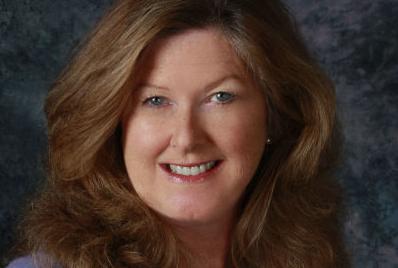
Kathleen Bethel
Dr. Kathleen Bethel is the CEO of SARSEF: Southern Arizona Research, Science & Engineering Foundation and works at the UA College of Engineering.


 Jim Click’s Tucson dealerships sell for $93 million


