

Last week I helped out with a folklife field school on the Rio Sonora. I’ve visited this lovely valley in previous blogs and will doubtless visit it some more, because it is filled with good stories.
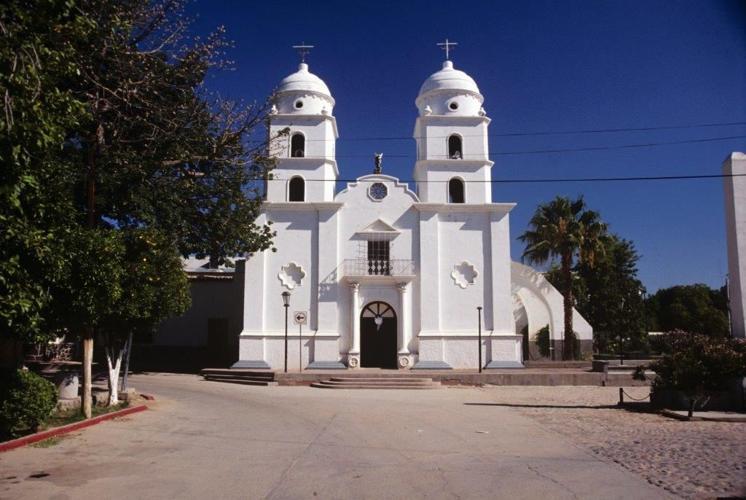
Just now I want to concentrate on the town of Ures, on the western stretch of the river after it turns west and runs through a gorge on its eventual way toward Hermosillo. The Jesuits began work there in 1636, and the first church was completed in 1646. The present church seems to date from the 19th century, with recent modifications.
Ures served as the capital of Sonora between 1838 and 1842, and again between 1847 and 1879, in which year the seat of administration was moved down river to Hermosillo, where it remains.
What’s special about Ures? In the first place, it is a lovely old-fashioned town, with more than its share of well-maintained 19th-century buildings. It is the site of an old flour mill that is being restored as a museum. The Rio Sonora is dotted with old water-powered mills in various stages of ruin — rendered obsolete by the introduction of new varieties of wheat, brought in as a result of the Green Revolution (which had its beginnings in Sonora, but that’s another story). This museum offers a glimpse at the interior of one of these important relics of the past.
People are also reading…
Then there’s the legend. In 1922, a band of colorados [“redshirts” - the anti- constitutionalist remnant followers of Pascual Orozco (1882 -1915)] is said to have been about to attack Ures on their way back to Chihuahua. A scout climbed a low hill overlooking the town and saw that the plaza was filled with armed men led by an officer waving a sword. The colorados avoided the town.
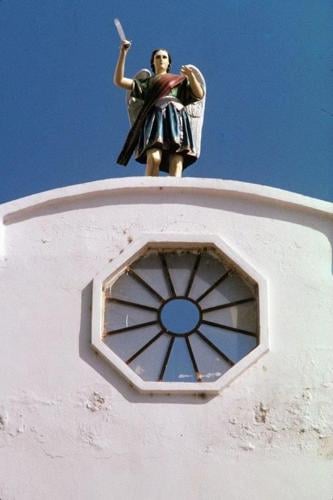
Now Saint Michael Archangel (San Miguel) is the patron of the church and town of Ures, and it was apparent to some of the tellers of this story that he intervened to save his town and people. We’ve encountered these legends before, and I’ll doubtless mention them again. They are literally all over the state. If you want to see what San Miguel looks like, there is a full-color, more-than-life-sized statue of him on the church roof, over the façade. There are interesting statues, some by local sculptors, inside the church as well.
A few miles down the Hermosillo road from Ures is Guadalupe. This cluster of roadside stands is dedicated to the making and selling of piloncillo or raw cane sugar. At the right time of year, you can watch the manufacturing process. The stands also sell prepared food and local produce, and are well worth a stop and even a photograph.
And so those are my reasons why I find Ures a special place. If I get to spend more time there, I’ll doubtless discover more.


