

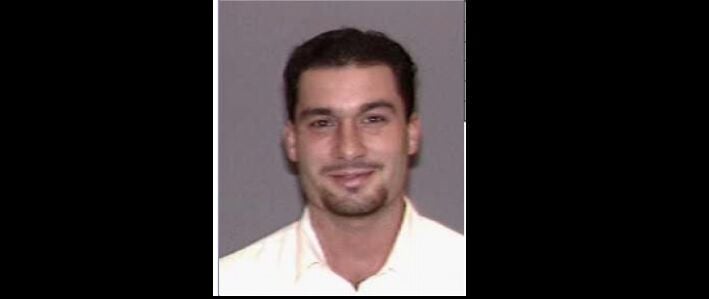
Covid-19 spawned dread and death, but Joseph C. Bella III spotted an opportunity to cash in.
The 48-year-old Buffalo man started advertising in March on social media he was selling Covid-19 test kits and N95 masks.
But his alleged lies about having a licensed laboratory, ultra-cold storage for test kits, and of selling 25,000 of the tests to the federal government brought his business to a screeching halt in April.
That's when federal agents raided his home and office, seized $114,063 from his business account as evidence of fraud, and charged him with possessing drugs, a gun and ammunition.
Bella’s attempt to profit from the pandemic had gone beyond sales. According to the U.S. Attorney's Office in Buffalo, he had lied on applications that allowed him to illegally receive $91,600 in federal disaster loans through the U.S. Small Business Administration and $66,097 from the federal Covid-19 relief Payroll Protection Program.
People are also reading…
Bella, who has pleaded not guilty to gun and drug charges, has not been charged in the Covid-19 business dealings, although an assistant U.S. attorney said in April that charges are expected.
“As I understand it, Mr. Bella was bringing tests into this state … not a bad thing,” Bella's attorney, Thomas J. Eoannou, told a federal judge in April.
Federal prosecutors described it differently.
History of fines
For Bella, serving at the helm of a business targeted by authorities was nothing new.
Shortly after the 2002 arrest of the Lackawanna Six, Bella started selling potassium iodide pills to thwart radiation poisoning from what he said was the threat of a “dirty bomb.” The state shut down his business and fined him $2,500.
In 2013, Bella agreed to pay $165,000 in restitution and penalties for illegal debt-collecting practices under a settlement with the state.
Two years later, the New York State Attorney General’s Office and Federal Trade Commission accused his debt-collecting business of using lies and threats of arrest to unlawfully collect $8.7 million from Americans. Bella was fined $112,000 and barred from working in the debt collecting industry.
It was that history that raised red flags among Department of Homeland Security agents who began looking into his newest venture in March, according to court documents.
Bella told customers that supplies of the Covid-19 test kits were limited and he urged them to quickly place orders, according to an undercover Homeland Security agent.
Bella claimed to be working with doctors and scientists. He said he operated laboratories in Buffalo and had freezers that could maintain extremely low temperatures to preserve the testing chemicals, according to a court document filed by prosecutors in the forfeiture case.
But when agents raided his Med-Cor Staffing business at 155 Summer St., they found nothing resembling the elaborate operation he bragged about.
There were some Covid-19 test kits, which Bella was reselling at almost four times the price he paid for them, but they were not in a freezer and there was no laboratory, according to the court documents.
“It's literally some tables and chairs and cubicles,” federal authorities said in court documents related to the April 23 raid.
In a separate raid at Bella’s home at 224 Summer, agents alleged cocaine, ecstasy, marijuana, a digital scale, packing material, a shotgun and ammunition for a handgun were seized, resulting in several criminal charges to which Bella has pleaded not guilty.
Federal authorities said Bella sold drugs at Buffalo bars and had connections to organized crime and a federal DEA agent who has been indicted for taking bribes.
On Bella’s phone, agents found photos and videos of Frank J. “Butch” BiFulco, who prosecutors alleged was part of organized crime. BiFulco, who died in October, was known to many as “Butchie BiFocals.”
Attorney Thomas J. Eoannou, who represents Bella and was BiFulco’s attorney, has disputed Bella has any connections to organized crime and said that Bella “barely knew” BiFulco.
Eoannou made his comment at a federal detention hearing on the drug and weapons-related charges. He also pointed out that Bella had not been charged with a crime over his Covid-19 business dealings and noted that that his client had attempted to reach out to the governor’s office on his business efforts.
Assistant U.S. Attorney Joseph M. Tripi told U.S. Magistrate Judge Michael J. Roemer at the April 27 hearing that criminal charges for the Covid-19 dealings are anticipated.
“Knowing he is a fraudster, they began an investigation right away and he was dealing with an undercover, the whole time jacking up the price from eight bucks to 35 bucks, misrepresenting who Med-Cor was, misrepresenting the kits as they were point-of-care tests, misrepresenting that Med-Cor was a laboratory, pretending that they had doctors and scientists on staff to answer questions and that they had like a legitimate capability to back someone up who bought these tests," Tripi said. “It was all garbage.”
'Mr. Bella sees opportunity'
In the weeks after the September 2002 arrests of the Lackawanna Six – a group of young men who had traveled to Afghanistan and met with Osama bin Laden before the Sept. 11, 2001, terrorism attacks – Bella started a business that raised fears of radioactive dirty bombs being ignited, Tripi said.
Bella had sent out an autodial recorded message in mid-October 2002 to hundreds of residents, stating:
“This is the anti-terrorism unit of BioFend in Western New York regarding the recent activities in our neighborhoods. You've probably heard that our local authorities have detained six allegedly trained al-Qaida terrorists and there are more on the prowl.
"We believe that the goal of this terrorist cell was to detonate briefcase-sized 'dirty bombs' right here in Western New York. ... Our division is responsible for delivering crisis kits to every household in Western New York. ... We cannot stress the importance of getting back to us enough. Agents are standing by."
Bella was hawking $29.95 “crisis kits” that contained potassium iodide pills to counteract radiation exposure, according to the State Attorney General's Office. The pills were an over-the-counter medication Bella had marked up.
“When everyone else is concerned about the safety of this country and their loved ones and is rallying again for the buildings that fell in a pile of rubble, Mr. Bella sees opportunity. Opportunity to prey on victims and scam them,” Tripi said. “And that is what he did in 2002.”
After the state shut down Bella's iodide pill business, Bella agreed to pay a $2,500 penalty and the Attorney General’s Office obtained a court order prohibiting him from operating similar businesses.
Organized crime and a DEA agent
Tripi elaborated on Bella's alleged connection to the drug world during the detention hearing.
Bella allegedly traveled back and forth from Canada, sometimes undetected in a boat, to bring drugs into Buffalo, where he distributed them in bars, Tripi said.
Bella was on the radar of federal authorities when he was stopped at the Peace Bridge in July 2016, and an officer confiscated his phone.
After contacts in the phone were downloaded, Tripi said it was determined the phone numbers were associated with “organized crime and drug trafficking types.”
That resulted in a Homeland Security agent paying a courtesy call to the DEA about Bella in August 2016.
During that meeting, then-DEA agent Joseph Bongiovanni entered the conference room uninvited, listened to what was said and started downplaying the Homeland Security agent’s information, according to federal authorities.
Bongiovanni was indicted in 2019, several months after his retirement, for allegedly accepting $250,000 in bribes from organized crime members involved in drug trafficking.
When Bongiovanni’s cellphone numbers were later compared to those in Bella’s phone, Tripi said, “he had all of Bongiovanni's co-conspirators in his phone.”
Tripi also informed Roemer that Bella has a long history of arrests dating back to the 1990s that include arrests in Florida. Among them was battery of a police officer and resisting arrest. In 2019, Bella was charged with aggravated harassment in Orchard Park. Bella has also used different identities, including the name Joseph Phillips, and has four different Social Security numbers, Tripi said.
Bella’s Covid-19 venture
In urging the undercover Homeland Security agent to buy Covid-19 test kits, Bella portrayed his business as brisk.
“I have only got 50,000 with my name on them. I just sold 25,000 to the United States government … and now I’ve got 25,000 left,” Bella said to the agent, who later checked and determined the government had not purchased any kits from him.
Bella also described his supply business as all-encompassing.
“We have every single thing that can be imagined as far as testing for Covid, from conception to shrink wrap,” he told the agent.
When the agent asked if the testing supplies were made in the United States, Bella said they were. “We have a warehouse set up right now in San Diego where these are being frozen, they have to remain frozen at negative 20 degrees,” he said.
In conversations with the maker of the tests, CoDiagnostics, the agent said he learned that Bella misrepresented himself to the manufacturer, claiming he had a laboratory, which is required to perform the tests.
A CoDiagnostics official said the company would not have sold tests to Bella if it was known he was going to resell them on the open market, the agent stated in the court papers.
After the Homeland Security agent agreed to purchase 5,000 test kits from Bella, the agent wired a partial payment of $43,750 on April 16 to Bella’s bank account.
The agent subsequently confirmed that Bella had placed an order for the test kits with CoDiagnostics. Seven days later on April 23, agents raided Med-Cor.
Federal authorities said they discovered three companies last spring placed orders with Med-Cor for protective masks and paid thousands of dollars in deposits. The investigation determined Bella did not have masks and was not a supplier.
Attorney: Drugs were fake movie prop
Eoannou said he is challenging the government’s civil forfeiture of the $114,063 it took from Bella’s bank account, but he declined to further comment on his client’s Covid-19 business.
Of the drugs and weapons-related charges, Eoannou said 2 ounces of cocaine seized from Bella’s home was fake and subsequent tests by the government confirmed that.
“The alleged cocaine was a prop for a movie he was making,” Eoannou said, adding that the movie project was never completed.
During the detention hearing, Eoannou said the shotgun that was seized was a gift from Bella’s uncle and that it was rusty, 40 years old and would have exploded if it had fired.
Of the indicted former DEA agent, Eoannou told the judge Bella did not know him.
“…my client says if he walked in the courtroom, he wouldn't recognize him. He does not recall ever meeting him. The fact that he has people that know the same people, it's a small town,” Eoannou said.
Of Bella’s past criminal history, the lawyer said, “It’s minor and insignificant.”
Roemer ruled against the government’s request that Bella be detained. He was conditionally released to home detention on a $340,000 bond following the hearing.
His next appearance on the federal drug and weapon charges is set for Monday. A court date on the civil forfeiture of Bella's $114,063 has not been scheduled.


