

SIERRA VISTA — It could've been a patrol down any Iraqi street.
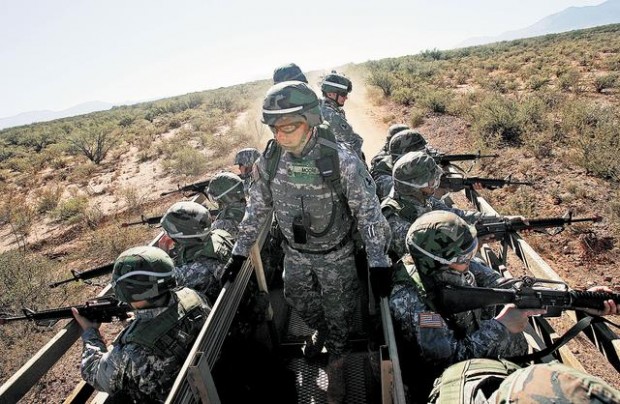
As a string of troop transports makes its way through the desert, heavy dust mixes with exhaust, obscuring the vision of dozens of Fort Huachuca soldiers keeping an eye out for insurgents.
Approaching a car near a mosque, the convoy slows as the sound of an Islamic prayer call hangs in the air.
Then comes the chaos.
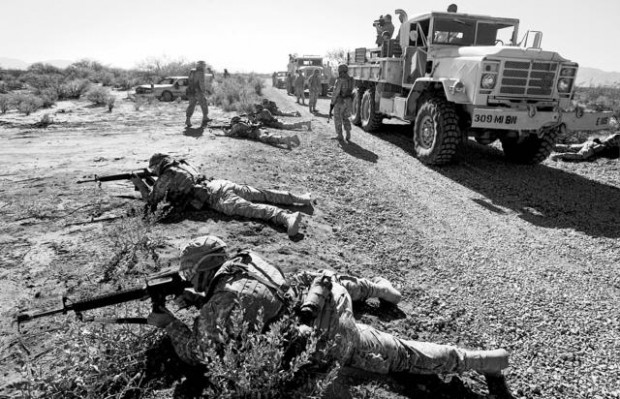
Debris shoots from the car in a mock explosion, disabling one of the transports and severely injuring a soldier. Machine-gun fire follows the roadside bomb as dummy insurgents appear, seemingly from everywhere, to ambush the troops.
Amid the noise, dust and confusion, the intelligence soldiers must dismount from the transports, secure the convoy and help the wounded.
People are also reading…
Roughly 150 intelligence soldiers confronted the hectic scenario Saturday morning as part of training that military leaders say is increasingly necessary.
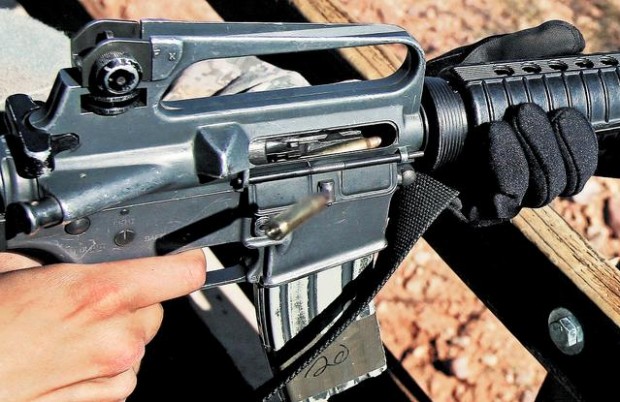
The course, roughly 60 miles southeast of Tucson, gives non-infantry U.S. Army soldiers a chance to fire their weapons from the back of a truck.
The goal is to create stress for the soldiers so when they deploy they'll have confidence to fall back on their training, said Lt. Col. Jeff Jennings, commander of the 309th Intelligence Battalion, which conducted the session.
The training is new for Fort Huachuca intelligence soldiers, as they increasingly find themselves on the front lines of conflicts in Iraq and Afghanistan.
In the past, soldiers training in intelligence wouldn't be expected to see the front lines, and they wouldn't fire a weapon until they were deployed.
The lack of confidence in their weapons that many soldiers had led to accidental shootings.
Senior Army leaders called for increased training for all soldiers so they could learn skills that were normally taught to infantry units.
The melee near the mosque Saturday was one of 13 scenarios the soldiers had to navigate along a three-mile course.
Pfc. Joshua Mowry said the training was realistic, forcing him to distinguish friend from foe as he bounced along the dirt road.
At first, many soldiers seemed tentative, unwilling to fire their weapons or unable to see a target.
That's normal, Jennings said, adding that the nerves should be worked out before the soldiers deploy.
"By no means do we make them experts," Jennings said, "but they will have confidence."
In addition to familiarizing the soldiers with their weapons, the training also teaches the importance of communication on the battlefield.
Amid the din of rifle and machine-gun fire, the soldiers yelled "Action left!" when enemies were sighted or "IED! IED!" to alert those around to a roadside bomb. The calls traveled down the line, repeating until every soldier knew what was happening.
The communication is crucial as the soldiers have to learn to observe everything around them while keeping their area of the battlefield secure, said Maj. Al Roach.
The repetition of commands and alerts will give soldiers something to fall back on should they ever have to face a real roadside bomb or ambush, Roach said.
The training will "save your life," he said.
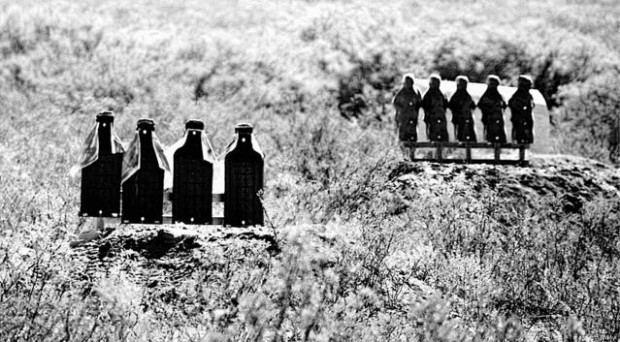
In the future, Fort Huachuca officials want to make the training even more realistic. They plan to add building facades and more lifelike enemies in addition to a bigger, louder mock roadside bomb, said Scott Miller, the civilian range-control officer.
While the roadside bomb could've been louder, the training was realistic and helpful, said Pfc. Anthony Casarez.
"It teaches you that you have to be prepared for every little thing around the corner."
See more images from the training mission at azstarnet.com/slideshows
"It teaches you that you have to be prepared for every little thing around the corner."
Anthony Casarez,
private first class


 Nancy Guthrie's Tucson neighbors: Life with streamers 'unbearable'


