
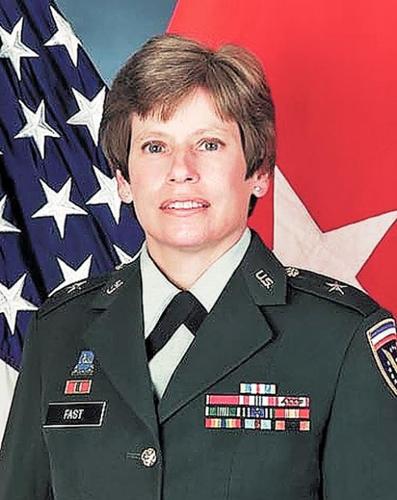
Maj. Gen. Barbara Fast, who emerged unscathed from the Abu Ghraib scandal to be put in charge of Army intelligence and interrogator training, will leave that job this summer, the Pentagon announced Friday.
Fast, who has served since March 2005 as commander of the U.S. Army Intelligence Center at Fort Huachuca, has been assigned new duties at Army Training and Doctrine Command at Fort Monroe, Va.
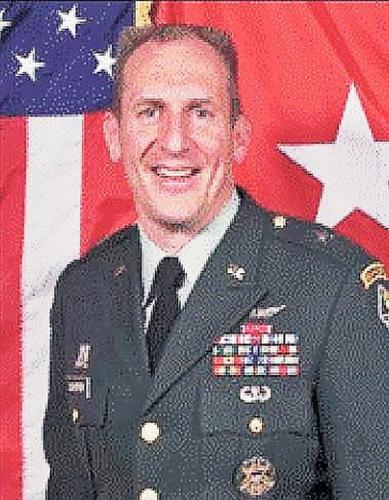
She will be replaced by Brig. Gen. John M. Custer III, who has previous ties to the region. He was formerly deputy commander of the intelligence school in Sierra Vista, 75 miles southeast of Tucson.
The change of leadership is tentatively set for June 29. Fort Huachuca typically changes commanders every few years.
The fort's intelligence school trains military-intelligence officers, interrogators and counterintelligence soldiers.
People are also reading…
Fast's new assignment is not a promotion but a lateral transfer, Army officials said.
She will serve as the deputy director/chief of staff at the Army Capabilities Integration Center at Fort Monroe.
In a statement on Friday, Fast described her time at Fort Huachuca as "exciting and tremendously rewarding."
It has also been challenging, starting with the circumstances surrounding her installment as commander.
Fast, one of the Army's few female two-star generals, was the head of military intelligence in Iraq during the Abu Ghraib prisoner-abuse saga, which shocked the world when photos of the abuse were made public in April 2004.
When Fast returned to Fort Huachuca from Iraq later that year, the Army delayed putting her in charge of intelligence training for several months while investigations of Abu Ghraib were under way.
One of those investigations found that Fast fell down on the job in Iraq by not giving her boss better advice on the right way to run interrogation and intelligence operations in Iraq.
But several other probes cleared her of wrongdoing, and one praised her for improving intelligence-collection efforts in Iraq. She took the helm at Fort Huachuca shortly afterward.
In her statement Friday, Fast praised Custer as "a tremendous leader who brings a wealth of experience to the position."
Custer, deputy commander of the fort and its intelligence school in 2002 and 2003, said he's thrilled to be returning to Southern Arizona.
He and his wife, Audrey, still have many friends and associates in the region, so, "It truly feels like we are going home," Custer said in a statement from U.S. Central Command in Florida, where he has worked as intelligence director since mid-2003.
"This announcement seems like a dream come true," he said. "It is the assignment we have hoped for since departing in 2003."
A native of Pennsylvania, Custer has been involved in military intelligence since 1978 and has held numerous command positions.
Did you know ...
A temporary camp was established at Fort Huachuca's current location on March 3, 1877, by Capt. Samuel Marmaduke Whitside with two companies of the 6th Cavalry.
The site was selected because it had fresh running water, many trees, excellent views in three directions and protective high ground for security against Apaches.
Camp Huachuca was redesignated a fort in 1882. In 1886, Gen. Nelson A. Miles designated Fort Huachuca as his advance headquarters and forward supply base for the campaign against Geronimo. After Geronimo's surrender in August 1886, the Army closed many camps and forts, but Fort Huachuca was retained because of continuing border troubles.
Source: Fort Huachuca Museum information on the Web site of the U.S. Army Installation Management Agency at huachuca-www.army.mil

 Jim Click’s Tucson dealerships sell for $93 million