John Pijanowski settled into a seat last Saturday next to his 12-year-old son, only a couple of rows behind the Tampa Bay Rays dugout. By the time the first few pitches had been thrown, John – in a way that was organic, almost automatic – was honoring what he knew his own father would have done.
As the Rays battled the host Toronto Blue Jays at Sahlen Field, with young Jack listening, John, 51, and his brother Mike, 60, began breaking down everything that happened.
Take a look: That man on second. Where do you throw if the ball is hit to left? The infielders, as they dig in. Watch their feet, how they respond to the batter, a chess game based on the tiniest decisions by the pitcher and the guy now at the plate.
“Our dad knew situational baseball,” Mike Pijanowski said. “He knew it like the back of his hand.”
People are also reading…

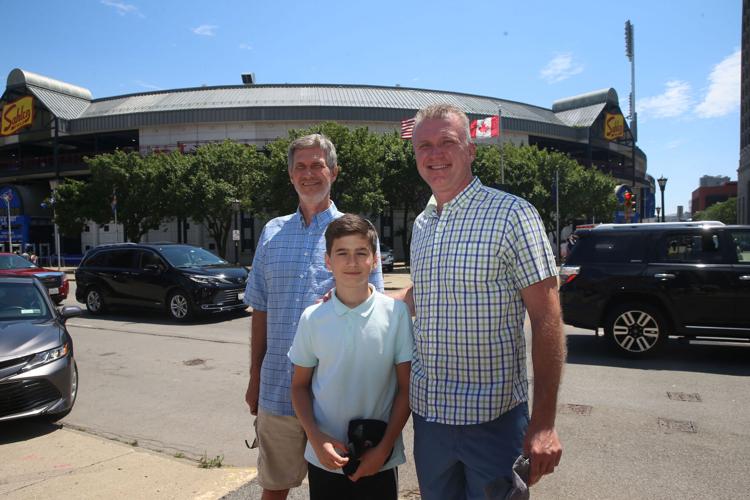
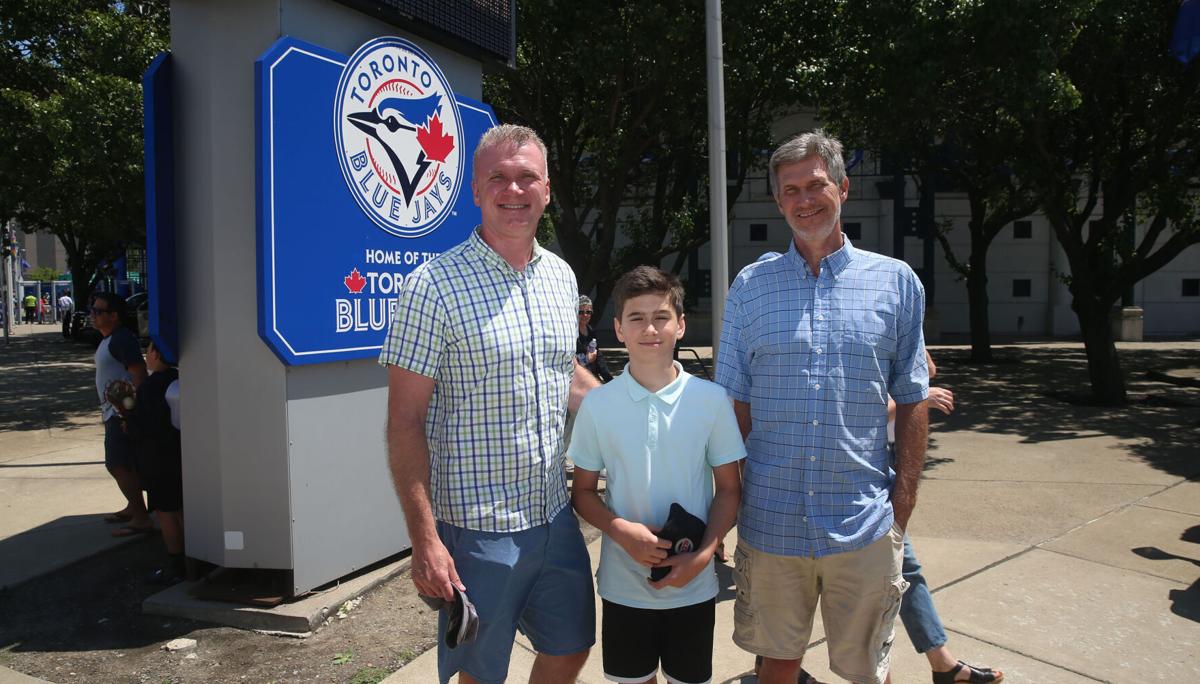
John Pijanowski, right, with his young son Jack, 12, and brother Mike outside Sahlen Field in Buffalo.
For John Pijanowski, a professor of education at the University of Arkansas, the trip to Sahlen was at the core of a pilgrimage. His father, Don Pijanowski, died 15 months ago from Covid-19, in the early weeks of the pandemic.
Don was 87, a robust and active Kenmore guy, which made it all that more of a shock when Mike found him collapsed on the floor, at Don's home. The four Pijanowski sons – Jeff, Mike, Greg and John – were scattered around the nation and stopped by pandemic safety measures from gathering with their father for the final vigil at the hospital, or assembling for a funeral.

Hal Miller, 61, who has stage 4 cancer, had dreamed of seeing big-league baseball in Buffalo since childhood. His son, Ryan, helped him find a way.
Instead, John stood in his quiet Arkansas kitchen and mourned digitally with his brothers by call or text, before he sent out a tribute that exploded across Twitter, built around this central paragraph:
“My dad was a great man. There are no buildings named after him, he left behind no fortune, and there are no books that tell his story. He was not great in the way we often try to define the term – he was great in that he was such a ‘good’ man – good to his core, unfailingly good.”
More than a year later, vaccinated and with restrictions finally lifted, John knew he and Jack needed to get back to Buffalo, for reasons the Blue Jays in many ways now symbolize.
“He never got the sendoff he deserved,” John said of his dad. “It left a little bit of a lingering wanting.”
This is the best way he can define his father: John thinks his dad was proud that his youngest son achieved an Ivy League education at Brown University, but he knows Don would have been equally proud if, say, after high school, John learned a skill that helped him build a long career of showing up every day, inside a plant.

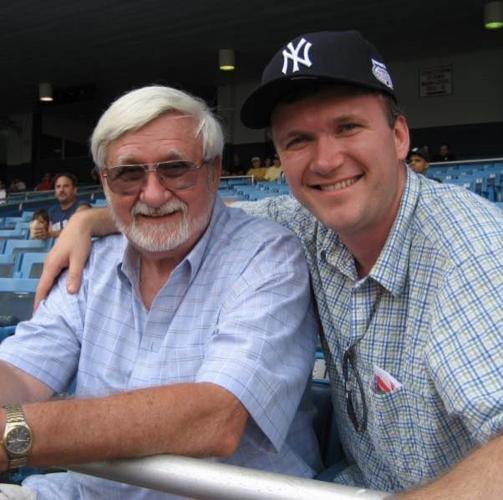
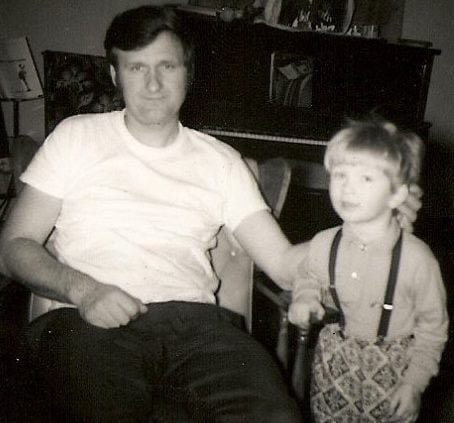
Don and John Pijanowski.
Neither of John’s parents completed high school – his mother, Kate, died in 2007 – but both in their own way were brilliant, he said. When John attended Brown, he used to bring home his textbooks after each semester because his mom, who held an office job, loved to read through them to learn, for its own sake.
John Pijanowski, with no way of being at his dad’s hospital bedside in Buffalo, learned by text in Arkansas of the death of his father from Covid-19.
As for their father, as John wrote on Twitter: “He wasn’t a suit & tie guy; he was a green bar of Lava soap guy. He had many jobs through the years (like wiring houses & steel manufacturing) & his career was ultimately building and later servicing huge industrial turbo compressors.”
What he loved – with the passion of both practitioner and lifetime student – was baseball.
Their dad went from youthful hardball to decades of pitching adult fast-pitch softball. Mike said Don was still playing “four or five times a week” when he married Kate. He was a Yankees fan, a guy who went to Bisons games throughout his entire life, and his sons can only guess how he would have felt about seeing the greatest players in the world this summer at Sahlen Field.

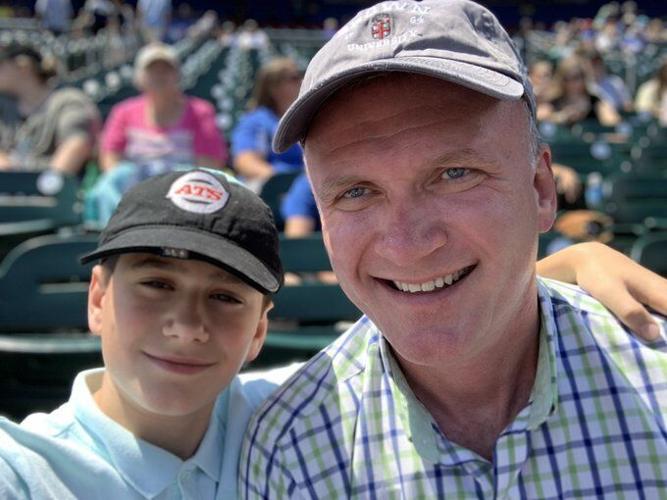
John Pijanowski, right, and his son Jack, at Sahlen Field, re-creating a ballpark image John once took with his own dad.
To Don, it would not have been about poetry or some some literary romance of the game. “He just loved baseball,” John said, “and loved seeing it played really well.”
Once John and Jack arrived in Buffalo, they connected with Mike to stand before Don’s grave at Mount Olivet Cemetery, where John said it instantly became real for his son. “All of his Buffalo memories are wrapped up in his grandpa,” said John, who planned this entire trip as both tribute and forward motion:
“We went through a hell of a lot,” John said, “and I wanted to push a button to help get to the next chapter.”

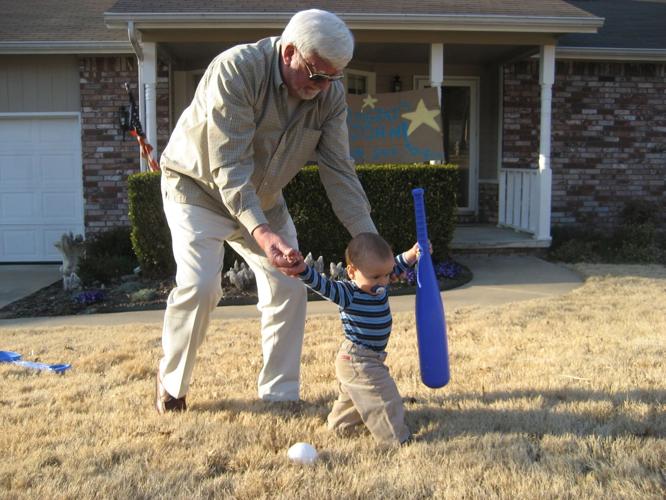
Don Pijanowski with his grandson, Jack.
In other words, he recalls how Don used to speak with reverence of a childhood chance to see such greats as Jackie Robinson in Buffalo. John hopes there will someday be a similar ripple of appreciation with Jack for the day he saw, say, Vlad Guerrero Jr.
The best memory of the afternoon, at least to John: Jack kept asking his dad for ice cream, and John spontaneously promised – when George Springer came to the plate – that his son would get his ice cream if Springer hit it out.
Boom.
From Buffalo, father and son left for Ithaca, where they are staying now. John met Jack’s mother there, the former Kim Kathan, when they held jobs in neighboring offices after college. Father and son are visiting with Kim’s mother while Jack attends lacrosse camp, and John finds solace in images of Kim, everywhere he looks.

Their presence in Buffalo through this weekend's Toronto-Tampa Bay series is a kind of ultimate tribute to what is happening at Sahlen Field.
She died in 2014, when Jack was 5, of amyotrophic lateral sclerosis, or Lou Gehrig’s disease. “Coming to Ithaca,” John said, “is all about his mom.” While their travels in a way go to the heart of absence in Buffalo and Ithaca, John said the purpose is the opposite of sorrow.
The nation, he said, is still confronting the full consequences of a pandemic in which more than 600,000 have died. Even those who did not lose someone to the virus have in some way been affected – health stolen, relationships changed or ended, jobs wiped out, careers changed or diverted, businesses closed.
“Everyone has been through so much, everyone has sacrificed, everyone in some way is mourning,” John said.
The road trip “is less about tethering to a mourning, a sadness” than about embracing what Pijanowski sees as the first steps toward healing. Every instant with his son – whether playing catch or in the stands or simply talking in the car – becomes fundamental to that process:

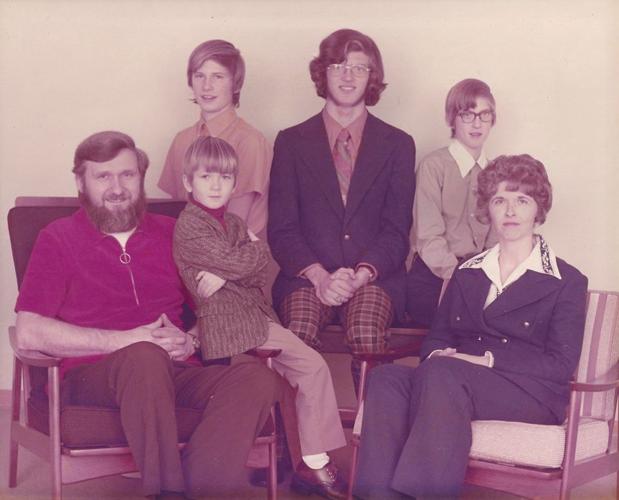
The Pijanowski family, Don to left, Kate to right.
For Jack, the father wants the memories of this trip to be joyous. At Sahlen Field, beneath sun and sky, he took a photo with his son that mirrored one John snapped with his own dad, when Don first saw Yankee Stadium. The ballpark power of being at a big-league game with your kid explains why John now feels both gratitude and instant connection whenever he sees a box score for the Blue Jays – a jubilant young team whose stay in Buffalo, a direct result of the pandemic, is also a kind of breakout therapy for solitude and loss.
Besides, John had another reason to return to his hometown. His brother inherited a genetic kidney disease from their mom. Mike needs a kidney transplant, and the doctors say John and Jack are free of the disease, which creates this possibility:
John is also here to go through tests at Erie County Medical Center, because for now all things point toward him being the best of possible kidney donors.
Sitting with his youngest brother and his nephew at that Blue Jays game, Mike was sure of how their dad would have reacted to John's plan.
“He always wanted us to stick up for each other,” Mike said, “and this is the same thing he would have done.”