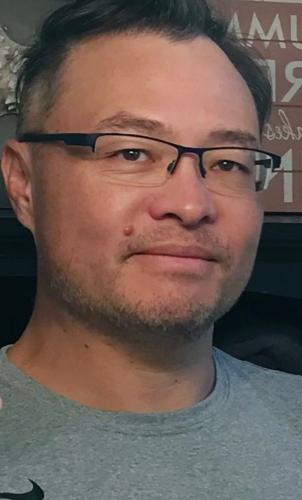

For four years, Dan Horner was not well.
Horner joined the Navy a month after he graduated high school and served until he was 27 and later entered the corporate world. After a while, he found that he was debilitatingly ill, with doctors puzzled at how to help him.
Unable to function normally with his laundry list of ailments, Horner learned that his illness stemmed from trauma he had sustained throughout his childhood and during his military service. For four years, he explored various avenues in alternative medicines, searching for something that could help him ease his condition.
Through the use of natural remedies and plant medicines, including psychedelics, Horner recovered from many of his ailments, and he turned his attention toward educating others about the benefits of these treatments.
Horner, who lives in Tucson, is the founder and director of the Science of Psychedelics and Spiritual Medicine Conference, which will take place April 28-30 at the Herberger Theater in Phoenix. The conference will host guest speakers with experience in the science of psychedelics, with both researchers and advocates alike.
People are also reading…

Dan Horner
The conference will be Horner’s 10th that he has organized in Arizona, having coordinated symposiums about topics in alternative medicine since 2010.
“They’re all structured the same way. We get speakers that are knowledgeable on the topic, and we bring them in to educate the public,” Horner, 48, said. “Of course, we’re happy to have lawmakers, we’re happy to have politicians and officials from other organizations. But generally, we open it up to the public because we’re trying to educate the public directly.”
Some of the speakers at the conference include Hamilton Morris, host of the television series “Hamilton’s Pharmacopeia;” and Louie Schwarzberg, director of the “Fantastic Fungi” documentary on Netflix and Rick Doblin, founder of the Multidisciplinary Association for Psychedelic Studies (MAPS).
Horner said that the inspiration for the conference stems from the wealth of research showing the benefits of psychedelics to improve and treat mental health conditions and to inform the public about recent breakthroughs in the science of psychedelic substances.
Recent studies from institutions, including the Center for Psychedelic Medicine at New York University Langone’s Department of Psychiatry have conducted research into psychedelic medicine, including the use of psilocybin as an effective treatment for alcohol use disorder. Additionally, MAPS has conducted research studies that support the medical efficacy of substances like MDMA, ibogaine and LSD to treat various mental health disorders.
“One-seventh of the entire population of the United States has a mental health disorder,” Horner said. “That includes depression, anxiety, PTSD, OCD, all sorts of disorders that are mentally related. And we’re finding that psychedelics can help with this gigantic range of mental health disorders, and things that you wouldn’t think of as mental health disorders.”
Zach Leary, host of the MAPS podcast and a facilitator at the Evolution Retreat Center in Jamaica, will present at the conference about the use of psychedelics in the 21st century. He is the son of Timothy Leary, a former Harvard professor who was a prominent figure in the psychedelic movement of the 1960s.
Leary said that with his presentation, he hopes to provide insight on using psychedelics responsibly, the importance of intention behind the psychedelic journey and how his own experiences and history with psychedelics have impacted his life.
“When psychedelics kind of found this modern renaissance within the last few decades, the explosion in psychedelic-assisted therapy, it has seen a tremendous rise in popularity and demand, and also a tremendous amount of success,” he said. “That said, there are also some things we should watch out for, and how people can be introduced to these substances, to these medicines in a safe, holistic way.”
Jennifer Montjoy, who holds a doctoral degree in biobehavioral neuroscience from the University of Arizona, will also speak at the conference. Montjoy utilizes ketamine-assisted psychotherapy at Resilience Behavioral Health Solutions in Tucson, where she said she has supervised over 200 psychotherapy sessions supplemented with ketamine.
Montjoy said she is glad the conference will feature speakers educated about a variety of substances, as well as speakers with different backgrounds in both academia and clinical research.
“I think it’s important culturally that we continue to shift and learn and have accurate information,” Montjoy said. “From people from different walks of life, different colored skin, different culture so that we’re also expanding access, hopefully, and it’s not just another elitist healing opportunity.”
Montjoy said if anyone is interested in learning about her practice in Tucson or is a clinician interested in being trained in psychotherapeutics, they can visit her website, jenmontjoy.com.
Some students at the University of Arizona have also been excited about the prospect of increased public discourse regarding psychedelics. Sophomore Evan Laughlin founded the Psychedelic Radar, a student newsletter dedicated to sharing breakthroughs in scientific and medicinal research regarding psychedelic substances.
The members of Radar are passionate about spreading the information gathered from recent research into psychedelics and bringing in guest speakers with expertise in the realm of psychedelic medicine to speak with members of their club.
“At this point in time, I think we’re seeing robust results, and the ability of psychedelics to change people’s perceptions for the better,” Laughlin said. “I think that for understanding them better, a conference like this is a huge step in that direction.”
Tickets for the conference, both online and in-person, start at $299. For more information, visit thescienceofpsychedelics.com/tickets.
Antidepressant pharmaceuticals have long been used to treat anxiety and depression in people with cancer, but what if there were a more natural way to do that?