

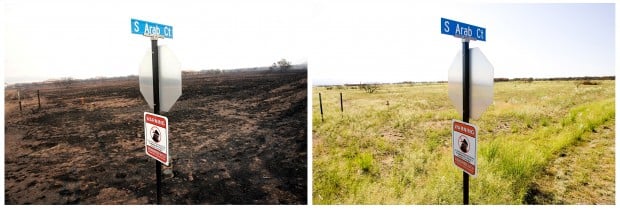
Lush green growth and dazzling wildflowers have burst to life out of the ashes of the Monument Fire - just two months after the blaze was contained.
"Things are growing beautifully where the fire burned. It's absolutely encouraging," said Katy Hooper, a park ranger at Coronado National Memorial south of Sierra Vista.
The human-caused fire started June 12 on memorial land and spread across the Huachuca Mountains.
It burned 30,526 acres before it was fully contained in early July after destroying 62 homes and blazing through four businesses and other buildings.
"The pink-throated morning glories were the first things to come back," Hooper said. "I got back here on July 5 after we were allowed to return, and I saw the plants of morning glories then - just two or three weeks after the fire burned through."
People are also reading…
Now the morning glories and other flowers are in brilliant bloom in a landscape so recently ravaged by fire.
"On the Coronado Peak Trail, there are flowers like Indian paintbrush and Ajo lilies," Hooper said. "You see grasses as you enter the park, and orange string bean is growing in the grasslands and along the roadsides."
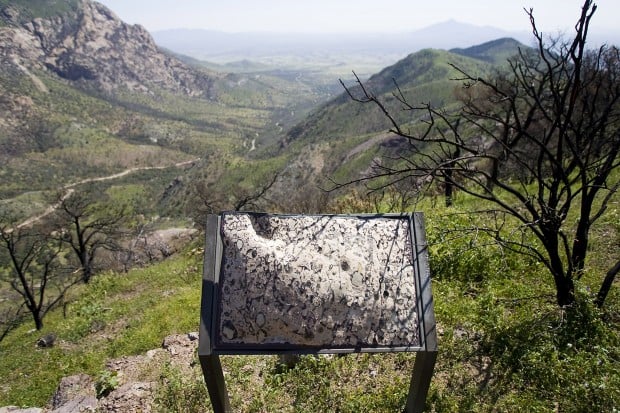
National forest lands blackened by the fire also are showing early signs of recovery.
"We're seeing grasses and forbs growing out of the ashes," said Drew Leiendecker, a prescribed fire and fuels specialist with the U.S. Forest Service.
"Wildflowers are coming back" in some fire-scorched canyons of the Huachuca Mountains, Leiendecker said. "But it's variable across the forest. Some places look really good, and in some places there's not a lot of new growth."
Among sites in the Huachucas where lush new growth is evident are Miller Canyon and the lower reaches of Carr Canyon.
New growth of trees - especially in areas where the fire burned with great intensity - will be a different story. It will take years and decades rather than months for oak woodlands and pine forests to recover.
REASONS FOR RECOVERY
Officials said the rapid recovery of vegetation stems from several factors - including adaptation, post-fire nutrients in the soil and timely rainfall.
"This is a fire-adapted ecosystem," Leiendecker said. "The grasses, forbs and shrubs are adapted to a frequent fire cycle. That's why this area is very resilient and comes back fairly quickly after a fire."
Plants in a post-fire landscape also get the benefit of soil that's been infused with fresh nutrients.
"Plants pull nutrients out of the ground when they grow, and when they burn they return the nutrients to the soil," Leiendecker said. "Fire recycles the nutrients and creates a way for new growth."
New growth also has been nurtured by monsoon moisture.
"We've had quite a bit of rain since the fire," said Hooper of Coronado Memorial.
Leiendecker said rainfall on forest lands has been slightly below average for the summer - but still sufficient to spur new growth.
COMING SUNDAY
Just how much damage have wildfires done in Arizona this year? The tally is in Sunday's Star.
On StarNet: See before and after photos of areas that are now becoming green at azstarnet.com/gallery
DID YOU KNOW?
Coronado National Memorial, where the Monument Fire started, commemorates the first major European exploration of the Southwest. It lies in sight of the San Pedro River Valley through which the Coronado Expedition of 1540-42 first entered what is now the United States.
Contact reporter Doug Kreutz at dkreutz@azstarnet.com or at 573-4192.


