
A research organization focused on Arizona's economy says it would be better if Tucson focused on traditional transportation infrastructure instead of "relative luxuries" such as bike lanes or free public transit, but city officials say that's what makes it Tucson.
In its report "Tucson's Struggling Economy & How to Fix It," The Common Sense Institute of Arizona says that while the city has consistently spent around one-fifth of its budget on transportation, "the city has had relatively little to show for it," arguing that if Tucson prioritized expanding its major roads and highways, the city would reap economic benefits.
The state's economy overall grew by 30% between 2001 and 2023, and Phoenix's metropolitan statistical area (MSA) grew by 32%; in contrast, the report states, Tucson’s economy grew by 20%.
People are also reading…
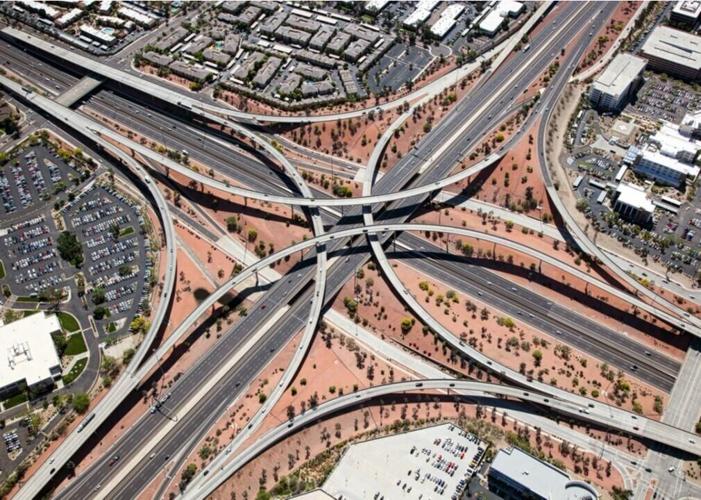
"While the Phoenix metro is crisscrossed by at least 8 major freeways, Tucson has only 1-2. In contrast, the broader Phoenix metro area has seen significant expansion in its highways in the last decade, allowing for economic expansion to spread further into the western parts of the valley,” the report contends. "A lack of similar expansion within the Tucson area is likely playing a role in its relative economic performance."
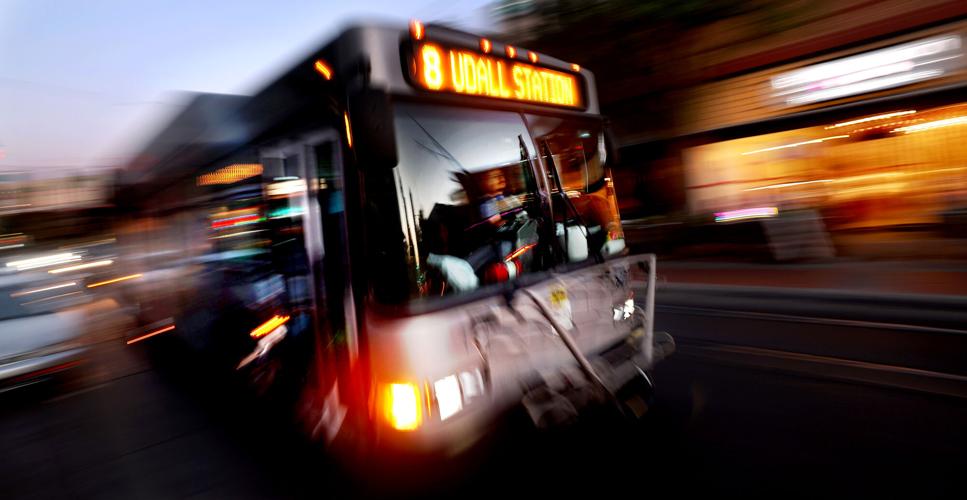
Katie Ratlief, executive director for the Common Sense Institute of Arizona, said the city focusing on "core functions" per its charter is much more important to its economic health than "peripheral issues" like bike lanes and free bus fares.
"Some of that is a cultural choice," she said. "I know Tucson historically is just totally uninterested in freeways -- that might be a mistake economically -- but that's a choice that they've made."
The report was published before the outcome of Prop. 414 was known, and well before the passage of the RTA Next plan, so Ratlief said it's hard to say what benefit the 20-year regional plan could bring to the region economically.
But a question remains still for her: What are Tucson's priorities?
"What I will say, though, is that something the city of Tucson is lacking, and this is both in transportation and just more generally, is just a vision, an articulatable vision of what kind of city Tucson wants to be," she said. "You know, Phoenix, other Valley cities, have really embraced 'we want to be welcoming to job creators. We want to be manufacturing hubs. We want to attract major projects.' It's not obvious to us that Tucson has any sort of comparable vision."
She said investment in core infrastructure should be prioritized.
"Once you have that, the city has an identity, it's growing, then you have the luxury of investing in alternative transportation methods," Ratlief said. "If you do them out of order, then maybe it's an identity, but it's not an identity that's connected to any sort of economic development plan, especially when it is detached from an investment in public safety."
Patrick Hartley, a planning administrator with the city's Department of Transportation and Mobility, said he found the premise a little surprising, "that a community's identity would be tied up" into something like a freeway system.
"In fact, if you look at a lot of the cultural history of urban areas in this country, it was the introduction of the freeway system that actually obliterated a lot of the cultural character of these communities," he said. "I think this is a community that really does take pride in its cycling infrastructure, and in many instances, we've become something of a national model on the work we're doing on that front.
"It might not land on the cover of The Economist but people recognize the way that we are innovating, particularly within our bike Boulevard network, the installation of the bike HAWK signal and HAWKs writ large."
Hartley said the city is responding to what voters have said are priorities, which include expanding transportation choices for people in terms of how to travel through the city.
"There is a significant share of the population who, for whatever reason, is unable to drive due to disability, due to economic barriers, due to age," he said. "I would contend that those are, in fact not luxuries, and are in fact broadening accessibility to transportation for our community."
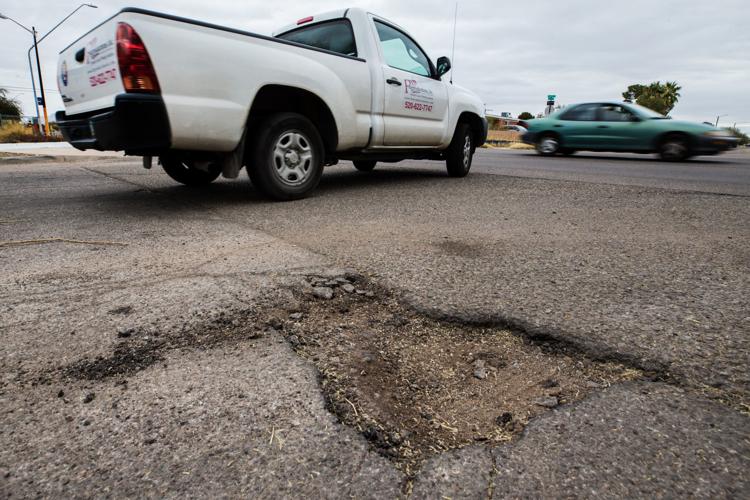
The push for an expanded highway system would be met with geographical challenges, as the region is "pretty much built out in all the areas where an interstate like that would be most useful," Hartley said, and a highway system through suburban areas on the outskirts of Tucson would create a disruption for those residents, would be long, costly and require buy-in from regional, state and federal partners.
"We are making a number of investments in our transportation system, which are aligning with what the priorities of the community are," Hartley said. "That, honestly, is the number one thing we hear from the community, 'When are you going to fix the roads, repave the roadways?' and that's what we're doing."